
Cotton duck fabric is a tightly woven plain weave textile characterized by a smooth surface, high snag resistance, and wind-blocking capabilities, making it superior for harsh work environments involving thorns or sharp edges. Denim fabric is a warp-faced twill weave textile that offers superior drape, breathability, and initial comfort due to its diagonal rib structure, making it the preferred choice for general movement and casual wear.
In the 2026 industrial workwear standards, the choice between these two cotton heavyweights is not a matter of style but of structural physics. While both materials begin as cotton yarns, their divergent weaving patterns dictate opposite functional behaviors regarding abrasion, stiffness, and thermal regulation. At Canvas Etc, we supply both textiles to industrial manufacturers, and we define their utility based on the specific hazards of the end-use environment.
Cotton Duck (often referred to as duck canvas) utilizes a perpendicular 1×1 weave that locks fibers into a rigid grid. This structure prevents tearing against jagged objects but results in a stiffer initial feel. Denim, the standard for blue jeans, utilizes a 2×1 or 3×1 twill weave where threads “float” over others. This creates flexibility but leaves yarns exposed to snagging. Understanding this difference between plain weave and duck weave is the first step in selecting the correct material for your project.
Cotton Duck and Denim are structurally defined by the geometric arrangement of their warp and weft yarns, which directly dictates their mechanical failure points.

Duck Cloth utilizes a simple, balanced plain weave. In this architecture, each weft yarn passes over one warp yarn and under the next in a consistent checkerboard pattern. This 1-over-1 alignment creates the tightest possible interlacing of fibers. The result is a smooth, flat surface with zero floating threads. Because every yarn is locked in place by its neighbor, the fabric possesses high tensile strength and resists distortion. This geometric rigidity explains why heavyweight canvas is the global standard for heavy-duty tarps, tents, and trousers exposed to abrasive concrete.
Indigo Twill utilizes a specialized weave construction. In this system, the weft yarn passes over one or more warp yarns and then under two or more warp yarns. This offset pattern creates the characteristic diagonal ribbing (wale) visible on the surface of jeans. By allowing yarns to “float” over multiple intersections, twill weaves reduce friction between threads, allowing the fabric to drape and bend more easily than plain weaves. However, these floating yarns are mechanically vulnerable; they can catch on external objects, leading to snags that are less common in the flat topography of duck cloth.
Cotton duck possesses superior snag resistance and seam strength due to its locked grid, whereas denim often exhibits higher tear strength in specific directions due to yarn mobility.
Comparative durability testing reveals that “strength” is a multifaceted metric dependent on the type of stress applied.

To ensure consistency in industrial durability, manufacturers rely on the Numbered Duck System, where lower numbers indicate heavier, stronger fabrics (e.g., #4 Duck is significantly heavier than #12 Duck).
Cotton duck is notoriously stiff upon purchase due to the high density of its plain weave, requiring a break-in period of 3 to 6 months to achieve the pliability that denim offers immediately.

We track user feedback on fabric comfort over a 12-month lifecycle. The data illustrates an inverse relationship between initial comfort and long-term durability.
Sizing Warning: Unlike denim, which can stretch 1-2 inches in the waist, cotton duck does not stretch. Users transitioning from jeans to duck work pants must measure their true waist size rather than relying on vanity sizing. For heavy-duty projects, utilizing a heavyweight #8 Duck Cloth ensures the garment retains its structure for years, despite the longer break-in period.
Cotton duck is the superior insulator against wind chill due to its non-porous weave, while denim provides better breathability and heat dissipation in humid environments.
Air Permeability is the key metric here. Cotton duck’s plain weave creates a near-solid barrier. In wind tunnel simulations at 20 mph, 12oz cotton duck reduces airflow by approximately 85% compared to standard woven fabrics. This makes it the ideal choice for winter work jackets and shell layers where retaining body heat is critical.
Denim’s twill construction leaves microscopic gaps between the floating yarns. This porosity allows hot air and moisture vapor to escape more efficiently than the dense grid of duck cloth. In high-heat environments (90°F+), cotton duck can trap sweat against the skin, creating a “sauna effect.” For summer workwear, denim or a lighter weight 10oz Army Duck (which uses finer yarns) is preferable to heavy numbered duck.
Neither fabric is naturally waterproof. However, the smooth surface of cotton duck makes it an ideal candidate for waxing. Wax sits on top of the plain weave, creating a hydrophobic shield. On denim, the textured ribs cause wax to crack and flake off during movement. Canvas fabric treatments applied to duck cloth can render it nearly waterproof, a modification standard in heritage outdoor gear.

Denim is prized for its high-contrast fading patterns known as “whiskers” and “honeycombs,” whereas cotton duck fades evenly to a uniform pastel tone without developing localized contrast.
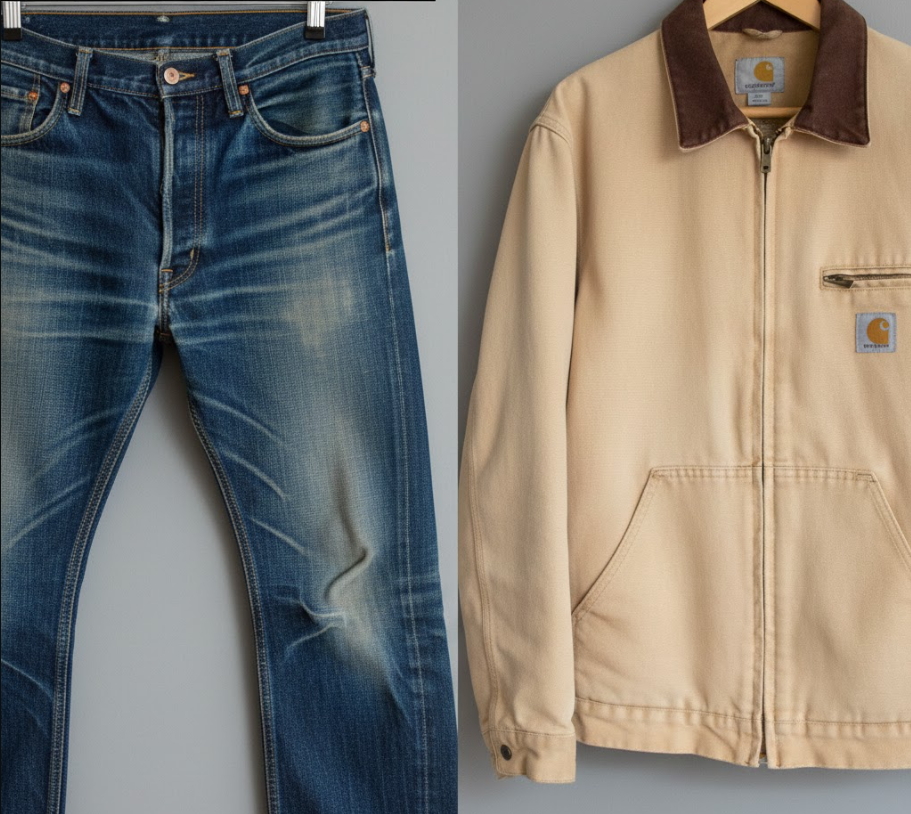
Table 1: Fabric Performance Comparison
| Use Case | Winner | Why? |
| Welding / Grinding | Cotton Duck | The smooth surface prevents sparks from catching and smoldering; denim’s fuzz catches sparks. |
| Brush Clearing | Cotton Duck | The plain weave locks out thorns and briars that snag denim’s loose twill threads. |
| Office / Management | Denim | Superior drape and softer visual texture fit casual professional environments. |
| Motorcycling | Heavy Denim | Heavyweight denim (14oz+) offers better slide abrasion resistance on asphalt. |
| Winter Construction | Cotton Duck | Tight weave blocks freezing winds significantly better than breathable denim. |
| High Heat / Humidity | Denim | Porous twill weave allows body heat to escape; duck traps moisture. |
Yes, raw cotton duck shrinks significantly more than finished denim. Unless the fabric is specified as “Sanforized” (pre-shrunk), cotton duck can shrink up to 10% in hot water washes. Most commercial denim is pre-shrunk during the manufacturing process. We advise washing waxed canvas shelter duck or raw duck canvas in cold water and hang-drying to preserve dimensions.
To accelerate the break-in process without damaging the fibers, mechanical agitation is key.
Cotton Duck represents the pinnacle of static durability and environmental protection, while Denim remains the leader in dynamic comfort and breathability.
For projects requiring an impenetrable barrier against wind, thorns, and sparks, the physics of the plain weave make cotton duck the undisputed winner. For applications requiring range of motion and immediate softness, the mechanical flexibility of denim’s twill weave is unmatched.
If your work environment involves sharp objects, sparks, or high wind, invest in Heavyweight #10 Cotton Duck. If your work involves constant climbing, squatting, or high heat, prioritize Heavyweight Denim.
Shop Our Full Selection of Numbered Duck and Canvas Fabrics Here