
Summer crafts for kids are seasonal craft projects children can make during summer break, camp, preschool, homeschool, or family activity time. We recommend choosing each craft by age range, active time, mess level, materials, indoor or outdoor setting, and adult supervision. Paper crafts work well for quick activities, while fabric and canvas crafts are more suitable when the goal is a keepsake, banner, display piece, or texture-rich project.
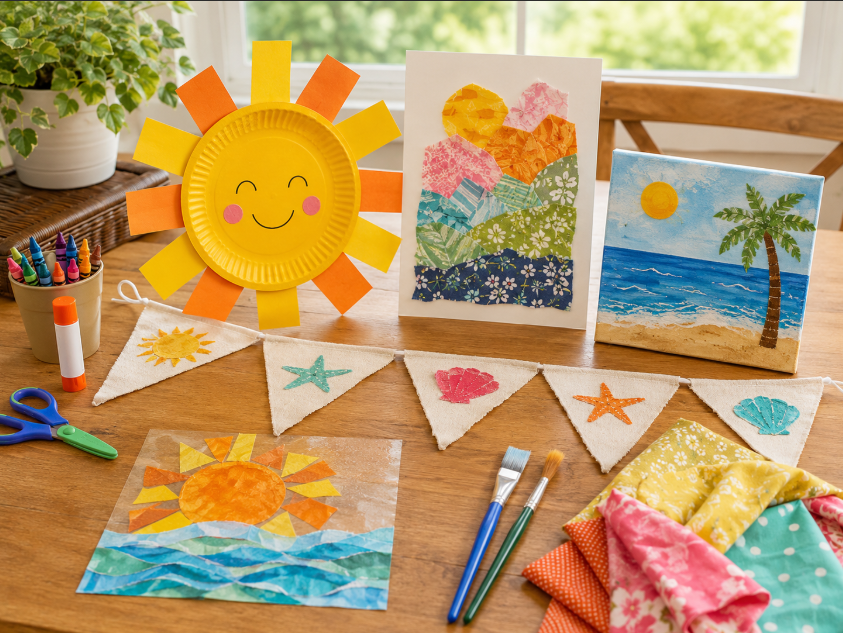
This guide focuses on craft ideas, material selection, safety checks, and setup planning. It does not cover local summer camps, broad summer activity lists, adult-only décor projects, or unsupervised craft processes with sharp tools, heat tools, solvent adhesives, or adult-labeled art materials.
| Decision point | Practical answer |
|---|---|
| Quickest craft type | Dry paper crafts and contact-paper crafts usually require the least setup. |
| Lowest-mess craft type | Crafts with pre-cut shapes, dry materials, and limited glue are usually easiest to clean up. |
| Better toddler approach | Use large pieces, adult setup, and no small loose embellishments. |
| Better keepsake material | Canvas, cotton duck, or muslin works better than paper when the project needs to hang, display, or last longer. |
| Outdoor craft condition | Outdoor crafts need shade, water breaks, cooler timing, and adult supervision. |
| Best group-planning rule | Plan around the youngest child in the group and pre-cut supplies before the activity starts. |
A quick summer craft selector helps us match the craft to the child, time window, mess tolerance, and supervision available. Dry crafts usually clean up fastest, while paint, glue, water, and outdoor materials require more adult setup.
| Mess level | Use this label when… | Setup requirement |
|---|---|---|
| Low | The craft uses dry pieces, crayons, contact paper, folding, or limited glue | Table cover optional but helpful |
| Medium | The craft uses washable paint, water, glue, markers that bleed, or drying trays | Table cover, handwashing, and drying space needed |
| High | The craft uses wet paint, natural materials, many loose pieces, dye, or outdoor cleanup | Adult-managed setup, cleanup zone, and stronger supervision needed |
| Craft | Age range | Active time | Drying time | Cleanup time | Mess level | Setting | Adult role |
|---|---|---|---|---|---|---|---|
| Paper plate sun | 3–7 | 15–20 min | 15–30 min if painted | 5–10 min | Low-medium | Indoor or shaded outdoor | Pre-cut rays for younger kids |
| Contact-paper suncatcher | 4–8 | 15–25 min | None | 5 min | Low | Indoor | Cut frame and contact paper |
| Paper boat ocean scene | 5–8 | 15–25 min | None | 5 min | Low | Indoor | Fold or pre-fold boats |
| Fabric texture board | 3+ with adult prep | 15–25 min | 15–30 min if glued | 5–10 min | Low-medium | Indoor | Pre-cut large fabric pieces |
| Fabric scrap collage | 3+ with adult prep | 20–30 min | 30–60 min depending on glue | 5–10 min | Low-medium | Indoor | Pre-cut large fabric pieces |
| Coffee-filter butterflies | 4–8 | 20–30 min | 30–60 min | 10 min | Medium | Indoor | Manage water and drying area |
| Canvas painting panel | 5+ | 30–45 min | Varies by paint | 10–15 min | Medium | Indoor or shaded outdoor | Portion paint and manage cleanup |
| No-sew summer banner | 6+ | 30–45 min | Varies by adhesive | 10–15 min | Medium | Indoor | Cut fabric and supervise adhesive |
| Painted rocks or shells | 5+ | 30–45 min | Varies by paint | 10–15 min | Medium-high | Shaded outdoor or covered table | Wash materials and supervise paint |
| Nature weaving with fabric strips | 6+ | 30–45 min | None unless glued | 5–10 min | Low | Indoor or shaded outdoor | Prepare loom and strips |
The right summer craft depends on the child’s age, the available adult help, the material, the setting, and the cleanup limit. We recommend choosing the craft before choosing supplies, because age and supervision determine whether paper, fabric, canvas, paint, glue, or outdoor materials are appropriate.
Choose a paper craft when the activity needs to be quick, dry, and easy to set up. Choose a fabric or canvas craft when the project should become a keepsake, group banner, texture board, or display piece.
| If this is true… | Choose this craft type | Avoid or adjust |
|---|---|---|
| The child is under 3 | Large-piece paper or large-piece fabric sorting with adult handling | Small parts, beads, buttons, sequins, tiny shells |
| The craft must take under 20 minutes | Paper boat scene, contact-paper suncatcher, paper plate sun | Multi-step painting, banners, dye projects |
| Cleanup must stay low | Contact paper, paper folding, large-piece collage | Loose glitter, heavy paint, dye, many tiny scraps |
| The craft happens outdoors | Painted rocks, nature weaving, shaded paper craft | Direct heat, tiny loose parts in grass, long paint drying |
| The project should last | Canvas panel, cotton duck base, muslin banner | Thin paper if the craft will hang or be handled often |
| The craft is for a group | Pre-cut paper or fabric kits with labeled trays | Shared sharp tools, open paint containers, mixed-age small parts |
For children under 3, we avoid craft pieces that can become small-parts hazards. CPSC describes small parts as a choking, aspiration, and ingestion risk for children under 3.
Easy summer crafts for kids should use simple materials, short steps, and age-appropriate adult setup. We recommend starting with one of these projects before moving into more complex paint, adhesive, or fabric work.
A paper plate sun is a simple summer craft for preschool and early elementary children because the main shape is large and easy to decorate.
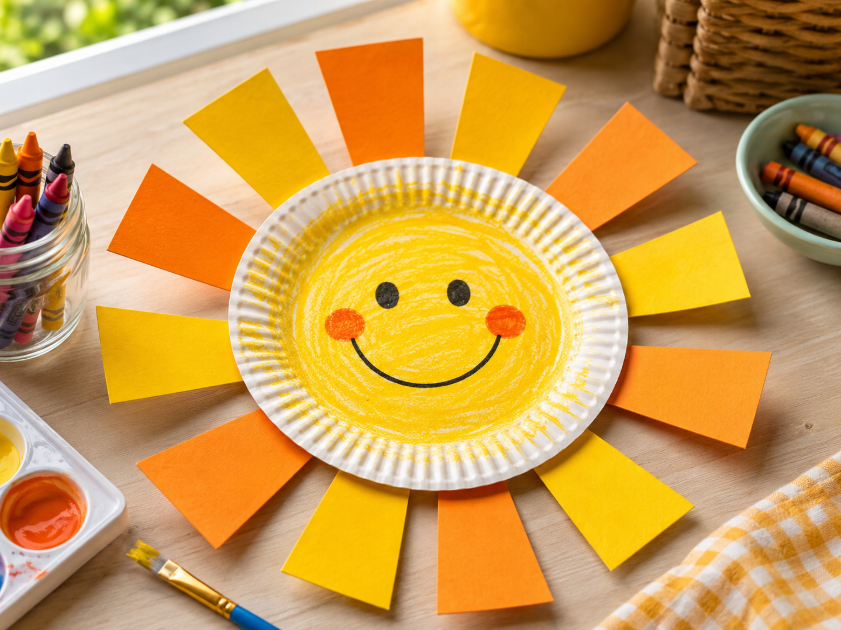
Materials: paper plate, yellow or orange paper strips, crayons or age-labeled washable paint, child-appropriate glue, supervised scissors.
Adult setup: Cut sun rays before the activity for younger children.
Steps: Decorate the plate, attach the rays, and let the plate dry flat if paint or glue is used.
Active time: 15–20 minutes.
Drying time: 15–30 minutes if painted.
Cleanup time: 5–10 minutes.
Mess level: Low-medium.
Safety note: We have adults manage scissors, glue portions, and paint setup.
A contact-paper suncatcher is a lower-mess summer craft because the sticky surface holds color pieces without liquid glue.
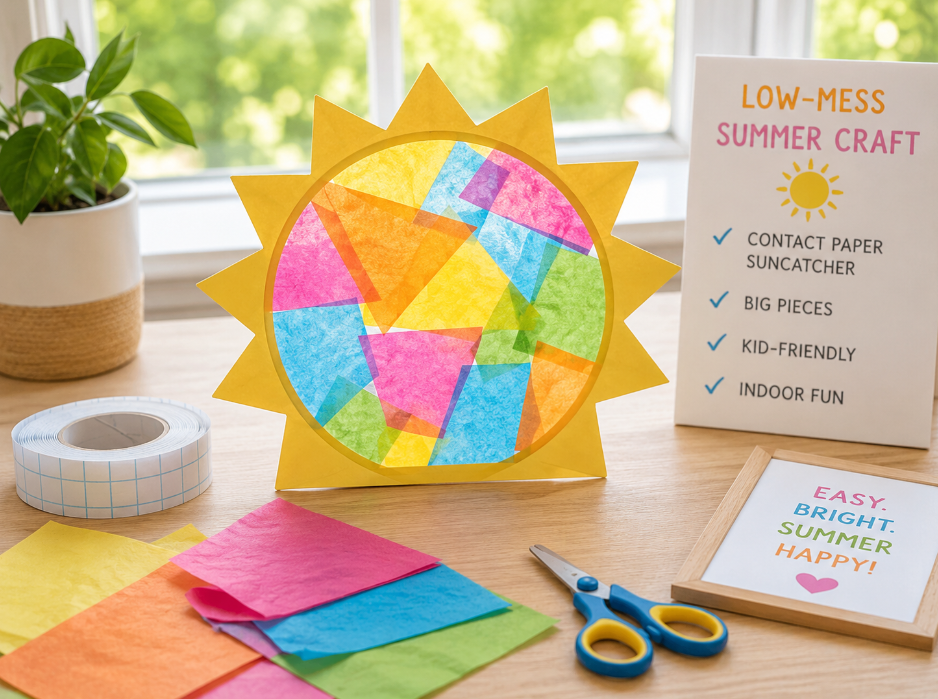
Materials: contact paper, paper frame, large tissue pieces or large lightweight fabric pieces, tape.
Adult setup: Cut the frame and contact paper before children begin.
Steps: Place the sticky sheet, arrange large color pieces, seal or frame the design, and hang it in a window.
Active time: 15–25 minutes.
Drying time: None unless glue is added.
Cleanup time: About 5 minutes.
Mess level: Low.
Safety note: We keep small scraps away from toddlers and preschoolers who still mouth objects.
A paper boat ocean scene is a dry summer craft that works well for hot afternoons, rainy days, or low-cleanup activity time.
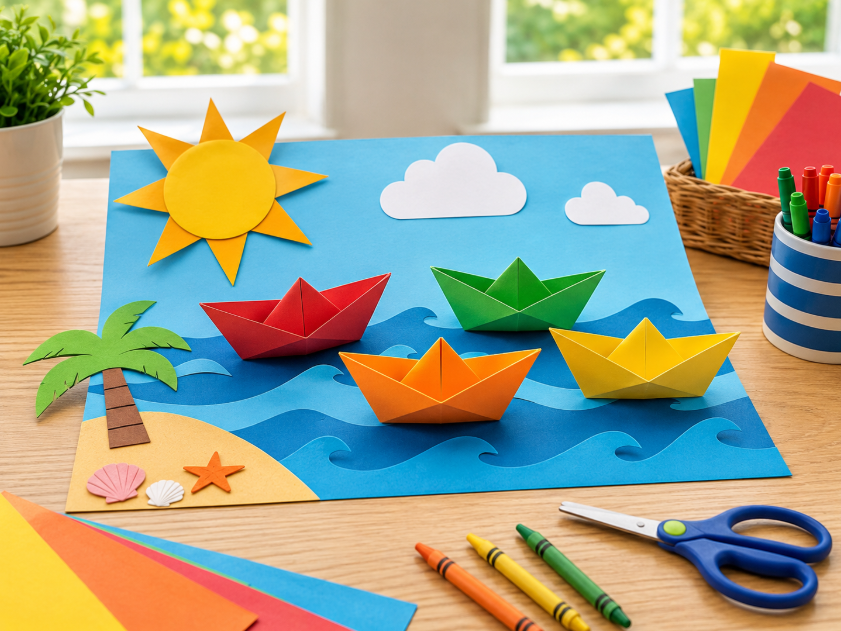
Materials: paper, crayons or markers, blue paper or a shallow tray, optional large paper waves.
Adult setup: Pre-fold boats for younger children.
Steps: Fold or decorate paper boats, place them on a blue background, and add large wave or sun shapes.
Active time: 15–25 minutes.
Drying time: None.
Cleanup time: About 5 minutes.
Mess level: Low.
Safety note: We use large pieces for younger children and supervise scissors if children cut waves.
A fabric texture board is a summer craft for kids who enjoy sorting color, texture, and pattern without sewing.
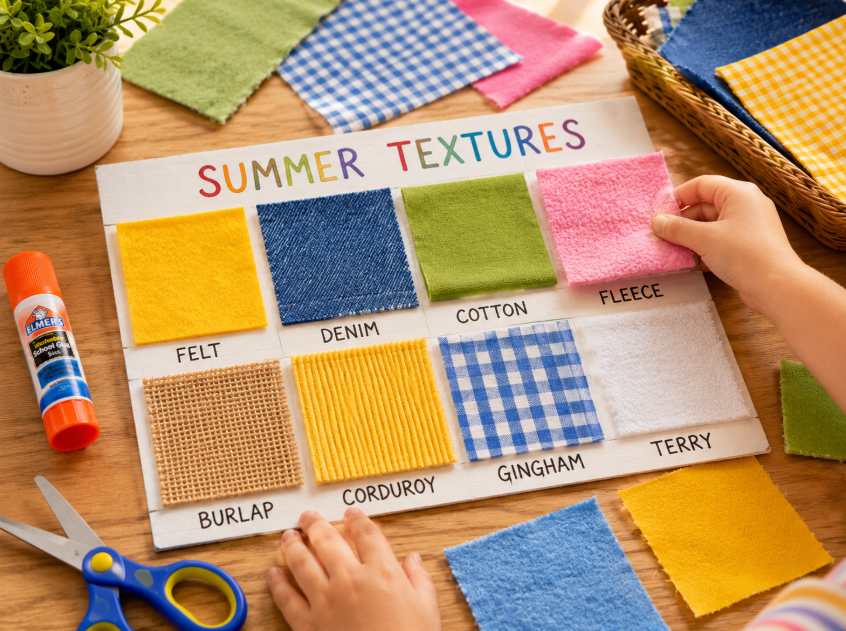
Materials: large fabric pieces, board or cardstock, child-appropriate glue, labels if desired.
Adult setup: Pre-cut fabric into large pieces and remove loose threads, pins, staples, or tiny trims.
Steps: Sort fabric by texture or color, arrange the pieces on the board, and glue each piece in place.
Active time: 15–25 minutes.
Drying time: 15–30 minutes if glued.
Cleanup time: 5–10 minutes.
Mess level: Low-medium.
Safety note: We use large fabric pieces only for toddlers and preschoolers.
A fabric scrap collage is a summer craft for kids when the project should feel more tactile and durable than a paper-only collage.
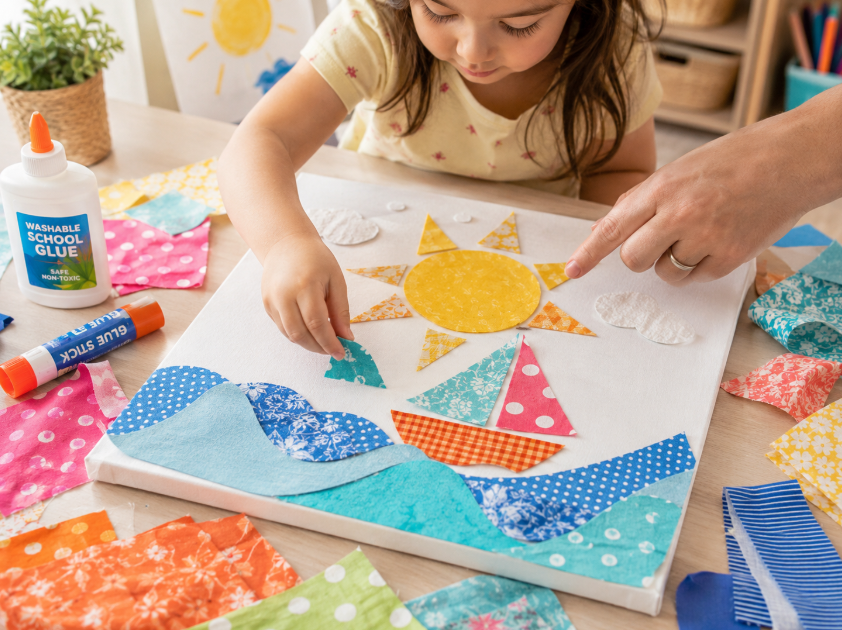
Materials: large adult-cut fabric pieces, cardstock or canvas board, child-appropriate glue, optional large paper shapes.
Adult setup: Sort fabric by size and remove any small trims or loose threads.
Steps: Arrange fabric pieces, glue them onto the base, and dry the collage flat.
Active time: 20–30 minutes.
Drying time: 30–60 minutes depending on glue.
Cleanup time: 5–10 minutes.
Mess level: Low-medium.
Safety note: We treat fabric scraps as adult-selected textile materials, not as child-certified toys.
A canvas painting panel is a summer craft for older children who can follow paint rules, work with supervised supplies, and wait for drying.
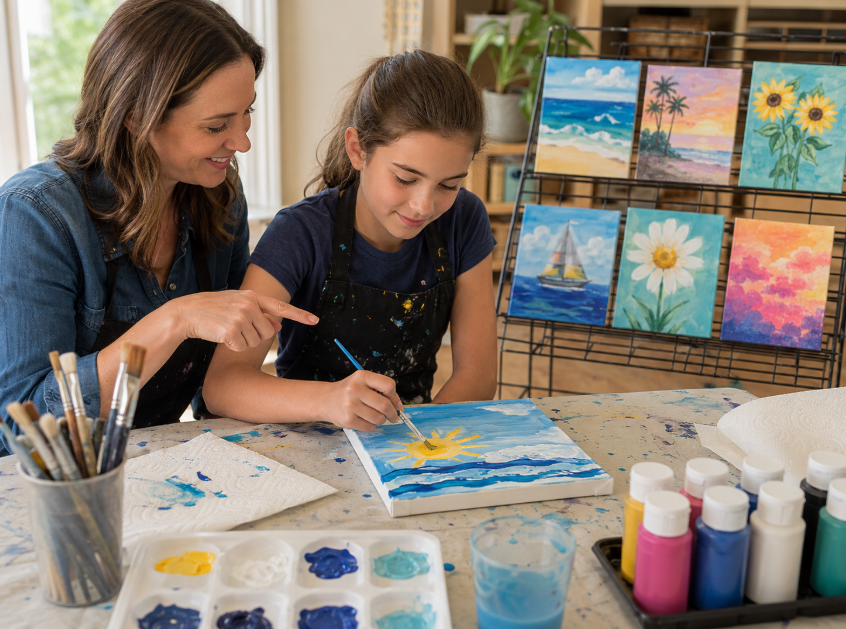
Materials: primed canvas panel or painting canvas, age-labeled paint, brushes, painter’s tape, table covering.
Adult setup: Portion paint, tape edges if desired, and prepare a drying area.
Steps: Paint a summer scene or pattern, let the panel dry flat, and display the finished piece.
Active time: 30–45 minutes.
Drying time: Varies by paint and layer thickness.
Cleanup time: 10–15 minutes.
Mess level: Medium.
Safety note: We check art-material labels and match paint to the child’s age and setting.
A no-sew summer banner is a fabric craft for older children or mixed-age groups when adults can cut fabric and supervise adhesive.
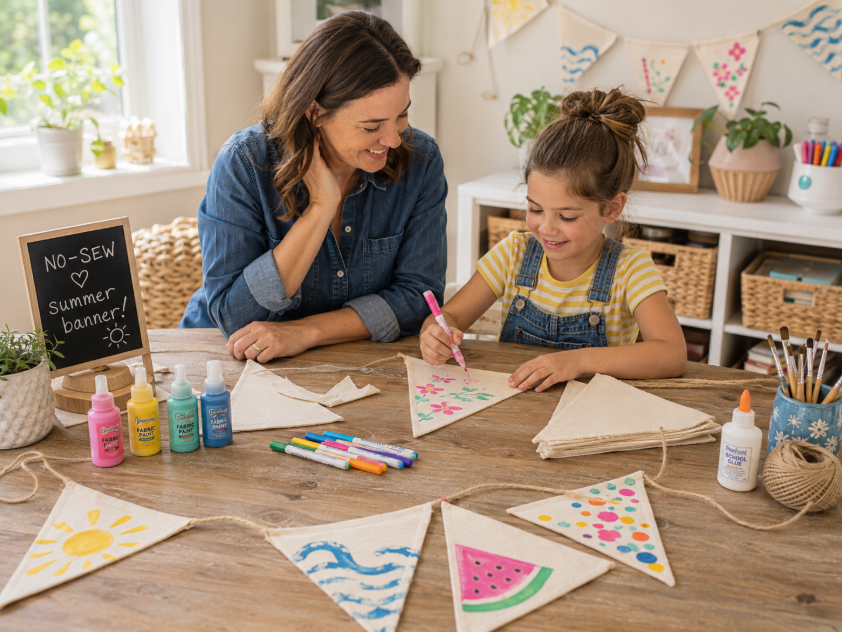
Materials: adult-cut muslin or cotton canvas triangles, string, markers or age-labeled paint, child-appropriate glue or adhesive approved by an adult.
Adult setup: Cut banner pieces and review adhesive labels before children start.
Steps: Decorate fabric triangles, attach them to string, and let the banner dry before hanging.
Active time: 30–45 minutes.
Drying time: Varies by adhesive.
Cleanup time: 10–15 minutes.
Mess level: Medium.
Safety note: We have adults manage cutting tools and adhesive use.
Painted rocks or shells are outdoor summer crafts for kids when the work happens on a shaded, covered surface with adult-managed cleanup.
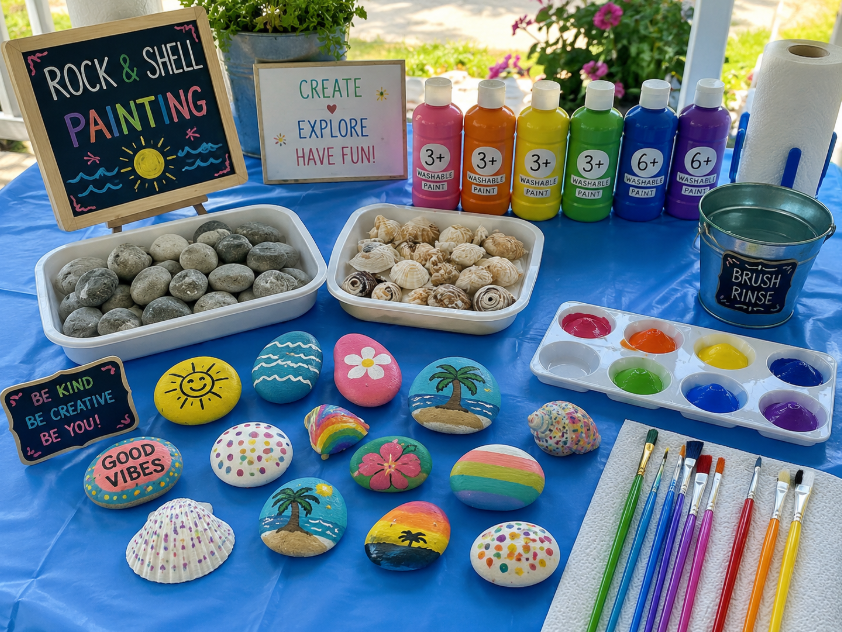
Materials: cleaned rocks or shells, age-labeled paint, brushes, paper towels, covered work surface.
Adult setup: Wash and dry natural materials before painting.
Steps: Paint simple summer designs, place pieces on a drying tray, and display the finished rocks or shells.
Active time: 30–45 minutes.
Drying time: Varies by paint.
Cleanup time: 10–15 minutes.
Mess level: Medium-high.
Safety note: We do not use small shells or pebble-sized pieces with children under 3.
Summer crafts by age group help us match materials, tools, and supervision to the child’s readiness. Age ranges are planning guidance only; adults should follow product labels, child readiness, and professional safety judgment.
| Age group | More suitable craft choices | Adult preparation | Avoid or reserve for older children |
|---|---|---|---|
| Under 3 | Large paper shapes, large fabric pieces, adult-led sensory color activities with age-labeled materials | Pre-cut all pieces and keep supplies large | Beads, buttons, tiny shells, sequins, small googly eyes, scissors, hot glue |
| 3–5 | Paper plate sun, contact-paper suncatcher, large fabric collage, paper boat scene | Pre-cut shapes and portion glue or paint | Loose glitter, permanent markers, small embellishments, unsupervised scissors |
| 6–8 | Coffee-filter butterflies, nature weaving, simple canvas painting, banner decorating | Prepare drying area and supervise paint/glue | Craft knives, rotary cutters, hot glue, solvent adhesives |
| 9–12 | No-sew banners, detailed canvas painting, woven fabric strips, larger collages | Review tool rules and adhesive labels | Heat tools, spray paint, adult art materials without review |
| Tweens+ | More independent design choices with supervised tools | Confirm safe tool handling and ventilation | Any sharp, heated, chemical, or caution-labeled process without adult oversight |
CPSC says art materials must undergo toxicological assessment and should include ASTM D-4236 conformance language where practicable. We use that guidance as a label-checking rule before recommending paints, markers, glues, or other art materials for children.
Indoor summer crafts work better during very hot, rainy, or high-cleanup-risk days, while outdoor summer crafts require shade, hydration, cooler timing, and active adult supervision. CDC says infants and young children rely on others to keep them cool and hydrated when it is hot outside.
| Situation | More suitable craft choices | Why this fit works | Condition |
|---|---|---|---|
| Very hot afternoon | Contact-paper suncatcher, paper boat scene, fabric texture board | Indoor crafts reduce heat exposure | Keep materials away from fans and pets |
| Rainy day | Paper plate sun, coffee-filter flowers, canvas painting | Table crafts do not need outdoor space | Prepare drying trays |
| Shaded patio | Painted rocks, nature weaving, paper plate sun | Outdoor surface can handle moderate mess | Use shade, water breaks, and short sessions |
| Classroom or camp | Paper plate sun, texture board, no-sew banner | Adults can pre-cut and organize stations | Avoid mixed-age small parts |
| Keepsake project | Canvas painting, fabric collage, muslin banner | Fabric and canvas last longer than thin paper | Test paint and glue before group use |
Outdoor crafts should move indoors when shade, water, adult supervision, or cooler timing is not available. CDC recommends shade, breaks, hydration, and cooler timing when heat risk is high.
Paper, fabric, muslin, cotton duck, and primed canvas differ by durability, cutting needs, paint behavior, glue behavior, and display use. We recommend paper for quick summer crafts and fabric or canvas for projects that need texture, hanging strength, or longer display life.
| Material | More suitable for | Main advantage | Main limitation | Adult role |
|---|---|---|---|---|
| Paper | Quick suns, boats, simple scenes | Easy to cut, fold, and recycle | Buckles with too much water or paint | Pre-cut for young children |
| Cardstock | Suncatcher frames, collage bases | Sturdier than paper | Still bends with heavy glue | Cut frames and bases |
| Large fabric pieces | Texture boards, collages | Adds tactile contrast | Loose threads and small scraps need sorting | Select and pre-cut pieces |
| Muslin | Banners, backdrops, practice painting | Lightweight cotton fabric for display projects | Paint or marker bleed must be tested | Cut pieces and test color bleed |
| Cotton duck | Adult-cut craft bases, durable panels | Heavier cotton base than paper | Harder for children to cut | Adults cut and prepare pieces |
| Primed painting canvas | Older-kid painting panels | Designed as a painting surface | Requires supervised paint setup and drying space | Portion paint and manage cleanup |
For adult-cut craft bases, we use 10 cotton canvas duck when a summer craft needs a sturdier cotton base than paper. We treat cotton duck as an adult-selected craft material, not as a child-certified toy.
For supervised older-kid painting projects, we use Painting Canvas 12 Duck when the project needs a primed painting surface. Adults should still choose age-labeled paints, prepare drying space, and manage cleanup.
For banners, backdrops, and practice fabric projects, we use muslin fabric when the craft needs a lightweight cotton fabric. For project-specific purchasing, adults can review NFR muslin cotton fabric and confirm whether it fits the intended craft, paint, and supervision plan.
For adult material comparison before a larger project, we recommend printed fabric swatches and samples so adults can compare color, texture, and material feel before choosing fabric for a group craft.
A summer craft table should be set up before children use paints, glue, scissors, shells, fabric, or outdoor materials. We recommend preparing the table, checking labels, separating small parts, and assigning an adult to tools, adhesives, paint refills, and cleanup.
| Safety check | What we do before the craft starts | Source or review basis |
|---|---|---|
| Art-material label | Check age recommendations and hazard language | CPSC art-material guidance |
| ASTM D-4236 | Look for ASTM D-4236 conformance language on art materials where applicable | CPSC art-material guidance |
| AP Seal | Choose AP-labeled products for young children when available and used as intended | ACMI safety guidance |
| Small parts | Keep beads, buttons, tiny shells, sequins, and loose trims away from children under 3 | CPSC small-parts guidance |
| Scissors and blades | Adults cut fabric, cardboard, and heavy paper for younger children | Adult-supervision rule |
| Adhesives | Use child-appropriate glue and follow product labels | Product-label rule |
| Paint | Portion paint into small cups and supervise water cups | Product-label rule |
| Outdoor heat | Use shade, water breaks, cooler timing, and short sessions | CDC heat guidance |
| Fabric materials | Treat fabrics as adult-selected textile materials, not toys | Product-suitability rule |
| Cleanup | Prepare wipes, drying trays, trash bags, and handwashing | Activity setup rule |
ACMI recommends looking for AP products for young children and says ACMI seals identify products evaluated by a qualified toxicologist.
Most summer craft problems happen when the material, liquid amount, adhesive, drying time, or child age does not match the project. We recommend testing paint and glue on a scrap before using fabric, cotton duck, muslin, or canvas with a group.
| Problem | Likely cause | Fix before the activity |
|---|---|---|
| Paint bleeds through fabric | Paint is too wet, fabric is lightweight, or no scrap test was done | Test on scrap, use less paint, and place a barrier under the fabric |
| Glue does not hold fabric | Adhesive is not compatible with fabric weight or finish | Test adhesive on the exact fabric and allow full drying time |
| Paper buckles | Too much water, paint, or glue | Use less liquid or switch to cardstock, fabric, or canvas |
| Craft takes too long | Drying time was not included | Separate active time from drying time in the instructions |
| Table gets messy quickly | Supplies were not portioned | Use trays, small paint cups, and pre-counted materials |
| Toddler craft becomes unsafe | Small pieces entered the project area | Use large pieces only and keep older-child supplies separate |
| Banner pieces fray | Fabric was cut roughly or handled heavily | Adults should pre-cut pieces and test edge behavior |
| Canvas painting overwhelms the child | Paint, drying time, or steps exceed readiness | Switch to paper plate sun, suncatcher, or large-piece collage |
Group summer crafts require pre-cut supplies, simple station setup, extra drying space, and age-safe material separation. We recommend planning group crafts around the youngest child in the room and keeping shared sharp tools out of the child work area.
Use this planning formula:
Per-child material size × number of children + extra allowance = total material needed
For example, if a banner project uses one adult-cut fabric triangle per child, decide the finished triangle size first, multiply by the number of children, and add extra material for mistakes or trimming before ordering fabric. For measured fabric planning, use our fabric yardage calculator to estimate fabric for a group banner project.
Group craft setup should include:
Once the summer craft is chosen, the next step is material planning. We recommend moving to Canvas ETC product or guide pages only when the link supports the craft material decision.
For old canvas or leftover material ideas, continue with our guide to upcycling old canvas. For larger canvas art projects, try our large blank canvas crafts. For broader canvas project planning, explore more canvas-based craft projects.
For adult-cut durable craft bases, review 10 cotton canvas duck. For supervised older-kid painting projects, review Painting Canvas 12 Duck. For banners, backdrops, and practice fabric projects, review NFR muslin cotton fabric. For adult material comparison, use printed fabric swatches and samples.
Easy summer crafts for kids include paper plate suns, contact-paper suncatchers, paper boat ocean scenes, large-piece fabric collages, and fabric texture boards. These crafts use simple shapes, short steps, and materials adults can prepare before children start.
Summer crafts for preschoolers should use large pieces, short instructions, and adult-prepped materials. Paper plate suns, contact-paper suncatchers, large-piece fabric collages, and paper boat scenes are more suitable than crafts with beads, tiny shells, hot glue, or sharp tools.
Toddlers can participate in summer crafts when adults use large materials, constant supervision, and age-labeled supplies. Large paper shapes and large fabric pieces are more suitable than beads, buttons, tiny shells, sequins, small googly eyes, or loose trims.
Low-mess summer crafts use dry or controlled materials. Contact-paper suncatchers, paper boat scenes, fabric texture boards, and pre-cut fabric collages usually create less cleanup than wet paint, dye, glitter, or multi-step glue projects.
Kids can do contact-paper suncatchers, paper boat scenes, paper plate suns, fabric texture boards, and canvas painting indoors on hot days. Indoor crafts reduce heat exposure, but adults still need table protection, drying space, and cleanup supplies.
Outdoor summer crafts are more suitable when the craft happens in shade, uses short activity windows, includes water breaks, and has active adult supervision. We move the craft indoors when the setting lacks shade, water, cooler timing, or enough adults.
Kids can make large-piece fabric collages, texture boards, no-sew banners, simple nature weaving, and supervised canvas painting projects. Adults should pre-cut fabric, remove small scraps, test paint or glue on a scrap, and match the project to the child’s age.
Kids can paint on canvas when the paint, tools, drying area, and supervision match the child’s age. Older children can usually handle more design steps, while younger children need larger brushes, small paint portions, age-labeled supplies, and adult-managed cleanup.
Fabric needs depend on the finished size of each piece, fabric width, number of children, and extra allowance for mistakes or trimming. For banners, panels, or repeated fabric pieces, calculate one finished piece first, multiply by the number of children, and then use our fabric yardage calculator.
Use paper when the craft needs to be quick, dry, and easy to cut. Use canvas, cotton duck, or muslin when the project should hang, display, or last longer, but adults should cut the material, test paints and adhesives, and supervise the craft.
The best summer crafts for kids are simple enough to set up, clear enough to supervise, and flexible enough to match the child’s age, time window, mess tolerance, and setting. We recommend starting with paper crafts when speed and cleanup matter most, then using fabric, muslin, cotton duck, or primed canvas when the project should become a banner, keepsake, display piece, or texture-rich activity.