
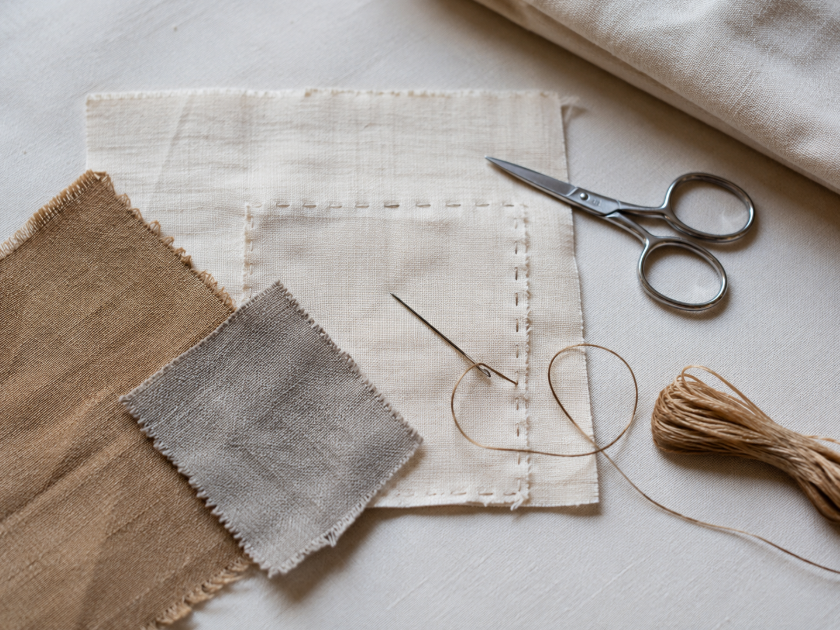
Slow stitching is a process-led form of hand sewing that uses fabric, needle, thread, and simple stitches to create texture, repair cloth, or build a small textile piece without rushing toward perfect results. Slow stitching is not one required stitch or one required pattern. Most beginners can start with a small base fabric, a few fabric scraps, a hand-sewing needle, and running stitch.
For beginners, slow stitching is easiest when the fabric is simple to pierce, the thread moves smoothly through the layers, and the first project is small enough to finish without complex planning. A soft cotton or linen fabric behaves differently from denim or cotton duck canvas, and that material difference affects needle resistance, stitch tension, and the structure of the finished piece.
| Slow Stitching Fact | Practical Meaning |
|---|---|
| Main practice | Process-led hand sewing |
| Typical supplies | Base fabric, fabric scraps, needle, thread, scissors |
| Common first stitch | Running stitch |
| Pattern requirement | A pattern is optional, not required |
| Beginner project | Small fabric sampler, patch, journal cover, or stitched panel |
| Main fabric decision | Choose fabric by softness, weight, weave, layer count, and final use |
| Best role for canvas | Structured patches, panels, covers, and durable accents when the fabric is not over-layered |
| Main beginner mistake | Pulling stitches too tightly or choosing fabric that is too dense for the needle |
Slow stitching is a mindful, intuitive hand-sewing practice where the maker builds texture, pattern, repair, or textile art through repeated hand stitches. The practice usually values rhythm, material feel, visible thread, and gradual construction more than speed, strict symmetry, or perfect stitch length.
Slow stitching can be decorative, functional, or both. A maker might stitch scraps onto a base cloth to create a small sampler, reinforce a worn fabric area, decorate a journal cover, or add visible texture to a patch. The shared feature is not one stitch. The shared feature is the slow, hand-guided process.
Fabric plays a central role in slow stitching because the material determines how the needle moves, how the thread sits, and how the finished piece behaves. A loose, soft cotton scrap folds and stitches easily. A dense canvas gives more structure, but canvas can resist the needle when several layers overlap.
Slow stitching and slow sewing overlap, but the terms are not always identical. Slow sewing can describe a broader approach to sewing slowly, thoughtfully, and with less focus on speed. Slow stitching usually refers more specifically to visible hand stitches, layered fabric, textile texture, and small hand-sewn pieces.
For our purposes, we use slow stitching when the reader’s task is to understand the hand-stitching practice and choose fabric for it. We use slow sewing when the broader topic is the pace, mindset, or general approach to sewing.
You need a base fabric, small fabric scraps, thread, a hand-sewing needle, scissors, and a comfortable work surface to start slow stitching. A hoop, thimble, ruler, marking pencil, pins, or clips can help, but those tools are optional for a first sample.
| Supply | What It Does | Beginner Note |
|---|---|---|
| Base fabric | Holds the stitched piece together | Start with a stable fabric that is not too thick |
| Fabric scraps | Add color, texture, layers, and shape | Use scraps that are easy to pierce by hand |
| Hand-sewing needle | Carries thread through the fabric | Match the needle to the fabric density and thread thickness |
| Thread | Creates visible lines, texture, and attachment | Choose thread that moves through the fabric without shredding or dragging |
| Scissors | Cut fabric and thread cleanly | Use sharp scissors for cleaner edges |
| Pins or clips | Hold layers before stitching | Useful when scraps shift |
| Thimble | Protects the finger pushing the needle | Helpful with denser fabric |
| Hoop | Holds some fabrics taut | Optional; not every slow stitching piece needs one |
Thread choice depends on fabric thickness and the look you want on the surface. Cotton thread can work for subtle lines on lighter fabric. Embroidery floss or perle cotton can create more visible texture when the fabric can support the thread thickness. A heavier visible thread usually needs a needle with an eye large enough to carry the thread without fraying it.
Needle choice depends on fabric density, thread thickness, and layer count. If the needle is hard to pull, the fabric may be too dense, the layers may be too thick, the thread may be too heavy, or the needle may be too small for the job.
Before committing to yardage, we recommend using order fabric swatches to compare fabric weight, finish, texture, and color in person. Canvas ETC’s swatch page lets buyers select up to 15 swatches, and the page explains that swatches are 3-inch by 3-inch cut squares intended to help evaluate weight, finish, texture, and color before choosing fabric for a project.
The best fabric for slow stitching depends on the project type, fabric weight, fabric hand, weave density, layer count, and how much structure the finished piece needs. Light and medium fabrics are usually easier for beginner samples, while heavier fabrics such as denim or cotton duck canvas are better suited to structured pieces, durable patches, covers, panels, and accents.
| Fabric Type | Hand-Stitching Behavior | Best Slow Stitching Use | Beginner Difficulty | Notes |
|---|---|---|---|---|
| Muslin or light cotton | Easy to pierce, soft, forgiving | First sampler, backing fabric, practice piece | Low | Good for learning stitch tension |
| Linen or linen-blend fabric | Textured, flexible, visible weave | Decorative panels, textile art, small samplers | Low-medium | Can fray depending on weave |
| Quilting cotton | Stable, smooth, easy to layer | Scraps, appliqué-style shapes, small projects | Low | Works well with running stitch |
| Denim | Sturdy, textured, thicker | Patches, visible mending, durable accents | Medium | Easier in fewer layers |
| Cotton duck canvas | Dense, structured, durable | Structured patches, covers, panels, bags, wall pieces | Medium-high | Better when layer count is controlled |
| Heavy canvas | Very sturdy, more needle resistance | Durable accents and structured applications | High | Not ideal for a tiny first sampler |
A beginner should usually start with a fabric that accepts a needle easily. If the first project uses too many layers of dense fabric, slow stitching can feel like a struggle instead of a low-pressure hand-sewing practice.
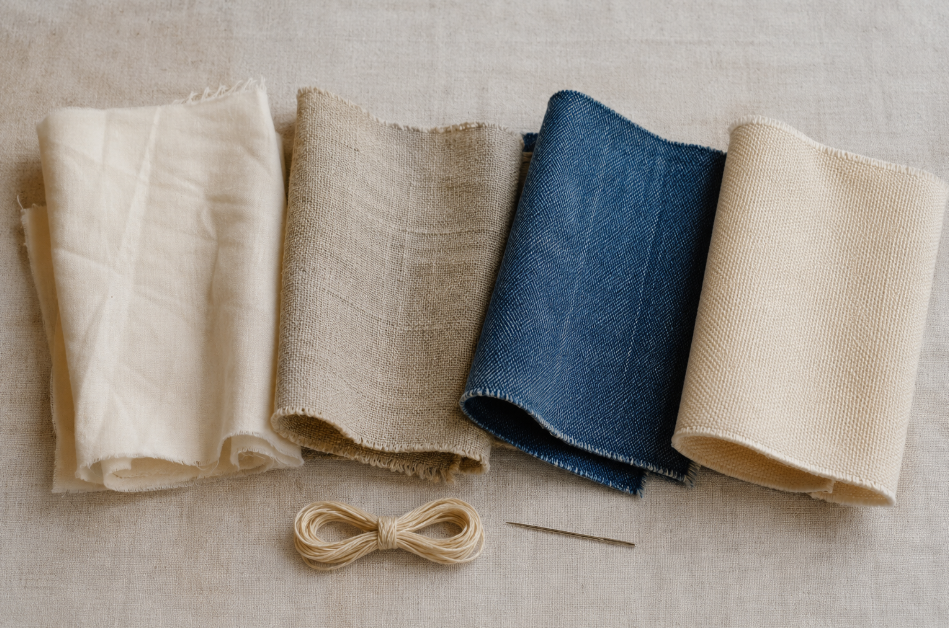
For natural-fiber projects, our guide to natural fabrics for hand sewing can help readers think through cotton, linen, canvas, and other natural textile choices. The guide discusses natural fibers such as cotton, linen, canvas, and silk, including breathability, comfort, durability, and care considerations.
Light fabrics are easier to stitch by hand because the needle meets less resistance. Light cotton, muslin, and many linen scraps work well for small samplers because they allow the maker to practice stitch length, spacing, and tension without fighting the cloth.
Medium fabrics give a slow stitching piece more body. Denim, medium cotton, and some canvas weights can work well when the project needs durability or a more substantial surface. The trade-off is that each added layer increases needle resistance.
Heavy fabrics provide structure, but heavy fabrics require more care in slow stitching. A heavy canvas backing can support a patch or panel, but multiple heavy layers can make stitches uneven, strain the hand, or require a stronger needle.
Canvas works well for slow stitching when the project needs structure, durability, or a stable surface. Cotton duck canvas can be a strong choice for stitched patches, wall panels, book or journal covers, tote accents, and decorative repairs where the cloth must hold its shape.
Canvas is less suitable when a beginner wants to make a tiny layered sampler with several overlapping pieces. Dense canvas plus multiple layers can make the needle harder to pull through and can reduce the soft, flexible feel many people expect from slow stitching.
For Canvas ETC projects, we recommend matching canvas to the final use rather than treating canvas as the default fabric for every slow stitching piece. Choose lighter fabric for easy practice, medium fabric for flexible structure, and cotton duck canvas for durable pieces that benefit from body. Canvas ETC’s #12 cotton duck canvas page lists the fabric as 100% cotton, plain weave, natural finish, no coating, and 11.76 oz/sq yd, with the softest hand among the numbered ducks.
For broader canvas sourcing, readers can also start with our canvas by the yard resource when they need yardage rather than a small practice swatch.
To start slow stitching, choose a small base fabric, place one or two scraps on top, thread a hand-sewing needle, and use simple stitches to attach the layers. The first piece should be small enough to finish without planning a complex design.
Slow stitching works well when each line of thread acts as both attachment and surface design. A row of running stitch can hold a scrap in place, create visual rhythm, and show the hand of the maker at the same time.
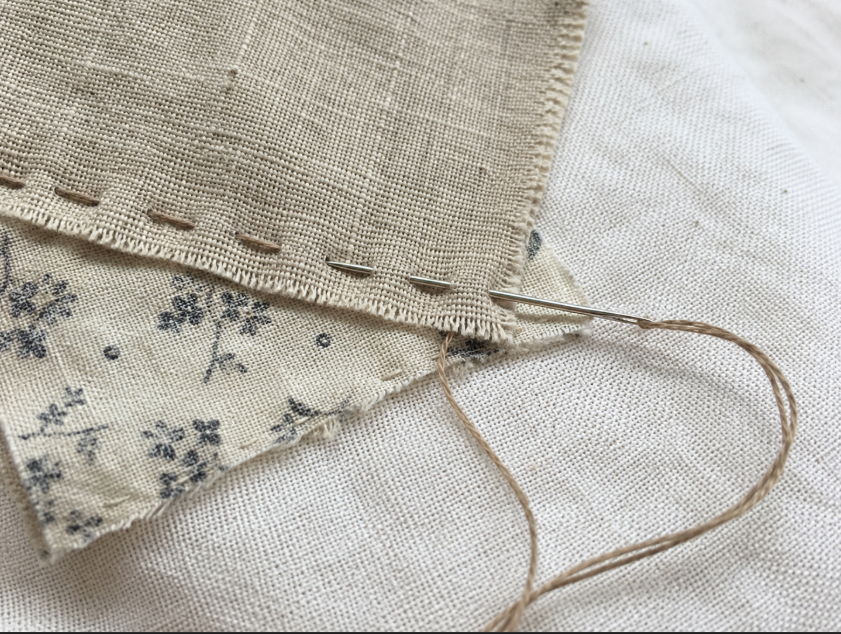
A simple 30-minute slow stitching sample can be made from one small base fabric, two scraps, one thread color, and running stitch. The goal is not to make a finished product; the goal is to learn how the fabric, needle, and thread behave together.
| Starter Sample Item | Suggested Starting Point |
|---|---|
| Base size | About 5 x 7 inches |
| Base fabric | Light or medium cotton, muslin, linen, or another easy-to-stitch fabric |
| Scraps | Two small pieces with different colors or textures |
| Thread | Cotton thread, embroidery floss, or perle cotton suited to the fabric |
| Stitch | Running stitch first, then optional seed stitch |
| Time | About 30 minutes for a small practice sample |
Start by placing one scrap near the center of the base fabric. Stitch around the edge with running stitch, then add a second scrap partly overlapping the first. Add a few rows of running stitch across the base fabric to connect the layers visually.
Running stitch is usually the easiest stitch for most beginners because running stitch attaches fabric layers and creates visible texture with one simple up-and-down motion. After running stitch feels comfortable, a beginner can add seed stitch, backstitch, whipstitch, or small knots for variation.
| Stitch | What It Does | Good Use in Slow Stitching |
|---|---|---|
| Running stitch | Creates simple dashed lines | Attaching scraps, building rhythm, filling space |
| Seed stitch | Creates small scattered marks | Adding texture without a strict pattern |
| Backstitch | Creates a stronger continuous line | Outlining shapes or reinforcing an edge |
| Whipstitch | Wraps around an edge | Securing appliqué edges or folded fabric |
| Cross stitch | Creates small X-shaped marks | Adding accents or repeated motifs |
| French knot or small knot | Creates raised texture | Adding dots, centers, or tactile details |
A beginner does not need to master many stitches before starting. One stitch used repeatedly can create a complete slow stitching piece when the fabric, thread color, spacing, and direction vary.
Slow stitching project ideas should follow the fabric’s structure, softness, and stitchability. A soft cotton sampler, a denim repair patch, and a canvas wall panel can all use slow stitching, but each project asks the fabric to do a different job.
| Project Idea | Suitable Fabric | Why the Fabric Fits | Notes |
|---|---|---|---|
| Beginner sampler | Muslin, light cotton, linen | Easy to pierce and forgiving | Best first project |
| Textile journal patch | Cotton, linen, small scraps | Flexible and easy to layer | Good for experimenting |
| Visible repair patch | Denim, medium cotton, canvas scrap | Adds strength and texture | Keep layers manageable |
| Journal or book cover | Medium cotton, linen, cotton duck canvas | Needs more structure | Test fold and needle resistance |
| Wall hanging or stitched panel | Linen, cotton, canvas | Can support visible texture | Canvas works when structure is desired |
| Tote accent or durable appliqué | Cotton duck canvas, denim, sturdy cotton | Handles wear better than delicate fabric | Use a suitable needle and fewer layers |
| Gift tag or ornament | Light cotton, linen, small scraps | Small scale and easy finishing | Good for quick practice |
Slow stitching on denim works best when the design uses fewer layers and a needle that can pass through the cloth without force. Denim can support visible repair patches and durable accents, but thick seams and folded areas may be harder to stitch by hand.
The project table is a selection tool, not a strict rule. If a fabric feels difficult to stitch, reduce the number of layers, switch to a more suitable needle, or choose a lighter base fabric.
For repair-minded projects, our guide to reduce, reuse, and recycle your fabrics is the closest Canvas ETC resource for mending, reusing scraps, and extending the life of fabrics. That page specifically discusses mending worn clothing or upholstery with needle and thread as a way to prolong fabric life.
Slow stitching overlaps with several textile practices, but slow stitching is not identical to embroidery, sashiko, boro, kantha, quilting, or visible mending. The safest way to compare these terms is to separate purpose, structure, cultural specificity, and technique.
| Term | Relationship to Slow Stitching | Main Difference |
|---|---|---|
| Embroidery | Related needlework category | Embroidery often emphasizes decorative stitched designs, motifs, or specific stitch techniques |
| Sashiko | Related but distinct Japanese stitching tradition | Sashiko uses running stitch to reinforce, quilt, or join fabric, and it has specific Japanese textile context |
| Boro | Related but distinct Japanese mended textile tradition | Boro refers to textiles repeatedly patched and repaired over time, historically rooted in reuse and necessity |
| Kantha | Related but distinct South Asian quilting and stitching tradition | Kantha traditionally uses layers of old fabric and running-stitch quilting in South Asian textile practice |
| Visible mending | Overlapping repair practice | Visible mending focuses on repairing damage in a visible or decorative way |
| Quilting | Adjacent textile practice | Quilting usually joins layers of fabric and batting into a structured textile |
Slow stitching can share the general ideas of visible handwork, layering, repair, or repeated stitches, but culturally specific textile traditions should not be treated as interchangeable style labels. The Metropolitan Museum of Art describes sashiko as a quilting technique using running stitch to reinforce, prolong, or join textiles; the International Quilt Museum describes boro as Japanese textiles repeatedly repaired with scraps and running stitches; and the V&A describes kantha as a South Asian quilting tradition worked on layers of old or recycled fabric.
If the reader wants garment repair, visible mending may be the better next topic. If the reader wants a specific Japanese sashiko technique, historical boro context, or South Asian kantha context, that intent deserves a dedicated guide rather than a short slow stitching subsection.
Most beginner slow stitching problems come from fabric weight, layer count, needle choice, thread choice, or stitch tension. The fix is usually to reduce resistance, loosen the pull of the thread, or simplify the layers.
| Problem | Likely Cause | Fix |
|---|---|---|
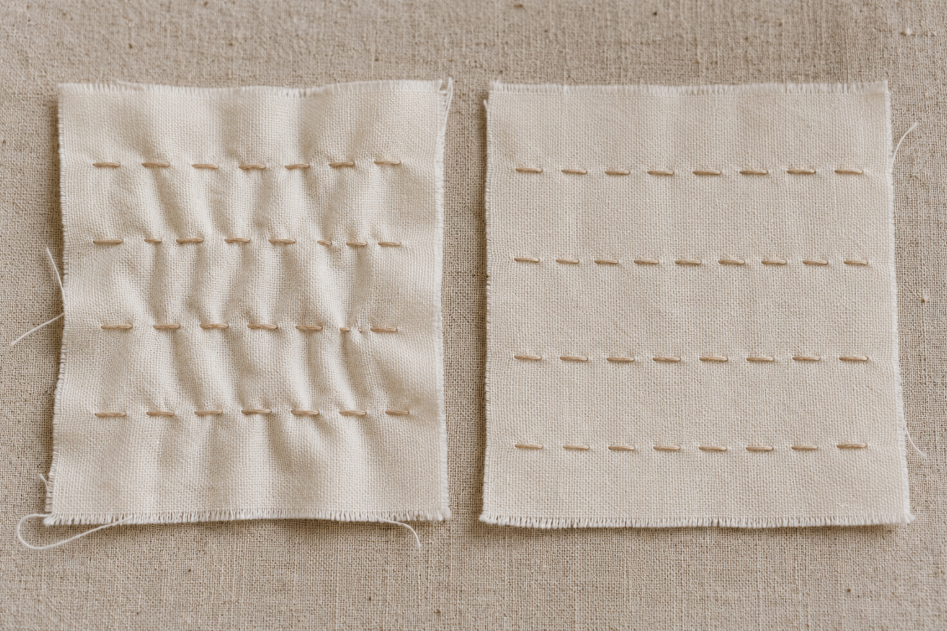
| Fabric puckers | Thread tension is too tight | Pull the thread less firmly and smooth the fabric after every few stitches |
| Needle is hard to pull | Fabric is dense, layers are thick, or needle is too small | Use fewer layers, a more suitable needle, or a lighter fabric |
| Thread tangles | Thread length is too long or thread twists | Use a shorter thread length and let the needle hang occasionally to untwist |
| Fabric frays | Fabric weave is loose or edge is handled heavily | Fold the edge, stitch farther from the edge, or use a more stable fabric |
| Stitches look uneven | Stitch spacing is inconsistent | Keep the first sample simple and use the weave as a spacing guide if visible |
| Layers shift | Scraps are not secured before stitching | Pin, clip, baste, or hold smaller areas at a time |
| Hand feels strained | Fabric is too heavy or needle resistance is high | Switch to lighter fabric, reduce layers, or pause more often |
Uneven stitches are not automatically a mistake in slow stitching. Uneven tension, however, can distort the cloth. If the fabric surface begins to ripple, loosen the next few stitches and check whether the layers are too thick for the needle.
Choose slow stitching materials from Canvas ETC by matching the fabric to the project’s structure, softness, stitchability, and intended use. A beginner sampler needs a different fabric from a durable patch, a wall panel, or a stitched tote accent.
| Project Goal | Material Direction | Canvas ETC Path |
|---|---|---|
| Easy first sampler | Light or medium cotton, muslin, linen, or similar easy-to-stitch fabric | Start with order fabric swatches |
| Structured stitched panel | Medium-weight stable fabric or canvas | Browse canvas by the yard |
| Durable patch or accent | Cotton duck canvas, denim, or sturdy cotton | Compare cotton duck canvas |
| Natural-fiber project | Cotton, linen, canvas, or another natural textile | Read about natural fabrics for hand sewing |
| Repair or reuse project | Reused fabric, scraps, or repair patches | Use our guide to reduce, reuse, and recycle your fabrics |
We recommend testing a swatch before choosing fabric for a larger slow stitching project. A swatch lets the maker feel the fabric hand, test needle resistance, check how thread sits on the surface, and decide whether the material supports the project’s purpose. Canvas ETC’s swatch page explains that swatches help buyers evaluate fabric weight, finish, texture, and color before choosing material for a project.
For heavier canvas or cotton duck, keep the first slow stitching design simple. Fewer layers, a suitable needle, and wider stitch spacing usually make structured fabrics easier to handle by hand.
Slow stitching is slow, visible hand sewing that uses fabric and thread to create texture, repair, or textile art. It is usually less focused on perfect stitch length and more focused on the process of stitching, layering, and responding to the fabric.
Slow stitching is related to embroidery, but slow stitching is not the same as embroidery. Embroidery often focuses on decorative motifs or specific stitch techniques, while slow stitching usually emphasizes process, texture, layering, repair, and intuitive handwork.
You do not need a pattern for slow stitching. A simple slow stitching project can start with a base fabric, a few scraps, and running stitch. A loose plan can help beginners, but a strict pattern is optional.
Running stitch is usually the easiest stitch for slow stitching because running stitch uses a simple up-and-down motion. Running stitch can attach fabric scraps, create lines, fill space, and build texture without requiring advanced embroidery skills.
Thread for slow stitching should match the fabric and the amount of visible texture you want. Cotton thread can create subtle lines on lighter fabric, while embroidery floss or perle cotton can create more visible texture when the fabric can support the thread thickness.
You can use canvas for slow stitching when the project needs structure or durability. Canvas is better suited to panels, patches, covers, and sturdy accents than to tiny layered beginner samples with many overlapping pieces.
You can slow stitch on denim when the design uses manageable layers and the needle can pass through the cloth without force. Denim works well for visible repair patches and durable accents, but thick seams and folded areas can be harder to stitch by hand.
The best fabric for slow stitching depends on the project. Light cotton, muslin, and linen are easier for beginner samples, while denim and cotton duck canvas work better for durable patches, panels, covers, and structured accents.
You can use old clothes or fabric scraps for slow stitching if the fabric is clean, stable, and easy enough to pierce by hand. Very stretchy, fragile, or thick fabrics may need backing, fewer layers, or a different needle.
Slow stitching is beginner-friendly because the practice can start with simple materials and running stitch. A beginner should start small, use easy-to-stitch fabric, and focus on learning fabric behavior rather than producing perfect stitches.
Many makers describe slow stitching as calming because the practice uses repeated hand movements and a slower pace. Slow stitching should not be described as a treatment for stress, anxiety, arthritis, or any medical condition unless that claim is supported by qualified health evidence.
The next step after learning slow stitching is to choose a small project and match the fabric to that project’s purpose. Choose a light fabric for a first sampler, choose medium fabric for flexible structure, and choose cotton duck canvas or another sturdy fabric when the finished piece needs body or durability.
For material selection, start with order fabric swatches before buying fabric for a larger piece. For structured canvas projects, browse canvas by the yard or compare cotton duck canvas. For natural-fiber context, use our guide to natural fabrics for hand sewing. For repair and reuse projects, start with our guide to reduce, reuse, and recycle your fabrics.