
To sew natural jute burlap without excess fraying, we must physically stabilize the raw edges before cutting and configure our sewing machine with a heavy-duty denim needle and a wide zigzag stitch. For projects requiring high fabric drape, we use the pulled-thread method to create a straight cutting path, whereas structured home decor projects benefit from a permanent iron-on fusible interfacing strip along the cut-line. We configure our sewing machine with a Jeans Size 90/14 or 100/16 needle, thread it with 100 percent polyester thread, and select a zigzag stitch (width: 4.5mm, length: 1.75mm) to lock the loose plain-weave yarns cleanly.
At Canvas ETC, our custom cut-and-sew division works with natural utility textiles daily. We have established this technical guide to help home sewists, event designers, and upholstery makers construct clean, highly durable burlap seams while protecting their equipment from abrasive fiber dust. To measure your specific project requirements before purchasing, we recommend using our interactive fabric yardage calculator tool to determine the exact bulk yardage needed.
Natural jute burlap is a plain-weave bast-fiber utility textile that possesses very low yarn-to-yarn friction. Because there are no chemical binders or tight structural twists holding the horizontal weft and vertical warp yarns in place, raw cut edges disintegrate rapidly when subjected to the mechanical vibration of a sewing machine needle. Consequently, any diagonal shear cut or direct needle puncture will cause the adjacent yarns to slide apart and unravel unless they are physically locked.
We must also recognize that natural jute is highly hydrophilic and absorbs moisture readily from the surrounding air. When raw burlap is exposed to continuous humidity, cotton sewing threads will absorb this moisture and rot, destroying the seam. As a result, we specify rot-resistant synthetic polyester thread for all joining seams. For a detailed comparison of jute fiber grades and classifications, we suggest reading our burlap vs hessian vs jute comparison guide.
We prepare and stabilize raw burlap edges using three physical pre-treatments before executing any scissor cuts. Depending on the required flexibility and structural weight of your project, we utilize three distinct edge-stabilization methods.
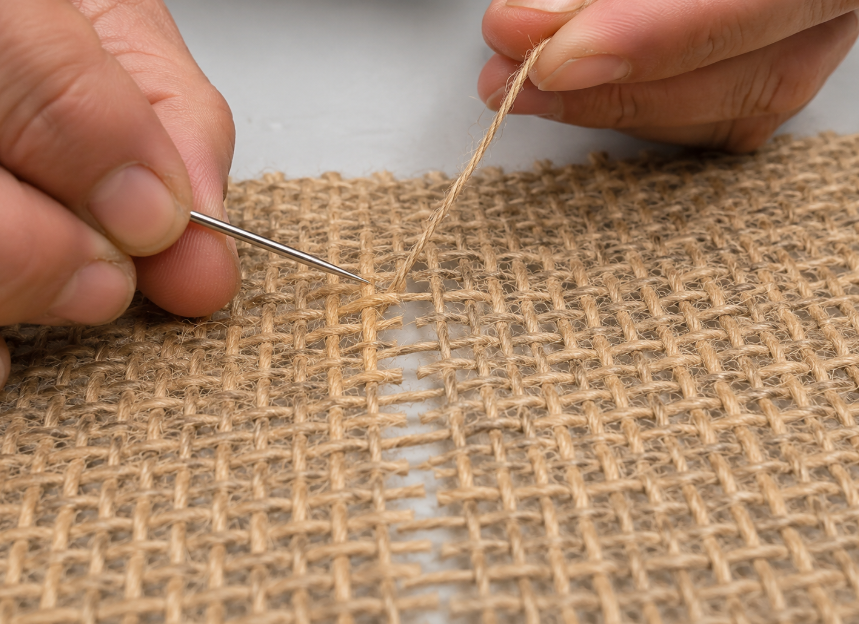
The pulled-thread cutting method involves extracting a single vertical yarn strand from the weave to serve as a precise, fray-minimizing cut path. This physical technique works on all natural jute burlap weights and prevents diagonal cuts that sever warp and weft fibers at unstable angles.
To execute this method, first measure your desired cut line on the burlap yardage. Use a tapestry needle or pin to isolate a single vertical warp thread at that mark. Pull the thread gently upward away from the weave. The strand will slide out completely, leaving a clean, transparent visual channel through which your scissors can glide without cutting across adjacent weave yarns.
Applying a 0.5-inch strip of lightweight fusible interfacing along the cut line creates a permanent chemical-mechanical bond that prevents fraying during cutting and sewing. The fusible interfacing tape method is the most effective permanent stabilization technique for structured upholstery, heavy-duty utility bags, and home decor items that require frequent handling.
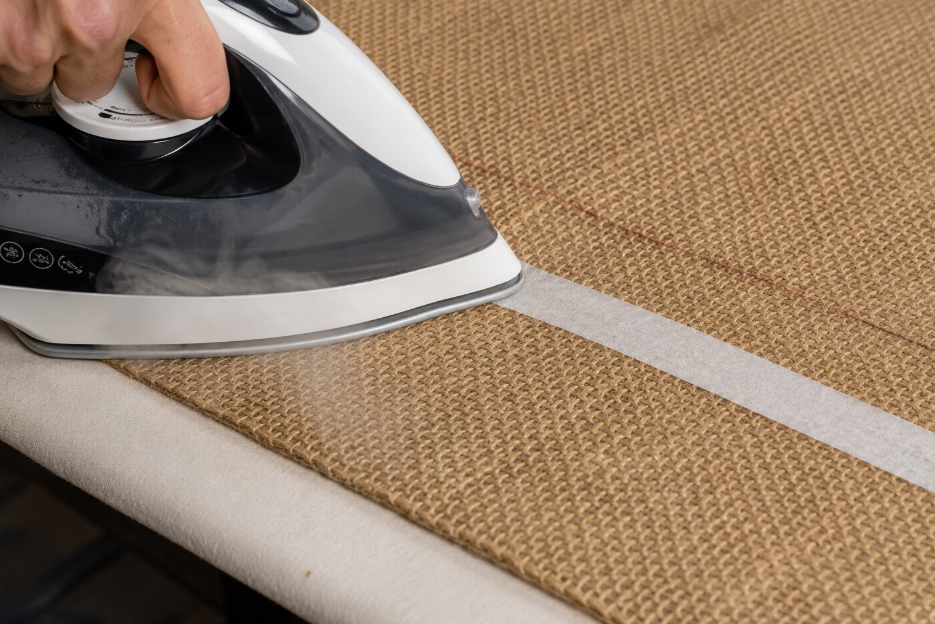
To execute this method, cut a 0.5-inch wide strip of lightweight, iron-on fusible interfacing tape. Position the adhesive side of the tape directly along your marked cutting line on the underside of the burlap. Set your dry iron to medium heat and press the tape firmly onto the burlap for 10 to 15 seconds. Let the adhesive cool completely to establish the mechanical bond, then cut straight down the middle of the stabilized strip.
Applying a diluted PVA adhesive mixture along the cut path seals the loose raw yarns without rendering the fabric too rigid for machine needles to penetrate. Standard craft guides recommend painting raw edges with undiluted glue, which makes the burlap rock-solid and causes sewing needles to deflect or break.
To execute this method, mix standard white PVA school glue or Mod Podge at a 1:1 ratio with warm water. Lay the burlap on a flat plastic sheet. Dip a small foam brush into the mixture and lightly dab a 0.5-inch wide line along your marked seam allowance path. Always use a soft foam brush to apply the diluted mixture, as standard bristles can catch and pull the raw jute fibers. Allow the chemical adhesive to dry completely for 30 minutes, then cut straight through the center of the glued path.
Sewing natural burlap on a standard machine requires a sharp, heavy-duty Denim or Jeans needle in Size 90/14 or Size 100/16 and 100 percent long-staple polyester thread. Standard universal sewing machine needles possess a slightly rounded point that deflects off coarse jute strands, resulting in skipped stitches, bent needles, and thread nests inside the bobbin case. According to sewing needle manufacturing specifications, jeans needles feature a reinforced blade and a sharp, modified medium ballpoint that cleanly penetrates dense utility fabrics.
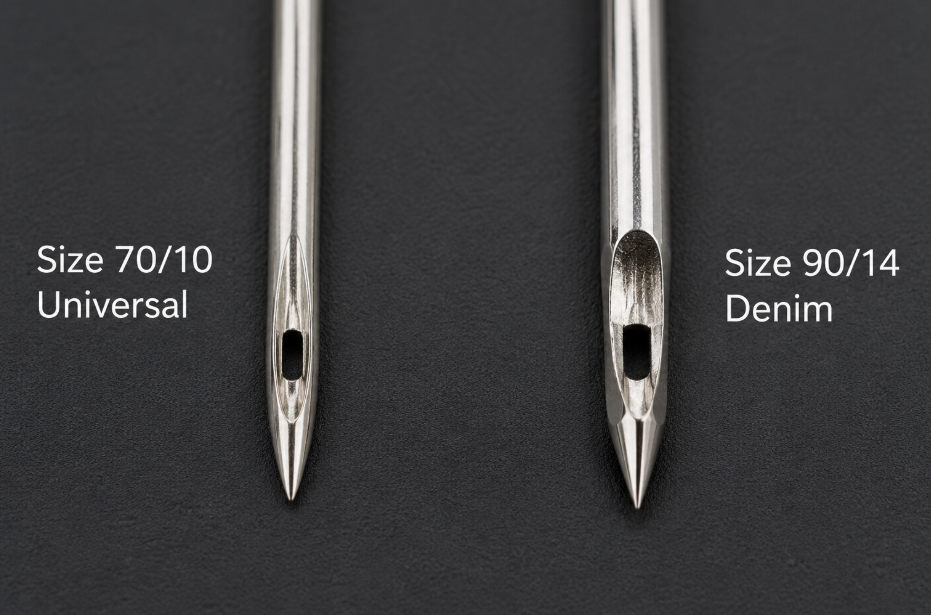
We configure our sewing machines with the exact parameters listed in the matrix below to guarantee mechanical consistency:
| Fabric Weight Class | Recommended Needle | Thread Material | Ideal Stitch Selection | Stitch Length (mm) | Stitch Width (mm) |
|---|---|---|---|---|---|
| Lightweight (7 oz) | Size 90/14 Denim | 100% Polyester | 3-Step Zigzag | 1.5 mm to 1.75 mm | 3.5 mm to 4.0 mm |
| Mediumweight (10 oz) | Size 90/14 Denim | 100% Polyester | 3-Step Zigzag | 1.75 mm to 2.0 mm | 4.0 mm to 4.5 mm |
| Heavyweight (12 oz+) | Size 100/16 Denim | 100% Polyester | 3-Step Zigzag | 2.0 mm to 2.5 mm | 4.5 mm to 5.0 mm |
Besides needle selection, we must adjust the machine’s feeding mechanism. Jute fibers are coarse and bulky, which can cause standard feed dogs to slip. We recommend installing a walking foot or even-feed presser foot attachment to feed the top and bottom layers of the burlap through the machine at a uniform rate.
The most effective machine stitch to lock a raw burlap edge is a wide, short zigzag stitch set to overcast the fabric border. We utilize two specific stitch configurations depending on whether we are finishing a raw edge or joining structural panels.
Zigzag overcasting binds the loose weft and warp threads directly along the raw border of the burlap. We configure our stitch width to 4.5mm and our stitch length to a shortened 1.75mm to increase stitch density.
Position the pre-treated fabric under the presser foot so that the needle’s rightward swing drops slightly off the raw edge of the burlap. As you sew, the zigzag thread wraps completely around the raw border, locking the loose vertical and horizontal yarns into a secure, flexible edge finish.
Straight stitches are used to join burlap panels together, but because the weave is loose, the seam must be backed by a stable lining fabric to prevent the stitches from pulling out under weight. We recommend pairing natural jute with our heavy-duty natural cotton duck cloth white to serve as a protective structural backing. Our cotton canvas yardage is classified under the numbered duck system weight chart and provides high-tensile resistance.
To construct this seam, place the cotton duck lining fabric directly beneath your burlap layer, aligning the raw edges. Insert a Size 100/16 Jeans needle and set your machine to a straight stitch with a standard length of 2.5mm to 3.0mm. Sew your joining seam exactly 0.5 inches from the raw edge, stitching through both the burlap and the canvas backing simultaneously. The canvas lining absorbs the physical pulling tension, protecting the loose burlap fibers from separating.
We must clean our sewing machine’s bobbin housing and feed mechanism after sewing every two yards of natural burlap fabric. Jute is a high-shedding natural plant fiber that releases fine, highly abrasive cellulose dust during the needle puncture process. In our custom cut-and-sew facility, we have verified that this damp-towel technique reduces airborne jute fibers by up to 80 percent. This cellulose lint rapidly absorbs machine lubricant, clogs tension discs, and can jam the hook mechanism if left to accumulate.
We execute the following workspace and machine maintenance checklist to prevent equipment damage:
No. Machine-washing raw, un-finished natural burlap will cause the loose plain-weave structure to completely disintegrate in the water drum, creating massive amounts of loose cellulose lint that can clog and ruin your washing machine’s drain pump. Always stabilize, stitch, and finish the raw edges of your project before hand-washing or spot-cleaning burlap items.
To clean burlap lint, first disconnect your machine from power and open the needle plate. Use a small nylon cleaning brush or a specialized micro-vacuum attachment to physically pull the loose fibers out of the feed dogs and the bobbin housing. Avoid using canned air, as this forces the abrasive jute dust deeper into the internal gear components of your machine.
To stop burlap edges from fraying without any sewing, apply a 1:1 mixture of water-soluble white PVA school glue and warm water along the cut path with a foam brush, or use a specialized liquid fray preventer. Once dry, the chemical adhesive binds the loose yarns permanently, though it will render the edge stiff.