
Linen vs cotton is not a universal “which fabric is better” decision. Linen is usually the better choice when you want crisp texture, quick moisture release, visible natural character, and long-wearing structure; cotton is usually the better choice when you want softness, broad availability, easier sourcing, and a wider range of weights, weaves, and finishes. The right fabric depends on the project, because a light cotton voile, heavy cotton duck, apparel linen, and linen canvas can behave very differently even when they are all plant-based fabrics.
For fabric buyers, the practical question is not only “linen or cotton?” The better question is: which fiber, weave, weight, finish, width, and hand feel match the end use? Use linen when texture, crispness, quick drying, and long-term strength matter. Use cotton when comfort, versatility, printability, cost control, and a broad specification range matter.
Quick decision
Linen and cotton differ most clearly by fiber source, hand feel, moisture behavior, wrinkling, durability, cost, and use case. Linen is made from flax, while cotton is a seed-hair fiber from cotton plants; those different fiber sources help explain why linen often feels crisp and structured while cotton often feels softer and more familiar. Britannica identifies linen as fiber, yarn, and fabric made from the flax plant, describes cotton as a seed-hair fiber made mostly of cellulose, and states that linen is stronger than cotton, dries more quickly, and wrinkles because of low elasticity.
| Comparison point | Linen | Cotton | What to check before buying |
|---|---|---|---|
| Fiber source | Flax plant | Cotton plant seed-hair fiber | Confirm whether the fabric is 100% linen, 100% cotton, or a blend. |
| Typical hand feel | Crisp, textured, sometimes stiff at first | Soft, familiar, available in many finishes | Order swatches when hand feel matters. |
| Breathability and heat comfort | Often selected for warm, airy garments and home textiles | Also breathable, but performance depends heavily on weave and weight | Compare fabric weight, openness, and finish. |
| Moisture behavior | Absorbs and releases moisture quickly | Absorbs moisture well because of cotton fiber structure | Match moisture needs to use case: clothing, towels, covers, bags, or canvas. |
| Drying | Linen generally dries more quickly than cotton | Cotton can hold moisture longer depending on construction | Avoid assuming drying speed from fiber name alone. |
| Wrinkling | Wrinkles readily because linen has low elasticity | Wrinkles too, but many cotton fabrics can be finished or woven to reduce wrinkling | Decide whether wrinkles are a visual problem or part of the desired look. |
| Durability | Linen is described by Britannica as stronger than cotton | Cotton can be durable, especially in heavier constructions such as duck or canvas | Compare yarn, weave, weight, and abrasion needs. |
| Cost and sourcing | Often higher cost and narrower availability | Broadly available across many weights, widths, and finishes | Verify current price and availability before publication or purchase. |
| Better for | Crisp garments, textured home goods, artist canvas, natural texture | Apparel, home textiles, cotton duck projects, printing, bags, covers, utility goods | Choose by project specification, not fiber name alone. |
This linen vs cotton table shows the main trade-off: linen often wins on crisp texture, quick drying, and visible natural character, while cotton often wins on softness, availability, and specification range. The final choice still depends on the actual fabric construction, not the fiber name alone.
Source note: The fiber-source, linen strength, linen drying, linen wrinkling, and cotton cellulose claims in this table are based on cited textile references. Use-case recommendations are starting points and should be checked against the project specification, supplier data, and swatches.
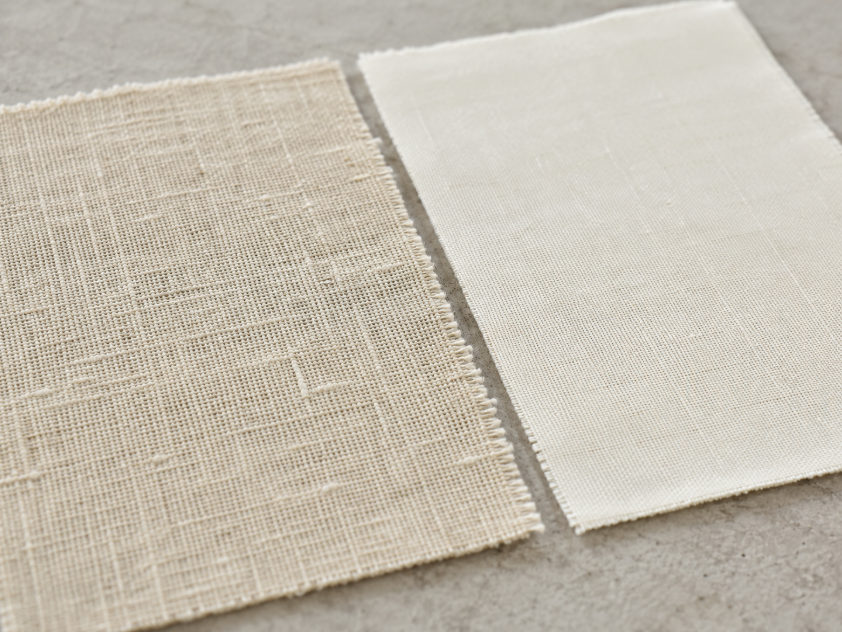
Linen is a flax-based textile, and cotton is a cotton-plant fiber used to make yarns and fabrics. Britannica defines linen as fiber, yarn, and fabric made from flax, and its cotton reference defines cotton as a seed-hair fiber made mostly of cellulose.
That source difference matters because linen and cotton do not start with the same plant structure. Linen comes from flax stalks, so linen is commonly discussed as a bast fiber. Cotton comes from fiber that grows around cotton seeds, so cotton is commonly discussed as a seed fiber.
In finished fabric, however, fiber source is only one part of performance. A soft cotton lawn, a heavy cotton duck, an open linen weave, and a dense linen canvas can all behave differently because yarn size, weave, fabric weight, and finishing change the final cloth.
Linen and cotton feel and perform differently because fiber structure and fabric construction work together. Linen’s flax origin contributes to a crisp, textured hand and low elasticity; cotton’s cellulose structure contributes to absorbency, softness, and broad finishing options. Britannica states that linen is stronger than cotton, dries more quickly, absorbs and releases moisture quickly, and wrinkles because low elasticity gives linen a hard, smooth texture.
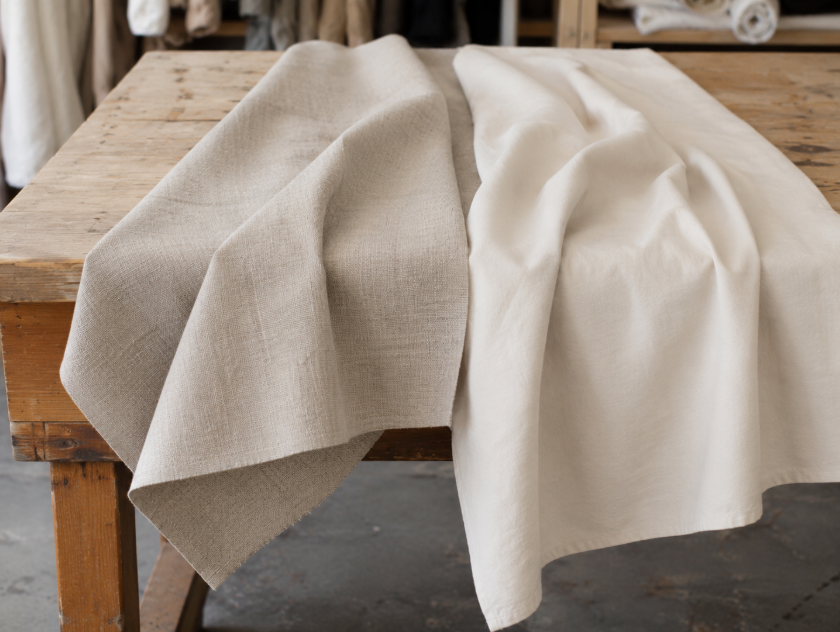
Cotton’s moisture behavior comes from its cellulose chemistry and internal fiber structure. Cotton Incorporated states that scoured and bleached cotton is 99% cellulose and explains that cellulose hydroxyl groups serve as sorption sites for water molecules. Cotton Incorporated also describes cotton fiber as having pores and capillary spaces that make the fiber accessible to liquids and vapors, which accounts for cotton’s wickability and absorbing capacity.
The practical takeaway is simple: fiber names do not replace specifications. Linen is not automatically right for every warm-weather garment, and cotton is not automatically soft, thin, or casual. A fabric buyer should compare the finished cloth by weight, weave, finish, width, hand, drape, opacity, care needs, and end use.
This guide compares linen and cotton by fiber source, fabric construction, weight, finish, hand feel, moisture behavior, wrinkling, durability, care, and end use. The comparison treats the fiber as the starting point, then checks whether the finished fabric actually fits the project. That approach prevents a common fabric-buying mistake: assuming that all linen fabrics behave alike or that all cotton fabrics behave alike.
The most useful linen vs cotton comparison is an attribute-by-attribute comparison, not a single winner. The same fiber can perform differently when it is woven loosely, woven densely, washed, coated, dyed, printed, waxed, or finished for a specific application.
Cotton usually feels softer at first touch, while linen usually feels crisper and more textured. That comparison is a practical buying rule, not a guarantee for every fabric. Brushed cotton, cotton jersey, cotton voile, cotton duck, washed linen, and linen canvas all create different hand-feel results.
Choose cotton when initial softness is the priority. Choose linen when visible texture, crispness, and natural character are part of the design.
Linen and cotton can both work in warm conditions, but breathability depends on fabric construction. Britannica notes that linen absorbs and releases moisture quickly and conducts heat well, which helps explain why linen garments can feel cool to wearers. Cotton can also feel comfortable in warm conditions, especially in lighter and more open constructions.
Choose linen for crisp warm-weather texture when wrinkles are acceptable. Choose cotton for warm-weather comfort when you need softer hand feel, easier laundering, or a specific cotton construction.
Linen absorbs and releases moisture quickly, while cotton is highly absorbent because of its cellulose structure and capillary spaces. Britannica describes linen as absorbing and releasing moisture quickly and drying more quickly than cotton. Cotton Incorporated explains cotton’s absorbing capacity through cellulose sorption sites and internal capillary spaces.
For garments and home textiles, linen is often chosen when quick moisture release and a crisp feel matter. Cotton is often chosen when absorbency, softness, and broad fabric availability matter. For bags, covers, upholstery, and canvas projects, moisture behavior must also be evaluated with the fabric finish, coating, and intended exposure.
Linen wrinkles readily because linen has low elasticity. Britannica directly connects linen’s low elasticity with wrinkling, so wrinkle behavior should be treated as a normal linen characteristic rather than a defect.
Cotton also wrinkles, but cotton fabric can be woven, blended, treated, or finished in many ways that affect wrinkle appearance. If a crisp, rumpled texture supports the design, linen can be a good fit. If a smoother appearance or easier maintenance matters more, compare cotton constructions or blends before selecting linen.
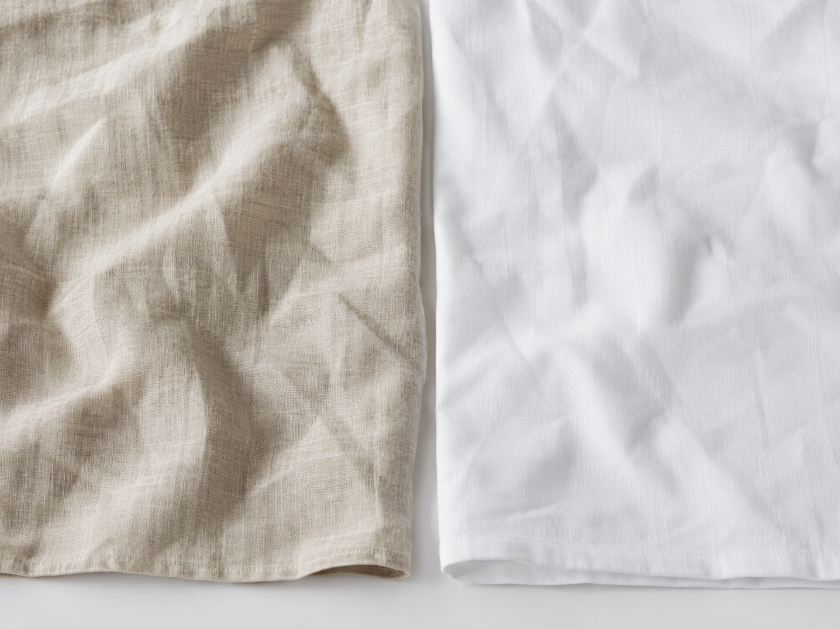
Linen has a strong durability argument at the fiber level, but cotton can be highly durable when the fabric construction is built for hard use. Britannica states that linen is stronger than cotton. Cotton fabrics can range from lightweight voiles and laces to heavy sailcloths and other durable constructions, so the finished fabric specification matters.
For utility goods, bags, covers, upholstery mockups, work aprons, banners, and structured projects, cotton duck or cotton canvas may be more suitable than apparel linen because the weave and weight create body. For artist canvas or specialty textile work, linen canvas may be the better fit when texture and painting surface are the priority.
Cotton is often easier to source and maintain, while linen often needs more tolerance for wrinkles and texture changes. Care requirements depend on whether the fabric is washed, dyed, printed, coated, preshrunk, blended, or finished. Do not assume a care method from the fiber name alone.
Before buying yardage or rolls, check the product’s care instructions, expected shrinkage, finish, and intended use. Exact shrinkage percentages should be stated only when supported by the specific fabric supplier or test method.
Choose linen or cotton by use case, because the same material can be right in one project and wrong in another. The recommendations below are starting points; final selection should be checked against weight, weave, width, finish, care requirements, and swatch results.
| Use case | Usually choose linen when… | Usually choose cotton when… | Specification check |
|---|---|---|---|
| Summer clothing | You want crisp texture, airflow, and visible natural character. | You want softness, easy laundering, or a familiar casual feel. | Compare weight, weave openness, opacity, and wrinkle tolerance. |
| Sheets and home textiles | You want textured, breathable bedding or a relaxed linen look. | You want softness, broad availability, and easier comparison across weaves and price points. | Compare weave, finish, care instructions, and hand feel. |
| Upholstery and decor | You want linen texture for decorative surfaces with appropriate backing or construction. | You need a wider range of durable canvas, duck, or home-decor constructions. | Verify abrasion needs, backing, weight, stability, and cleaning method. |
| Artist canvas | You want a linen painting surface or a specific textured art support. | You want cotton canvas or cotton duck for broad availability and project versatility. | Compare primed/unprimed status, weight, width, and surface texture. |
| Bags and utility goods | You want visible linen texture for lighter or decorative goods. | You need structure, body, and a broad range of heavy cotton duck options. | Compare ounces per square yard, duck number, width, and finish. |
| Printing and custom fabric work | You want linen texture as part of the printed result. | You want cotton’s familiar print surface and broad construction range. | Test print result, color behavior, hand, opacity, and finish. |
| Institutional or brand sourcing | You need linen’s specific texture and fiber story. | You need repeatable specifications, roll availability, and cost control. | Confirm roll size, lead time, dye lot, finish, and sample approval. |
In practice, linen is the stronger fit when the surface character and crisp hand are part of the design. Cotton is the stronger fit when the project needs broad sourcing options, repeatable specifications, easy sampling, or a heavy canvas/duck construction. For either fabric, swatches and product specifications should confirm the final choice before ordering yardage or rolls.
For artist-canvas decisions, use Canvas ETC’s guide to linen canvas fabric and the related guide to differences between cotton and linen canvas as deeper next steps. For structured cotton projects, compare duck canvas by weight and cotton duck product options before choosing a final cloth.
To compare linen and cotton before buying, first check the fabric specification, then review a swatch, and then calculate the project yardage. The most reliable comparison uses the same end-use conditions: the same project, the same expected wear, the same cleaning method, and the same visual requirements.
Use this checklist before buying cut yardage, full rolls, or production fabric:
| What to check | Why it matters |
|---|---|
| Fiber content | Confirms whether the fabric is linen, cotton, or a blend. |
| Weight | Controls body, opacity, structure, and suitability for bags, apparel, decor, or canvas. |
| Width | Affects yield, cutting layout, seams, and cost per finished item. |
| Weave | Changes strength, drape, texture, air movement, and print surface. |
| Finish or coating | Changes water behavior, stiffness, cleaning, and print compatibility. |
| Hand feel | Determines whether the fabric feels soft, crisp, stiff, smooth, or textured. |
| Drape | Determines whether the fabric hangs, folds, or stands away from the body or frame. |
| Opacity | Matters for clothing, curtains, backdrops, bags, and printed goods. |
| Wrinkle behavior | Matters when a smooth appearance is part of the product requirement. |
| Care requirements | Controls laundering, shrinkage risk, pressing, and customer instructions. |
| Print or dye behavior | Matters for custom fabric, branding, artwork, and production consistency. |
| Swatch approval | Reduces the risk of choosing the wrong hand, color, texture, or weight. |
A fabric swatch is most useful when hand feel, drape, opacity, color, finish, or print response affects the finished item. For real-world selection, order fabric swatches or samples before committing to yardage or rolls when texture, drape, print result, or opacity affects the finished product. If quantity is the question, use the fabric yardage calculator after choosing the material type.
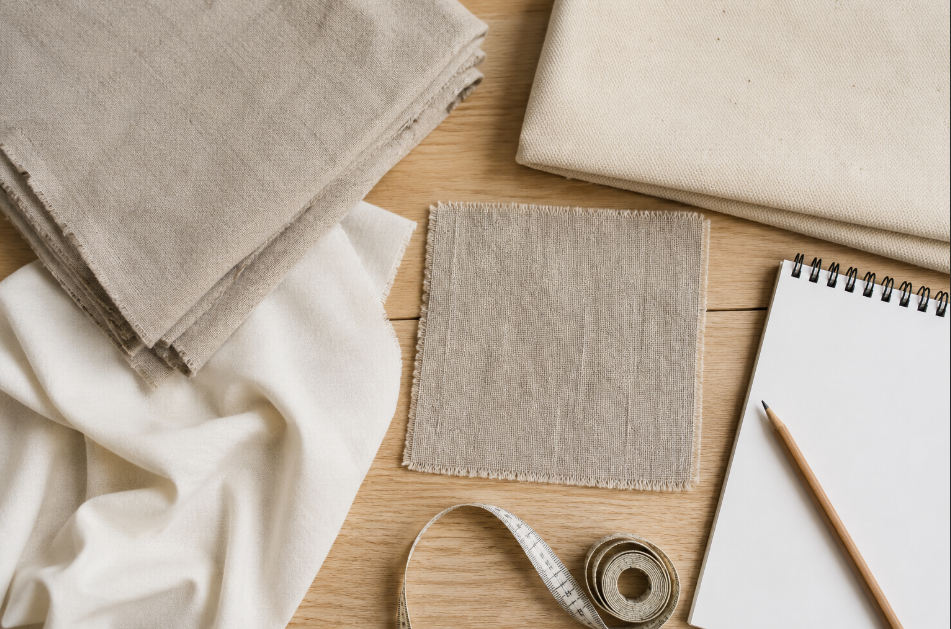
The most common mistake is choosing between linen and cotton by fiber name alone. Fiber source matters, but finished fabric performance depends on yarn, weave, weight, finish, coating, width, and care requirements.
A second mistake is assuming that all cotton fabric feels like soft apparel cotton. Cotton duck, numbered duck, canvas, muslin, voile, jersey, twill, and denim are all cotton-based or cotton-adjacent fabric categories with different structure and hand. A heavy cotton duck can be much stiffer than a light linen fabric.
A third mistake is treating wrinkles as a failure in linen. Linen’s wrinkle tendency comes from low elasticity, so linen is a better fit when a relaxed or textured appearance is acceptable. If the project needs a smooth, pressed, low-wrinkle look, cotton constructions, blends, or finished fabrics may be easier to evaluate.
A fourth mistake is skipping swatches for visual or tactile projects. Online specifications can describe weight, width, content, and finish, but a swatch shows how the fabric actually feels, folds, catches light, accepts print, and coordinates with other materials.
Core linen and cotton definitions can be stated with confidence when they are tied to authoritative textile references. Britannica supports the flax origin of linen and identifies several general linen properties, including strength, faster drying, moisture release, heat conduction, and wrinkling from low elasticity. Britannica and Cotton Incorporated support the cotton side of the comparison by describing cotton as a cellulose-rich seed-hair fiber and explaining cotton’s cellulose chemistry and capillary structure.
Several common linen vs cotton claims need caution. Do not claim that linen is always more sustainable than cotton unless the comparison defines farming method, water use, processing, dyeing, finishing, laundering, lifespan, certification, and disposal. Do not claim that linen is hypoallergenic, antibacterial, or medically preferable without medical or peer-reviewed evidence. Do not claim exact price, availability, shrinkage, or product performance unless the specific fabric page, test method, or product data supports the claim.
Linen is better than cotton when the project needs crisp texture, quick moisture release, visible natural character, and long-term fiber strength. Cotton is better than linen when the project needs initial softness, broad availability, easier sourcing, and many weight and weave options. The better choice depends on the finished fabric specification and end use.
Cotton is better than linen for many projects that need softness, versatility, print compatibility, easy sourcing, or a wide range of canvas and duck constructions. Cotton is not automatically better for every project, because linen can be a stronger fit when the design calls for crisp texture, quick drying, and a distinct natural surface.
Linen generally wrinkles more than cotton because linen has low elasticity. Britannica connects linen’s low elasticity with wrinkling, so wrinkles should be expected in many linen fabrics rather than treated as a surprise defect.
Linen often feels cool in warm conditions because it absorbs and releases moisture quickly and conducts heat well, according to Britannica’s linen reference. Cotton can also be comfortable in warm conditions, especially in lighter and more open constructions. For clothing, compare the specific fabric weight, weave, and finish before deciding.
Linen has a strong fiber-level durability argument because Britannica describes linen as stronger than cotton. The finished fabric still matters. A heavy cotton duck can be more suitable for a utility bag than a lightweight linen shirting because construction and weight determine whether the fabric fits the job.
Linen is often chosen for sheets when the buyer wants texture, airflow, and a relaxed look. Cotton is often chosen for sheets when the buyer wants softness, broad availability, and easier comparison across weaves and price points. Sheets are a narrower use case than the whole linen vs cotton fabric decision, so compare weave, finish, care instructions, and hand feel.
Cotton is often easier to evaluate for upholstery and decor because cotton canvas, duck, twill, and other constructions are available in many weights and finishes. Linen can work for decorative upholstery when the desired look is textured and natural, but upholstery decisions should also check abrasion requirements, backing, cleaning method, dimensional stability, and expected wear. For a full upholstery decision, use or create a separate upholstery-specific guide.
A linen-cotton blend can combine some linen texture with some cotton softness, depending on the blend ratio, yarn, weave, and finish. Blends should not be judged by fiber names alone. Evaluate the actual cloth for hand feel, wrinkle behavior, opacity, weight, care, and end use.
Order swatches before choosing linen or cotton when hand feel, drape, opacity, color, print result, or surface texture affects the final product. A swatch is especially useful for apparel, upholstery, artist canvas, bags, branded goods, and custom printing because the finished fabric must match the project, not just the fiber category.
Linen may have environmental advantages in some contexts, and cotton may have advantages in others, but a responsible sustainability comparison needs a defined scope. Farming method, water use, pesticide use, processing, dyeing, finishing, laundering, product lifespan, certifications, and end-of-life handling all affect the answer. Do not treat “linen is more sustainable than cotton” as a universal claim without source-specific evidence.
The next step after comparing linen and cotton is to test the real fabric against the project requirements. Start with a swatch when touch, texture, drape, opacity, or print result matters. Then confirm weight, width, weave, finish, care, and yardage before ordering cut yardage or full rolls.
For Canvas ETC fabric planning, use these task-based next steps: