
Budget fabric for large projects is fabric that keeps the total project cost low while still meeting the project’s required material, width, weight or denier, finish, color consistency, and order quantity. We do not define budget fabric as the lowest price per yard. A fabric can cost more in the finished project if it creates excess waste, extra seams, rework, mismatched dye lots, or unsupported performance risk.
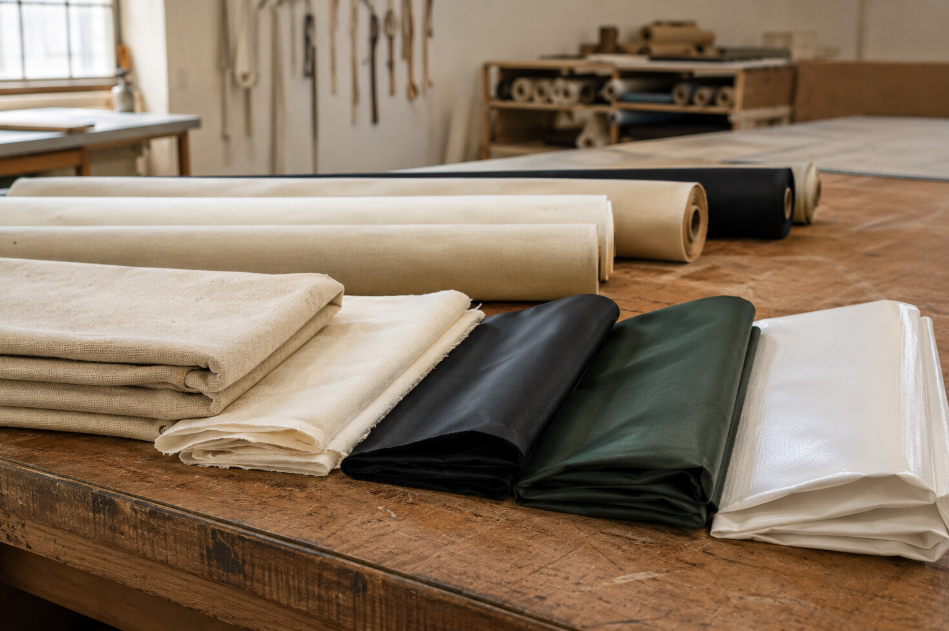
This guide covers textile fabric for sewing, production, display, backdrop, cover, bag, craft, and similar fabric projects. It does not cover landscape fabric, geotextiles, or construction ground-cover materials.
Budget fabric for large projects is a fabric sourcing decision, not a single fabric type. We compare fabric by usable cost, project fit, continuity risk, and verification steps before a buyer commits to yardage, bolt, roll, roll-end, or full-roll quantities.
| Decision Factor | What It Means | Why It Matters for Large Projects |
|---|---|---|
| Material | Cotton, canvas, muslin, nylon, polyester, vinyl-coated polyester, mesh, or another textile class | Material affects hand, body, drape, strength, finish compatibility, sewing behavior, and end use |
| Width | The usable fabric width after accounting for cutting, edge waste, layout, and any shrinkage allowance | Width affects yardage, seam count, panel layout, and cost per usable yard |
| Weight or denier | Ounces per square yard for many canvas fabrics; denier for many synthetic fabrics | Weight and denier help describe body, thickness, and expected application fit |
| Finish or coating | Untreated, dyed, waxed, vinyl-coated, FR, IFR, NFR, or another documented finish | Finish affects suitability, care, venue requirements, and performance assumptions |
| Purchase unit | Fabric by the yard, fabric by the bolt, fabric by the roll, roll end, or full roll | Purchase unit affects continuity, reorderability, leftover fabric, and buying risk |
| Dye lot | A production or finishing batch that can affect fabric color consistency | Dye lots matter when panels, products, or sets must match visually |
| Swatch result | A small sample used to check color, hand, opacity, texture, finish, and approximate weight | Swatches reduce the risk of choosing the wrong material before a large order |
| Reorderability | The likelihood that the same fabric, color, finish, and lot can be ordered again | Reorderability matters when the project may expand, repeat, or require repairs |
How we evaluate budget fabric for large projects: we start with the end use, then compare material, usable width, weight or denier, finish, color continuity, order quantity, and reorder risk. Product-specific decisions should be confirmed against the current product page, project requirements, and any required documentation before purchase.
Budget fabric for a large project is fit-for-use textile fabric with the lowest practical total cost for the job. The right choice is not always the fabric with the lowest listed yard price, because a low yard price can be offset by narrow width, poor layout efficiency, unsuitable weight, finish mismatch, color variation, or limited reorderability.
For large projects, the budget decision includes at least five checks: the fabric must suit the finished use, the width must work with the layout, the material must meet the project’s handling and durability needs, the color or lot must be consistent enough for visible areas, and the purchase quantity must match the project plan.
Use this working definition before comparing options:
Budget fabric for large projects = fit-for-use textile fabric with the lowest total usable project cost.
That definition keeps the decision centered on the finished project instead of a single price number.
Yard price alone is incomplete for large projects because usable width, cutting waste, seam count, shipping, sampling, and reorder risk can change the real project cost. A lower-priced narrow fabric may require more yardage than a wider fabric. A discounted fabric may also cost more overall if it cannot be reordered or if different dye lots create visible mismatch.
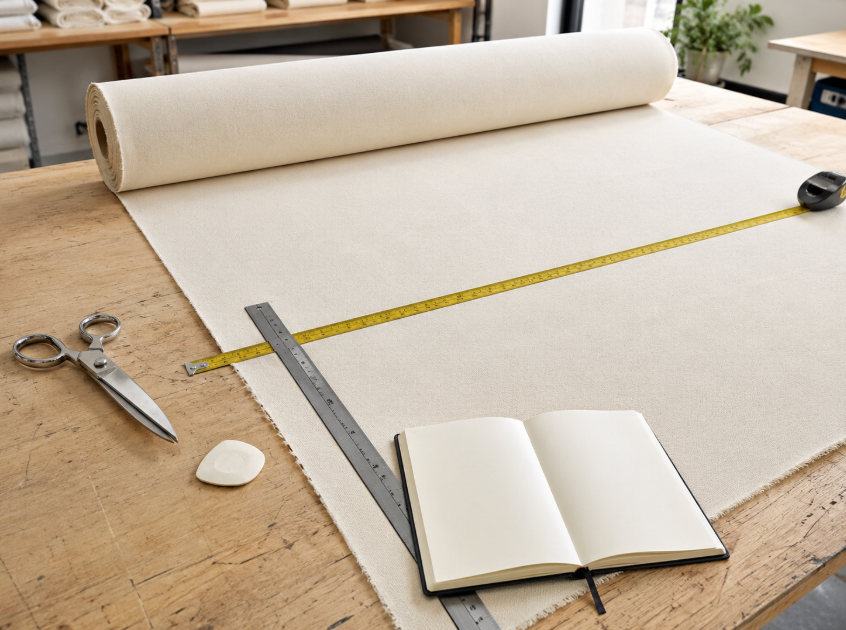
Use this planning formula before comparing fabric options:
| Cost Factor | Planning Check |
|---|---|
| Estimated fabric cost | Price per yard × yards required |
| Usable width | Listed width minus unusable edge, trimming, cutting allowance, or shrinkage allowance when relevant |
| Cost per usable yard | Total fabric cost ÷ usable yards |
| Cost per usable square yard | Total fabric cost ÷ usable square yards |
| Risk adjustment | Add expected cost for waste, sampling, shipping, reorders, leftover material, or rework |
For measurement planning, use our fabric yardage calculator after you know the project dimensions and the fabric width.
Cost per usable yard compares what the project can actually use, not only what the fabric listing shows. A fabric’s listed width may not equal the final usable width if the project requires seam allowance, pattern matching, shrinkage allowance, clean panel edges, or trimming.
A practical comparison rule is simple: compare budget fabric by usable yield. The project cost depends on fabric price, usable width, waste, and whether enough consistent fabric can be ordered for the full project.
Fabric width affects how many seams, cuts, and yards a large project needs. Wide fabric can reduce seams for backdrops, curtains, panels, covers, and display work. Narrower fabric can still be efficient for bags, pouches, repeated parts, and projects where panel width is not the limiting factor.
| Project Constraint | Why Width Matters | Buying Implication |
|---|---|---|
| Large flat panels | Wider fabric can reduce seam count | Compare cost per usable square yard |
| Repeated cut pieces | Width affects layout efficiency | Test the cutting layout before buying quantity |
| Matching panels | Width and dye lot both affect consistency | Confirm fabric width and lot before ordering |
| Heavy fabric | Wider heavy fabric can be harder to handle | Balance yield with cutting and sewing capacity |
| Printed fabric | Width affects layout, repeat, and print planning | Confirm both print width and fabric width before production |
Budget fabric options should be chosen by project type, required attributes, and acceptable risk. A fabric that works for a studio backdrop may not work for a heavy-duty bag, coated cover, outdoor-facing use, or venue-regulated installation. Use the matrix below to narrow the fabric class, then verify the current product page and project requirements before ordering.
| Large Project Type | Fabric Class to Consider | Attributes to Verify | Avoid When | Possible Canvas ETC Path |
|---|---|---|---|---|
| Tote bags, storage bins, utility pouches, craft goods | Cotton duck or canvas | Weight, width, weave, shrinkage behavior, color, hand | Avoid when the project requires a documented coating, water-resistance rating, or synthetic performance | Start with canvas options such as 10 oz cotton duck fabric or compare weights with our guide to duck canvas by weight |
| Backdrops, mockups, patterning, display panels | Muslin or wide cotton fabric | Width, opacity, finish, flame classification if required, shrinkage behavior | Avoid when the project requires abrasion resistance, exterior exposure, or a documented performance finish | Review options such as NFR muslin fabric and verify project requirements before ordering |
| Lightweight covers, linings, bags, or technical soft goods | Denier nylon or polyester | Denier, coating, weave, width, backing, sewing compatibility, color | Avoid when the project requires cotton hand, breathability, or documentation not provided for the selected fabric | Use our guide to choose denier fabric before selecting a specific product |
| Repeated utility components or synthetic fabric projects | 600D polyester or related denier fabrics | Denier, backing, coating, width, color, and intended use | Avoid when the exact finish or backing is not documented for the project use | Review options such as 600 denier polyester and verify current specifications |
| Heavy-duty covers, coated panels, or protective applications | Vinyl-coated polyester or coated fabric | Base fabric, coating, weight, width, flexibility, cleaning needs, documented performance | Avoid when the project requires waterproof, marine-grade, or compliance claims that are not documented | Review options such as 18 oz vinyl-coated polyester and confirm the required documentation before purchase |
| Event drape, trade-show, stage, or venue applications | Drape, muslin, IFR, FR, or NFR fabric when required | Width, opacity, drape, flame classification, certificate status, venue requirements | Avoid unverified flame-resistance claims or undocumented substitutions | Verify the venue requirement before selecting IFR, FR, or NFR fabric |
This matrix is a selection aid, not a final specification. Before buying quantity, confirm the product name, width, color, finish, fabric class, lot requirements, and any required performance documentation.

Fabric by the yard, fabric by the bolt, and fabric by the roll differ by quantity, continuity, commitment, and reorder risk. Cut yardage is better for testing and smaller runs. Bolt or roll purchasing can make sense when the project needs more continuous yardage or stronger lot control, but savings and availability must be verified for the specific fabric and order.
| Purchase Unit | Best Used When | Main Advantage | Main Risk | What to Verify |
|---|---|---|---|---|
| Fabric by the yard | You are testing, prototyping, or buying a smaller quantity | Lower initial commitment | Reorder and dye-lot mismatch risk if the project grows | Width, dye lot, reorderability, return rules |
| Fabric by the bolt | You need more quantity than cut yardage and the fabric is sold that way | Better continuity than scattered small cuts | Bolt length, pricing, and availability vary by fabric | Bolt length, lot, price, condition, return policy |
| Fabric by the roll | You need continuous yardage or a production quantity | Stronger continuity planning | Higher upfront cost and leftover fabric risk | Roll length, lot, freight, storage, lead time |
| Roll ends | You can use a known remaining quantity | Can fit projects with fixed yardage needs | Limited yardage and limited reorderability | Remaining length, width, lot, condition |
| Full rolls | You need consistency across a larger project | Better planning for production runs | Requires a larger commitment | Full-roll price, lot, availability, storage, lead time |
For a deeper comparison, see our guide to fabric roll ends vs full rolls. If you are comparing suppliers before placing a large order, use our guide on how to compare fabric suppliers.
Swatches and dye-lot checks reduce the risk of choosing the wrong fabric for a large project. A swatch helps evaluate color, hand, opacity, finish, texture, and approximate weight before the order becomes expensive to correct. A dye-lot check helps reduce visible mismatch when the project uses panels, sets, or repeated components.
Order or request swatches when the project depends on any of these factors:
For sampling, review our printed fabric swatches and samples before committing to larger yardage. A swatch helps evaluate material fit, but the final order still needs lot, width, and availability verification when matching matters.
Dye lots affect color consistency because fabric produced or finished in different batches may not match exactly. Dye-lot risk matters most when fabric pieces are visible side by side or when a project may require later reorders.
Use this checklist before buying quantity:
| Check | Why It Matters |
|---|---|
| Confirm the total project quantity before ordering | Reduces the chance of needing a later reorder from a different lot |
| Ask whether the order can ship from one dye lot | Supports color consistency across visible fabric |
| Keep product labels, lot details, and order records | Helps with future troubleshooting or reorder questions |
| Avoid mixing unverified dye lots in visible areas | Reduces the chance of noticeable color mismatch |
| Use swatches to compare color and finish | Helps catch wrong-material decisions before bulk purchase |
For a deeper color-continuity check, see our guide on how to match dye lots on discount fabric before you buy.
Roll ends, seconds, and closeouts can fit budget fabric projects when the available quantity, condition, and reorder limits match the project. These options require more caution than standard first-quality yardage because the fabric may have limited remaining quantity, disclosed flaws, or limited future availability.
| Budget Option | Use When | Avoid When | Verification Needed |
|---|---|---|---|
| Roll ends | The project can use a known remaining quantity | The project may need more matching yardage later | Remaining length, width, lot, condition |
| Seconds | The project can work around disclosed flaws | The finished item requires first-quality appearance throughout | Defect type, defect location, usable yield |
| Closeouts | The project does not require future reorders | The project requires long-term availability | Quantity available, reorder status, color, finish |
| Clearance fabric | The specs fit the project and the available quantity is enough | The lower price is the only reason for choosing it | Specs, condition, return rules, lot |
For a deeper quality-risk comparison, see our guide to first-quality vs seconds vs closeout fabric. Do not choose roll ends, seconds, or closeouts for a large project unless the usable quantity and condition are suitable for the finished use.
A large-project fabric order should be planned in sequence: define the use, estimate the yardage, verify fabric attributes, sample the fabric, confirm continuity, and then choose the purchase unit. This sequence reduces the chance that a low yard price becomes a costly mistake.
For common ordering errors, review our guide to fabric-by-the-yard mistakes.
Performance claims need documentation before a buyer uses budget fabric in a large project. Terms such as water-resistant, waterproof, flame-retardant, inherently flame-retardant, non-flame-retardant, marine-grade, mil-spec, abrasion-resistant, or outdoor-rated should be checked against the product listing, supplier documentation, certificate, test method, or project requirement.
| Claim Type | Do Not Rely On Without | Safer Buying Question |
|---|---|---|
| Lowest price or cheapest | Current comparative pricing data | What is the total usable project cost? |
| In stock or available | Current inventory confirmation | Can the needed quantity be supplied for this order? |
| Quantity discount or full-roll savings | Current sales policy and quote details | Does quantity pricing apply to this fabric and order size? |
| Waterproof | Product documentation or test evidence | What water-resistance or waterproof documentation applies? |
| FR, IFR, or NFR | Flame classification documentation or certificate where required | What flame classification does the venue or project require? |
| Marine-grade | Product specification and use-case documentation | Is this fabric documented for the marine environment? |
| Mil-spec | Exact specification and compliance documentation | Does the fabric match the exact required specification? |
| Best fabric | A visible methodology and evidence | Which fabric fits this project’s required attributes? |
This verification step matters most when the finished project will be used outdoors, in a venue, in an institution, for protective applications, or in any setting where fabric failure could create safety, compliance, replacement, or rework costs.
The cheapest fabric for a large project cannot be identified by yard price alone. The lower-cost choice is the fabric that meets the project’s requirements with the lowest usable cost after width, waste, seams, shipping, sampling, dye-lot risk, and rework risk are considered.
Budget fabric is not the same as low-quality fabric. Budget fabric is a cost-conscious fabric choice that still fits the project’s material, width, weight, finish, durability, and appearance requirements. Low-quality fabric becomes expensive if it causes failure, mismatch, waste, or replacement.
Buy fabric by the yard when you are testing, prototyping, or working on a smaller quantity. Consider fabric by the bolt or fabric by the roll when the project needs more continuous yardage, stronger lot control, or production planning. Verify the supplier’s bolt length, roll length, quantity pricing, and return policy before buying.
Swatches are recommended when the fabric’s color, hand, stiffness, opacity, finish, printability, or weight affects the finished project. A swatch does not remove every risk, but it can reveal a wrong material before the buyer commits to large yardage.
Dye lots matter because fabric from different production or finishing batches can vary in color. Dye-lot differences are most visible when panels, bags, covers, drapes, or repeated components are placed side by side. Ask whether the full order can be filled from one lot when color consistency matters.
Do not mix unverified dye lots in visible side-by-side areas when color consistency matters. If different lots must be used, separate them by location, use them in less visible areas, or confirm the color difference is acceptable before cutting.
Roll ends can work for large projects only when the remaining yardage is enough and the project does not require easy reorders. Roll ends are riskier for projects that need future matching yardage, consistent color across many pieces, or strict first-quality appearance.
Seconds and closeout fabrics can be worth considering when the project can accept disclosed flaws, limited quantities, or limited reorderability. They are risky when the project requires flawless appearance, exact color matching, future reorders, or documented performance.
The right fabric width depends on the project layout. Wide fabric can reduce seams and waste for panels, curtains, backdrops, and covers. Narrower fabric can still be efficient for repeated small pieces. Compare usable width against the cutting layout before choosing.
After narrowing the fabric class, estimate yardage, order swatches, and verify any large-project constraints before buying quantity. Use our fabric yardage calculator for measurement planning, use printed fabric swatches and samples to check material fit, and verify current product specs, dye lot, availability, and purchase-unit options before committing to a large order.
Recommended publication note: Review product specs, stock-dependent language, purchase-unit policies, swatch options, dye-lot handling, and performance documentation before publishing or updating this page.