
We compare upholstery material by test method, construction, finish, cleaning, exposure, fabrication, and end use, not by fiber name, weight, or denier alone.
July 11, 2026: We reviewed current ACT and ASTM test guidance, U.S. CPSC upholstered-furniture guidance, and the linked Canvas ETC product pages. Standards, regulations, product specifications, and availability can change; verify the current technical packet before ordering production yardage.
High-traffic furniture performs best when we specify the complete upholstery system, not when we choose a fiber name in isolation. Our default shortlist is a tightly constructed, upholstery-engineered synthetic or performance textile with current abrasion, pilling, seam, cleaning, and project-compliance data. Natural materials, protected leather, coated upholstery, wool blends, microfiber, and cotton duck can all be right in narrower conditions. ACT and ASTM guidance also limits what abrasion numbers prove: method, construction, care, environment, and furniture design still affect field performance. The best fabric is therefore the one whose documented properties match the actual seat, hazards, maintenance plan, and compliance scope.
A tightly woven, upholstery-engineered performance synthetic with a complete, current technical packet.
30,000 Wyzenbeek double rubs or 40,000 Martindale cycles for woven indoor high-traffic/public-space upholstery.
Do not convert Wyzenbeek and Martindale results; ACT states that the methods do not correlate.
Abrasion is a laboratory screen, not a forecast of years in service. Whole durability Pilling, seam slippage, breaking strength, cleaning, colorfastness, coating behavior, furniture construction, and compliance can change the outcome.
Ounces per square yard and yarn denier are specification fields, not upholstery verdicts.
We built this guide from three evidence layers. First, we used the ACT high-traffic woven upholstery guideline, ACT physical-property guidance, and the public summary for ASTM D4966-22 to define what abrasion and supporting tests can and cannot tell us. Second, we checked the CPSC upholstered-furniture FAQ so durability advice would not be confused with U.S. flammability compliance. Third, we audited five Canvas ETC product pages for material, weight or denier, width, weave, finish, coating, stated end use, and visible upholstery-test evidence.
This was a source and specification review, not a hands-on wear test. We did not assign product scores, estimate years of life, or treat missing data as failure. For a wider discussion of style, maintenance, and budget, our broader upholstery-fabric selection guide is the useful next read; this page stays focused on heavy use and technical qualification.
We use the following categories as a non-ranked decision framework, not as a measured universal ranking. The exact fiber blend, weave or substrate, finish, coating, backing, color, lot, fabrication, and current test report control the final decision.
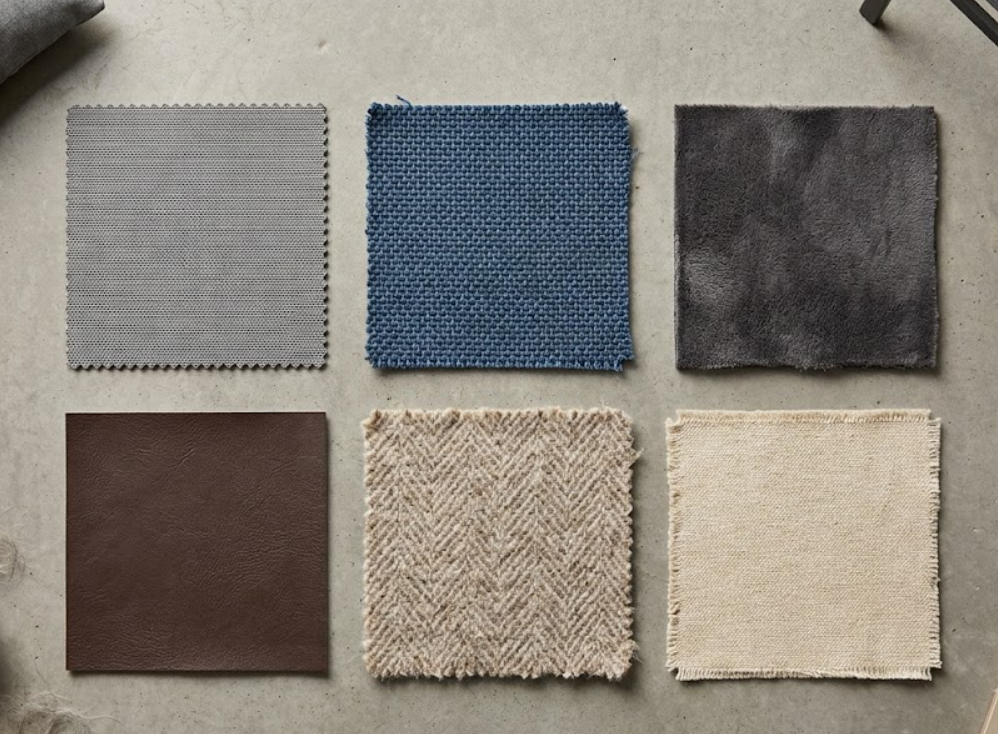
| Material category | Best fit | Why we shortlist it | What to verify | Main limit |
|---|---|---|---|---|
| Upholstery-engineered performance synthetic | Family rooms, offices, waiting areas, hospitality seating | Our broadest starting point when frequent use, spills, and repeat cleaning all matter | Named abrasion method/result, pilling, seam, strength, written care, finish, and compliance documents | “Performance” is not a standard by itself; inspect the exact SKU |
| Solution-dyed synthetic upholstery | Sunny rooms, indoor-outdoor transitions, patios, marine-adjacent spaces | Moves up our list when a current lightfastness/UV report supports the exact product | Lightfastness/UV method, water and mildew claims, abrasion, cleaning, breathability, and end use | Outdoor-cover fabric is not automatically seating upholstery; see our marine upholstery exposure guide |
| Microfiber or another dense, flat upholstery weave | Homes with pets, frequent contact, and a preference for a soft hand | A sensible snag-risk shortlist when the exact construction data supports it | Fiber, pile/construction, pilling, seam behavior, abrasion method, and written cleaning instructions | Oil, finish damage, matting, and cleaner compatibility still depend on the product |
| Protected leather or upholstery-grade coated material | Dining, healthcare-adjacent, hospitality, and other wipe-clean applications | A continuous surface can simplify spill removal when the coating and seams fit the job | Coating/substrate, adhesion, flex, seam strength, cleaner/disinfectant compatibility, and cold-crack or hydrolysis data where relevant | Generic vinyl, tarp material, or fashion leather is not automatically furniture upholstery |
| Upholstery-grade wool blend | Contract interiors where appearance retention, hand, and a tailored look matter | A high-use candidate only when supplied as a tested upholstery construction | Abrasion, pilling, seam, strength, care, colorfastness, and project flame requirements | Fiber identity alone does not establish stain behavior or compliance |
| Cotton duck or canvas | Removable covers, slipcovers, workroom-led seating, utility aesthetics, and custom printed projects | Clear specification language around ounce weight, weave, yarn, finish, width, and fabrication | Shrinkage, crocking/colorfastness, pilling, seam, abrasion, stain/cleaning plan, and exact finish | Untreated cotton absorbs moisture; heavy weight does not prove seating durability. Use our duck canvas upholstery weight and use guide to narrow the construction |
For a busy family sofa or institutional lounge, we start with an upholstery-engineered performance synthetic and reject any option whose technical packet is incomplete. For strong sun or indoor-outdoor exposure, we move a solution-dyed synthetic forward only when current lightfastness and exposure data support the exact product. For frequent food or healthcare-style wipe-downs, we investigate protected leather or upholstery-grade coated material and pay special attention to seam, flex, and cleaner compatibility. For pet claws, we favor a dense, flat surface over loops or open texture. For removable slipcovers or a custom canvas-led aesthetic, we consider cotton duck, but only after the specific finish, shrinkage, color transfer, cleaning, seam, and abrasion questions are answered.
For woven indoor upholstery in high-traffic or public spaces, ACT lists 30,000 double rubs under ASTM D4157 (Wyzenbeek) or 40,000 cycles under ASTM D4966 (Martindale). Those figures belong to different test methods and should not be converted into one another. ACT reports that results on some woven constructions can vary by 60% or more, while ASTM explains that laboratory abrasion is only one contributor to real durability. We use the named method and result as a screening field, not as a prediction of years of service.
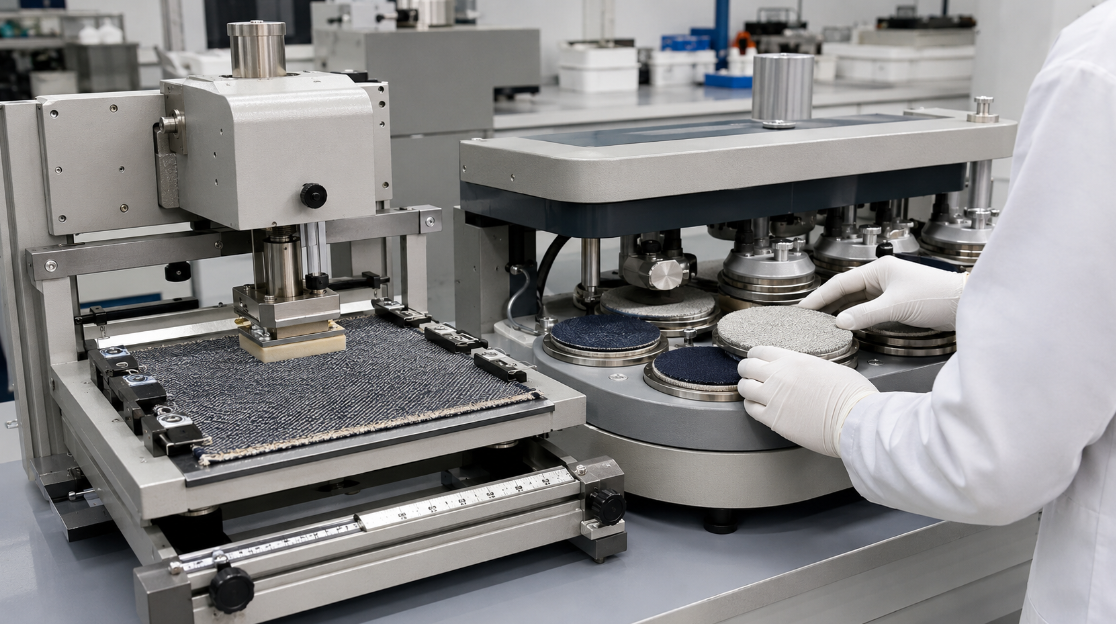
Wyzenbeek uses an oscillatory-cylinder procedure; Martindale uses a different motion, pressure, abradant, and evaluation framework. A higher number under one method does not let us calculate a result under the other. When a supplier lists “50,000 rubs” without the method, specimen identity, endpoint, and test version, we treat the number as incomplete.
We evaluate high-traffic upholstery across a test packet rather than a single rub count. ACT’s woven-fabric guidance includes pilling, breaking strength, and seam slippage, while its cleaning guidance warns that W/S/WS/X codes alone are not complete care instructions. We also check fiber, weave or substrate, weight or denier, width, finish, coating, colorfastness where exposure requires it, and the furniture manufacturer’s construction requirements. This evaluation narrows risk, but it cannot reproduce every combination of user behavior, foam, seam design, cleaner, humidity, and maintenance.
Ounces per square yard describe finished fabric mass per area. Denier describes yarn linear density. Neither tells us the final weave density, coating adhesion, seam behavior, pilling, abrasion result, or suitability for a chair or sofa. Our guide to denier, weave, weight, and durability explains the specification language in more detail. We use denier to compare yarn systems and ounces to compare finished mass, then require end-use and test data separately.
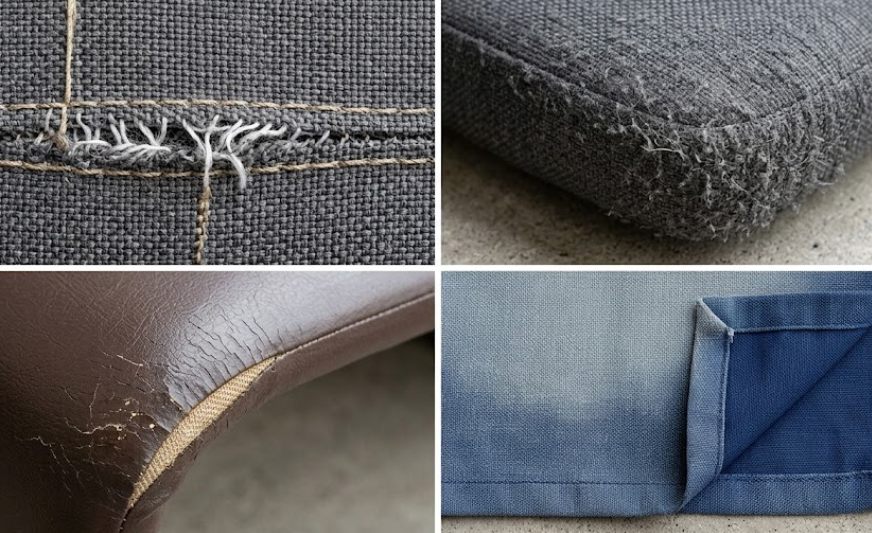
A high abrasion number can coexist with an unsuitable upholstery result. A woven fabric may pull at seams or pill; a coated surface may crack, delaminate, or fail around needle holes; a cleaner may damage a finish; a tight weave may still fade near strong sun; and a heavy canvas may be too stiff for a small radius or may lack the project’s required flame documentation. Because these failures occur outside a simple rub-count comparison, we require a swatch, current technical sheet, fabrication review, and care/compliance confirmation before production yardage.
We reviewed five products to show how we read a supplier page. These links are sampling and specification starting points, not a ranked list of proven high-traffic upholstery fabrics.
| Canvas ETC product | Visible construction data | Stated use context | What the page establishes | What to request before seating use |
|---|---|---|---|---|
| 10 oz Royal cotton duck | 100% cotton; 9.5 oz/sq yd; 58/60 in; single yarn; Oxford weave; dyed, water-repellent finish; no coating | Slipcovers and general utility uses appear in the product context | A medium-weight colored cotton duck with defined width, weave, and finish | Abrasion method/result, pilling, seam, shrinkage, crocking/lightfastness, care, and project compliance |
| 10 oz Black cotton duck for upholstery and slipcovers | 100% cotton; 9.5 oz/sq yd; 58/60 in; single yarn; Oxford weave; dyed, water-repellent finish; no coating | Upholstery and slipcovers are listed | The page identifies an upholstery/slipcover use and gives construction fields | The page gives no rub-fastness/lightfastness guarantee; request the complete upholstery report set |
| #8 18 oz natural duck cloth | 100% cotton; 18 oz/sq yd; 36 to 84 in options; plied yarn; plain weave; natural finish; no coating | Industrial and craft uses | A heavier, plied-yarn numbered duck with multiple widths | Do not infer seating performance from weight; verify abrasion, pilling, seams, hand, care, and compliance |
| 600D PVC-backed polyester | Polyester; 600D × 300D; 10 oz/sq yd; 58/59 in; plain weave; PVC on one side; DWR/dyed | Bags, luggage, indoor covers, cases, and totes | A coated technical polyester with clear denier, mass, width, weave, and end-use fields | The page does not present it as upholstery; qualify flex, seams, hand, cleaner compatibility, and furniture use |
| 18 oz vinyl-coated polyester | 18 oz/sq yd; 61 in; vinyl-coated polyester construction | Tarps, covers, and other technical applications | A heavy coated textile with a defined technical-use profile | Do not treat truck-tarp vinyl as upholstery vinyl; request seating-specific substrate, flex, adhesion, seam, care, and compliance data |
The pattern is more important than any one row. We want material, weight or denier, width, weave, finish, coating, and end use in the same specification record. Then we add the application-specific tests. This is where our combined canvas, technical-synthetic, and print-to-production capability is most useful: we can help translate a design into a fabric and fabrication brief, while the buyer, furniture maker, and compliance owner retain final approval for the intended construction.
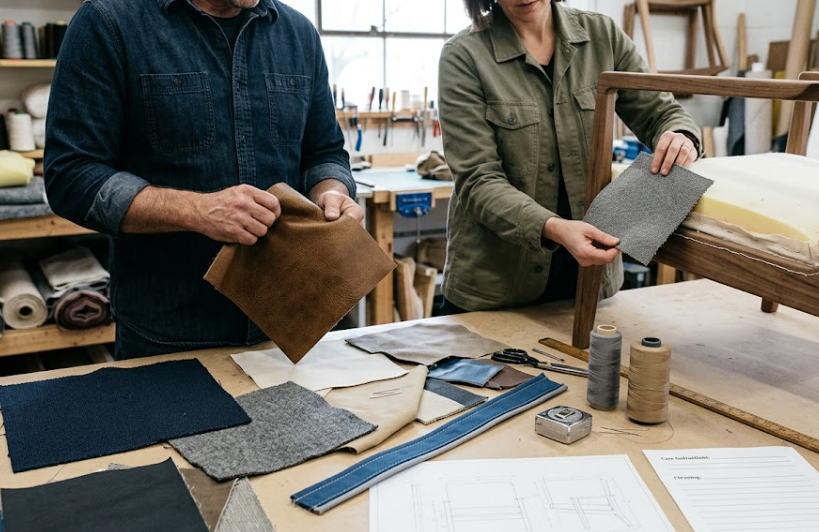
There is no responsible fiber-only answer. For mixed high-traffic hazards, we first shortlist a tightly constructed, upholstery-engineered performance synthetic with complete abrasion, pilling, seam, strength, care, and compliance data. Protected leather, upholstery-grade coated material, solution-dyed synthetics, wool blends, microfiber, and cotton duck can move ahead when a narrower use case favors them. The exact product and construction, not the category name, decide the result.
We avoid any fabric with an open or snag-prone construction for a claw-heavy room, an incompatible cleaning plan, incomplete seam or coating data, strong light exposure without colorfastness evidence, or a technical-cover end use substituted for seating without qualification. We also reject anonymous “commercial grade,” “heavy duty,” or “50,000 rub” claims that omit the standard, method, product identity, and limitations.
For woven indoor upholstery in high-traffic/public spaces, ACT lists 30,000 Wyzenbeek double rubs and separately lists 40,000 Martindale cycles. We do not convert between the methods or use either number to predict years of life. The project may require different or additional criteria, and the rest of the durability packet still matters.
We usually start with a dense, flat, low-profile upholstery construction and verify pilling, seam behavior, cleaning, and the exact finish. We avoid promising that any fabric is “pet-proof”: claws can damage surfaces, oil and saliva affect care, and hair removal depends on texture and static. When buying without handling the full roll first, use our guide to translating online fabric specifications into a sample plan.
Cotton duck can be a strong candidate for removable covers, slipcovers, tailored utility furniture, and custom printed programs because its weight, weave, yarn, width, finish, and fabrication can be specified clearly. It is not automatically the best fixed upholstery for spills, strong sun, or institutional cleaning. We verify shrinkage, crocking, lightfastness, abrasion, pilling, seams, care, finish, and project obligations for the exact duck construction.
No. “Commercial grade” is not a substitute for a named test report or a project compliance review. CPSC explains that in-scope upholstered furniture under 16 CFR part 1640 follows TB 117-2013 pathways for cover fabric, barriers, filling, and decking, plus labeling and certification responsibilities. We ask the responsible manufacturer or compliance professional to approve the finished construction.
For a busy indoor sofa, our request would read more like this than “send your toughest fabric”:
Upholstery-engineered, tightly constructed fabric for frequent indoor seating; identify fiber/content, finished weight, usable width, weave or substrate, finish/coating/backing, color, and hand. Supply a current Wyzenbeek or Martindale result with method/version and specimen identity; pilling, seam, and breaking-strength data; written cleaning and chemical compatibility; colorfastness as exposure requires; and applicable project flammability documentation. Include a swatch and disclose any difference between the sampled and production finish.
That brief gives the supplier, workroom, furniture maker, and compliance owner a common record. It also lets us compare alternatives without pretending that one label, whether polyester, leather, microfiber, canvas, vinyl, wool, denier, or “performance,” answers every question.
The best fabrics for high-traffic furniture are the products whose complete, current specification fits the actual use. We begin most mixed-hazard projects with upholstery-engineered performance synthetics; move solution-dyed options forward only when exposure data supports the exact product; investigate protected leather or upholstery-grade coated material for wipeability; favor dense flat constructions around snag risk; use tested wool blends for suitable contract interiors; and specify cotton duck when a canvas-led construction, removable cover, or custom production workflow is the better fit.
We supply cotton duck canvas, technical denier fabrics, coated materials, and custom textile-production support, but we do not use weight, denier, or a product name as a shortcut for approval. Bring us the furniture, hazards, care plan, fabrication details, required tests, width, color, finish, coating, quantity, and end use. We can help narrow the material and production path, then document the questions that must be closed before full-roll or cut-yard purchasing.