
Jute is the fiber. Burlap and hessian are common fabric terms for coarse woven cloth made from jute or similar vegetable fibers. In North America, the word burlap is more common; in the UK and Europe, hessian is more common. For buying or sourcing, the right question is not only “burlap vs hessian vs jute?” but also “what is the fiber content, weave, weight, width, finish, and end use?”
| Quick fact | Plain answer |
|---|---|
| Jute | The plant fiber or source material. |
| Burlap | The common North American term for coarse woven fabric often made from jute. |
| Hessian | The common UK and European term for a similar coarse woven fabric. |
| Buying rule | Use the term your supplier recognizes, then verify the fabric specification. |
Jute is a bast fiber from Corchorus plants, while burlap and hessian usually describe woven cloth made from that fiber. Britannica identifies jute as fiber from Corchorus plants and notes that the fiber is obtained from the inner bark tissue of the plant stem. Britannica also states that burlap is made from jute.
Burlap and hessian are often different regional names for the same broad fabric category. Whaleys describes hessian as a coarse plain-weave fabric made from jute and vegetable fibers, and it states that burlap is the name more commonly used in America and Canada while hessian is better known in the UK and Europe. The Textile Research Centre similarly describes hessian as a rough plain-weave fabric made from jute fibers and known in the USA and Canada as burlap.
Use jute when you mean the fiber or material source. Use burlap when you are sourcing coarse jute-based cloth in the United States. Use hessian when you are working with UK, European, or Commonwealth terminology. Then confirm the exact fabric construction before buying.
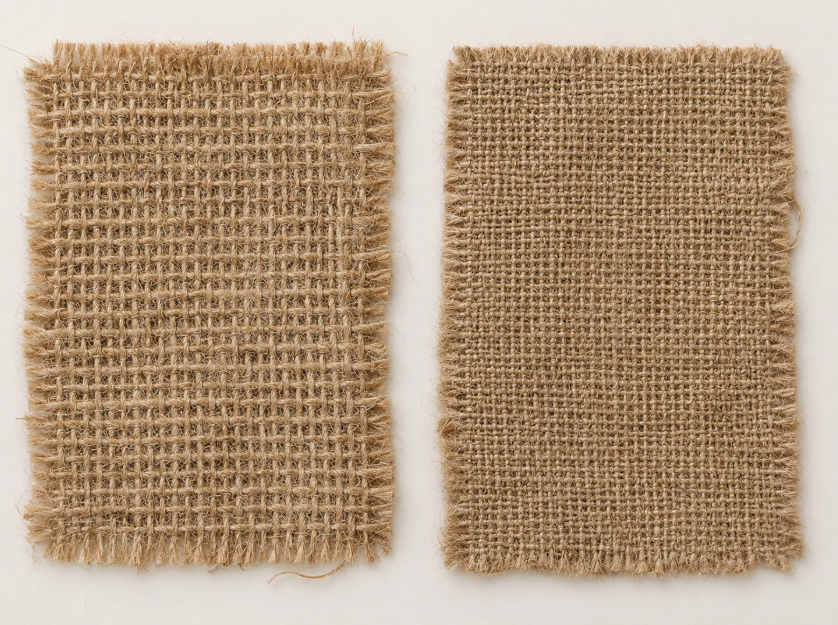
Burlap, hessian, and jute differ mainly by terminology level: jute names the fiber, while burlap and hessian usually name the woven fabric.
| Term | What it refers to | Common region or use | Typical material relationship | What to verify before buying |
|---|---|---|---|---|
| Jute | Fiber or source material | Global material term | Jute fiber can be spun into yarn and used in cloth, twine, bags, sacks, wrappings, and other goods. | Fiber grade, yarn, weave, fabric weight, treatment, and intended application. |
| Burlap | Coarse woven fabric term | North America, especially the US and Canada | Often a jute-based woven cloth used for sacks, gardening, rustic décor, wrapping, and craft projects. | Fiber content, weave openness, weight or GSM, width, dye, finish, and treatment. |
| Hessian | Coarse woven fabric term | UK, Europe, and many Commonwealth contexts | Often the same broad class of fabric that US buyers call burlap. | Weight, weave, width, finishing, treatment, and supplier-specific grade. |
Table note: The definition and regional distinctions above are based on cited textile/reference sources. The buying specifications are sourcing criteria and should be confirmed against the supplier’s current product data.
The table matters because a label alone does not define fabric performance. A loose, open-weave burlap and a heavier jute hessian can behave differently even if both are jute-based. For production, packaging, décor, gardening, bags, or upholstery-adjacent uses, compare construction details before choosing yardage, rolls, or finished goods.
The terms get confused because jute, burlap, and hessian do not all name the same level of the textile. Jute names the plant fiber. Burlap and hessian usually name a woven fabric made from jute or similar vegetable fibers. Regional language adds another layer because US buyers usually say burlap, while UK and European suppliers often say hessian.
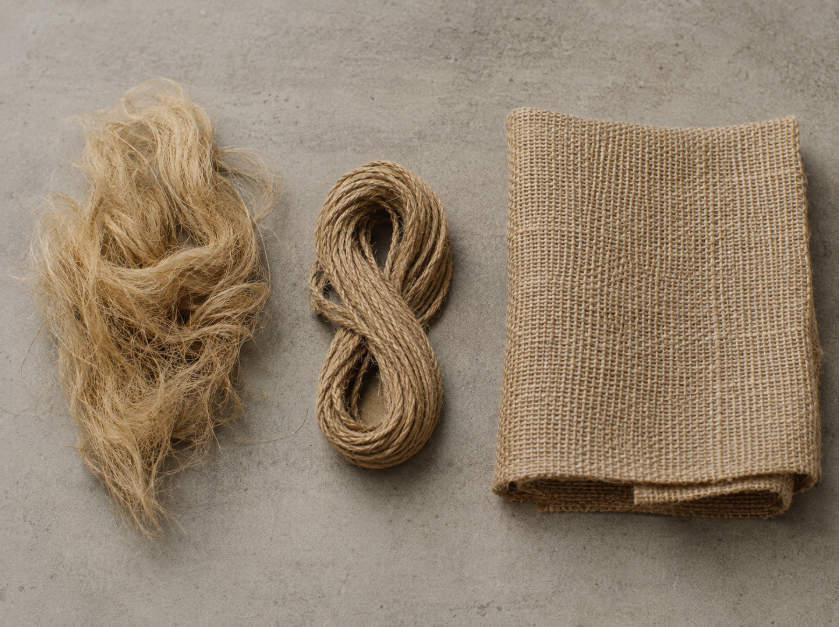
Fiber-to-fabric relationship:
Jute is the fiber or source material, not only the finished fabric label. The term can refer to the Corchorus plant species and to the fiber obtained from those plants. Britannica identifies jute as coming from Corchorus species and describes the fiber as a bast fiber from the plant stem’s inner bark tissue.
Use jute when the material source matters. A buyer may ask whether a cloth is 100% jute, a jute blend, or a different vegetable fiber. That question is more precise than asking whether the product is “natural-looking,” “rustic,” or “burlap-like.”
Burlap is the common North American term for a coarse woven fabric often made from jute. In practical US sourcing, “burlap fabric” usually points to rustic, open-textured cloth used for sacks, garden wrapping, event décor, craft work, and certain packaging uses.
Burlap should not be treated as a complete specification. A burlap listing may still vary by fiber content, weave openness, weight, width, finish, dye, and treatment. If a project depends on strength, drape, printability, odor, shedding, or long-term wear, request current supplier specifications and review a sample before production.
Hessian is the common UK and European term for the same broad class of coarse woven fabric that North American buyers often call burlap. Whaleys describes hessian as a plain-weave coarse fabric made from jute and vegetable fibers, and the Textile Research Centre describes hessian as rough plain-weave fabric made from jute fibers and known in the USA and Canada as burlap.
Use hessian when you are reading UK, European, Australian, or Commonwealth supplier information. Use burlap when you are sourcing from a US supplier. If the project is technical, do not stop at the regional term; ask for weight, width, weave, finish, treatment, and fiber content.
The fabric name is not enough for accurate sourcing. A buyer should specify fiber content, weave, weight, width, finish, treatment, and end use before deciding whether burlap, hessian, jute cloth, canvas, duck cloth, or another textile is the right material.
| Specification | What to ask | Why it matters |
|---|---|---|
| Fiber content | Is the fabric 100% jute, a jute blend, sisal, hemp, cotton, synthetic, or another vegetable fiber? | Fiber content affects texture, strength assumptions, care, disposal claims, and supplier comparison. |
| Weave | Is the weave open, medium, close, plain, scrim-like, or tightly woven? | Weave affects breathability, stability, opacity, shedding, and structure. |
| Weight | What is the weight in GSM or ounces per square yard? | Weight helps compare fabrics across suppliers. |
| Width | What is the usable fabric width? | Width affects yardage planning, seams, waste, and production efficiency. |
| Finish or treatment | Is the cloth dyed, stiffened, flame-retardant, water-repellent, laminated, coated, or untreated? | Treatments can change handling, care, safety, printability, and disposal assumptions. |
| End use | Is the fabric for sacks, crafts, décor, gardening, upholstery, bags, covers, or display? | End use determines whether rustic open-weave cloth is suitable or whether a tighter canvas, duck, or technical fabric should be compared. |
| Sample review | Can you review a swatch, header, or sample before buying yardage or rolls? | A sample helps confirm texture, color, stiffness, odor, shedding, and weave density before production. |
For broader supplier evaluation, use a supplier comparison process that checks classification, minimum order quantities, sample testing, logistics, and certification evidence rather than relying only on visual similarity or fabric names. Canvas ETC’s fabric supplier comparison guide explains how supplier evaluation can be structured around samples, testing data, and production requirements.
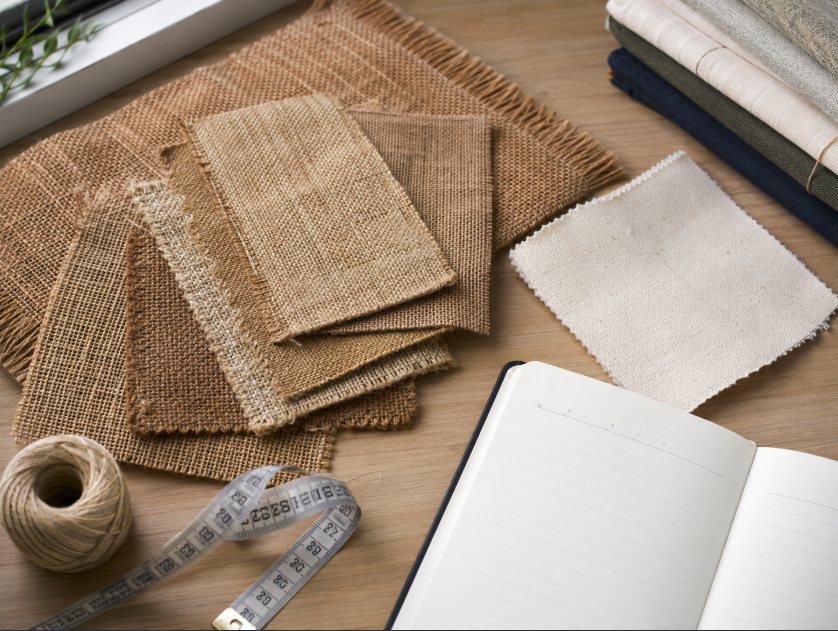
The right term depends on region, but the right material depends on the project. Burlap or hessian can be suitable for rustic, breathable, coarse-texture uses; tighter canvas, duck cloth, vinyl, nylon, or other technical fabrics may be more suitable when structure, abrasion resistance, water resistance, or repeated handling matters.
| Use case | Common term to search | What to check | When to compare another fabric |
|---|---|---|---|
| US craft, rustic décor, table runners, event accents | Burlap | Color, odor, shedding, weave openness, width | Compare cotton canvas if the piece needs a smoother face, tighter weave, or repeated washing. |
| UK/EU décor or craft sourcing | Hessian | Weight, weave, finish, dye, supplier grade | Compare a tighter woven fabric if the supplier’s hessian grade is too open, stiff, or irregular for the project. |
| Sacks, coffee-style bags, agricultural packaging | Burlap, hessian, jute sack cloth | Weight, seam strength, weave, breathability, treatment | Compare polypropylene, canvas, or technical fabrics if abrasion, moisture, or repeated heavy use is the main requirement. |
| Gardening, root-ball wrapping, erosion, landscape use | Burlap or hessian | Untreated fiber, weave openness, disposal conditions | Compare synthetic landscape fabric or technical mesh if the project specifies longer-term outdoor performance. |
| Structured bags, totes, covers, upholstery, workwear | Canvas, duck cloth, cotton duck, waxed canvas | Weight, weave, finish, abrasion needs, sewing requirements | Burlap/hessian may be too open, coarse, unstable, or shed-prone for structured fabric goods. |
| Outdoor covers, tarps, marine, awnings | Canvas, duck, treated canvas, vinyl, coated polyester, technical fabric | Water resistance, UV resistance, mildew resistance, coating, weight | Burlap/hessian is usually not the first choice for weather-exposed performance uses. |
Canvas is not a synonym for burlap. Canvas and duck cloth are different woven fabric categories that become relevant when the project needs tighter construction, more body, or different performance characteristics. For follow-up comparison, see Canvas ETC’s guides to duck canvas bags, duck canvas by weight, the numbered duck system, and industrial bag and sack fabrics.
Burlap or hessian may not be the right fabric when the project needs a tight weave, smooth hand, stable body, weather resistance, repeated abrasion, or controlled print quality. In those cases, the better sourcing question is not “burlap or hessian?” but “what fabric construction fits the job?”
Choose a tighter woven canvas or duck cloth when the project needs more body, structure, or fabric stability. Canvas ETC’s duck canvas bag guide describes duck canvas as a heavy-duty plain-woven cotton fabric and emphasizes fabric weight, seams, reinforcement, and use case as bag-selection factors. Canvas ETC’s duck canvas by weight and numbered duck system resources can support follow-up decisions where weight, grade, and fabric construction matter.
Choose coated canvas, vinyl-coated polyester, denier fabric, marine canvas, awning fabric, or another technical textile only when the required performance matches the finish or construction. Do not substitute a technical fabric only because burlap feels too coarse; substitute it because the project has a defined requirement such as water resistance, UV exposure, abrasion, load, washability, or dimensional stability.
This guide separates definitions, regional terminology, and sourcing recommendations because those claims have different evidence requirements. Definitions of jute, burlap, and hessian are based on reference and textile sources. Regional usage is supported by textile-source descriptions of hessian and burlap terminology. Sourcing recommendations are condition-based and should be validated against supplier specifications before purchase.
| Claim type | Evidence standard used in this article | Publication note |
|---|---|---|
| Definition claims | Reference or textile source | Cited near the claim. |
| Regional terminology claims | Textile source or supplier terminology guide | Cited near the claim. |
| Buying/specification advice | Sourcing logic and supplier-specification requirements | [SME review needed before publication.] |
| Product or sample availability | Current Canvas ETC page validation | [Verify: current availability as of publication date.] |
| Environmental claims | Qualified language and regulatory caution | Avoid unqualified claims unless substantiated. |
The definitions in this guide are supported by textile and reference sources, but performance claims require product-level details. Britannica supports the jute-fiber definition and burlap’s relationship to jute. Whaleys and the Textile Research Centre support the hessian/burlap regional distinction and hessian’s plain-weave jute-fabric definition.
Sustainability and biodegradability claims need tighter wording than many product pages use. A cloth made entirely from untreated vegetable fiber is not the same as a dyed, coated, blended, flame-retardant, laminated, or finished fabric. The FTC’s Green Guides state that environmental marketing claims should be truthful, substantiated, and qualified where needed, and the eCFR guidance on degradable claims warns against misrepresenting biodegradable or degradable claims.
Strength claims also need construction details. “Jute,” “burlap,” and “hessian” do not automatically answer which material is stronger. Strength depends on yarn, weave, weight, fiber quality, moisture exposure, seam construction, load direction, and finish. If load-bearing performance matters, request product specifications or test data from the supplier.
Hessian and burlap often refer to the same broad fabric class: coarse woven cloth made from jute or vegetable fibers. The main difference is regional language. “Burlap” is more common in America and Canada, while “hessian” is more common in the UK and Europe.
Hessian is commonly called burlap in America and Canada. The word “hessian” may still appear in imported product listings, technical sourcing contexts, or UK/EU supplier catalogs, but a US buyer usually searches for “burlap fabric.”
Jute is not the same type of term as burlap. Jute names the fiber or material source, while burlap usually names a woven fabric made from jute. Britannica identifies jute as Corchorus fiber and states that burlap is made from jute.
Burlap is commonly made from jute, but a buyer should verify fiber content instead of assuming every burlap-like fabric is 100% jute. Some coarse woven cloth may include other vegetable fibers, blends, dyes, coatings, or treatments. Ask the supplier for composition and finish details before relying on performance or environmental claims.
The question is incomplete because jute is a fiber and burlap is a fabric term. A stronger or weaker result depends on yarn quality, weave density, fabric weight, moisture exposure, seam construction, and treatment. For load-bearing projects, compare product specifications or test results rather than the name alone.
Untreated vegetable-fiber burlap may be biodegradable under suitable conditions, but the claim should not be applied automatically to every burlap or hessian product. Dyes, coatings, synthetic blends, flame-retardant treatments, laminations, contamination, and disposal conditions can change the answer. The FTC’s environmental-marketing guidance requires green claims to be substantiated and qualified where needed.
Use canvas or duck cloth instead of burlap when the project needs tighter weave, smoother handling, repeated abrasion resistance, structured body, upholstery suitability, or more controlled sewing and finishing. For next-step comparison, use Canvas ETC’s duck canvas bag, duck canvas by weight, numbered duck system, and canvas fabric resources.
If your question started with terminology, use the comparison above. If your project now depends on structure, weight, supplier evaluation, or production fit, move from names to specifications.
Recommended next steps: