
Flax fiber means linen gets much of its performance from a long, plant-based bast fiber rather than from a surface finish alone. For fabric buyers, makers, artists, and specifiers, that fiber structure helps explain why linen fabric can feel crisp, breathable, moisture-responsive, textured, and durable, while also explaining why linen wrinkles and behaves differently from cotton. The finished fabric still depends on yarn quality, weave, weight, finish, laundering, and end use, so flax fiber is the starting point for linen performance, not the only factor.
Key facts
| Question | Short answer |
|---|---|
| What is flax fiber? | Flax fiber is a natural bast fiber taken from the stem of the flax plant. |
| What is linen? | Linen is yarn or fabric made from processed flax fiber. |
| What does flax fiber change in linen? | Flax fiber influences linen’s strength, moisture behavior, airflow potential, texture, crispness, and wrinkle tendency. |
| What else affects linen performance? | Yarn quality, weave, fabric weight, finish, care, and project use all change how linen performs. |
| What should buyers verify? | Weight, width, weave, finish, color, shrinkage expectations, surface texture, and current product specifications before ordering. |
CFDA separates fiber flax, which is used to make linen textiles, from seed flax, which is grown for food, feed, or oil uses. CFDA also notes that cultivation is only one part of linen’s lifecycle impact because extraction, processing, consumer use, and care can carry higher impact than growing the flax.
Flax fiber changes linen performance by giving the fabric a specific set of fiber-driven strengths and tradeoffs. We evaluate linen by connecting each fiber trait to a finished-fabric behavior, then checking whether the fabric construction supports the project.
| Flax fiber trait | What happens in linen fabric | Performance benefit | Tradeoff | Best use or specification implication | Evidence or qualification |
|---|---|---|---|---|---|
| Long bast fibers | Flax fibers can support stable yarns and woven linen when processing and spinning preserve fiber quality. | Better fabric integrity and durability in suitable constructions. | Stiffness or crispness may be noticeable before softening. | Artist canvas, upholstery, structured goods, long-use textiles. | Linen is described as stronger than cotton in Britannica’s linen entry, but fabric-level durability still depends on yarn, weave, weight, and finish. |
| Cellulosic plant structure | Linen absorbs moisture and interacts strongly with humidity. | Moisture response can support comfort in breathable fabric constructions. | Moisture behavior varies by weave, weight, and finish. | Apparel, bedding, table linens, breathable covers. | USDA ARS reports flax-related moisture wicking and air permeability benefits in cotton-flax textile research. |
| Low elasticity | Linen stretches and recovers less readily than more elastic fibers. | Crisp hand, stable body, structured surface. | Wrinkles and creases form more readily. | Table linens, canvas, decorative textiles, structured panels. | Britannica identifies linen’s low elasticity as the reason it is subject to wrinkling. |
| Natural slub and fiber irregularity | Yarn and fabric may show small thick-thin variations. | Texture, visible weave character, and organic surface interest. | Uniform appearance may require tighter fiber, yarn, and finishing control. | Decorative fabric, art canvas tooth, visible-weave applications. | Use original fabric close-up photography before publication if texture is a key selling point. [Asset needed: macro image of linen weave and slub.] |
| Fiber stiffness | Linen can feel cool, crisp, firm, or structured. | Defined hand and surface stability. | Not ideal when stretch, softness, or drape is the main requirement. | Canvas, table linens, tailored home goods, structured décor. | Britannica connects linen’s low elasticity with a hard, smooth texture and wrinkle tendency. |
| Processing quality | Retting, scutching, hackling, spinning, and finishing influence fiber cleanliness and consistency. | Cleaner, better-prepared fibers can produce more predictable yarns and fabrics. | Poor processing can contribute to roughness, unevenness, or inconsistent performance. | Specify quality, weight, weave, finish, and end use rather than buying by fiber name alone. | USDA ARS identifies flax fiber production, enzyme retting, fiber quality parameters, and fiber standards as key research and processing concerns. |
| Weave, weight, and finish | Fiber traits are expressed through fabric construction. | The same fiber source can serve apparel, canvas, upholstery, and decorative uses. | A lightweight linen shirting and a heavy linen canvas will not perform the same way. | Match fiber, construction, and project requirements before purchasing. | Treat “linen” as a material family, not as one fixed performance grade. |
Flax is the plant and fiber source, while linen is the yarn or fabric made from processed flax fiber. That distinction matters because “flax fiber” explains the source material, while “linen performance” describes the behavior of the finished textile.
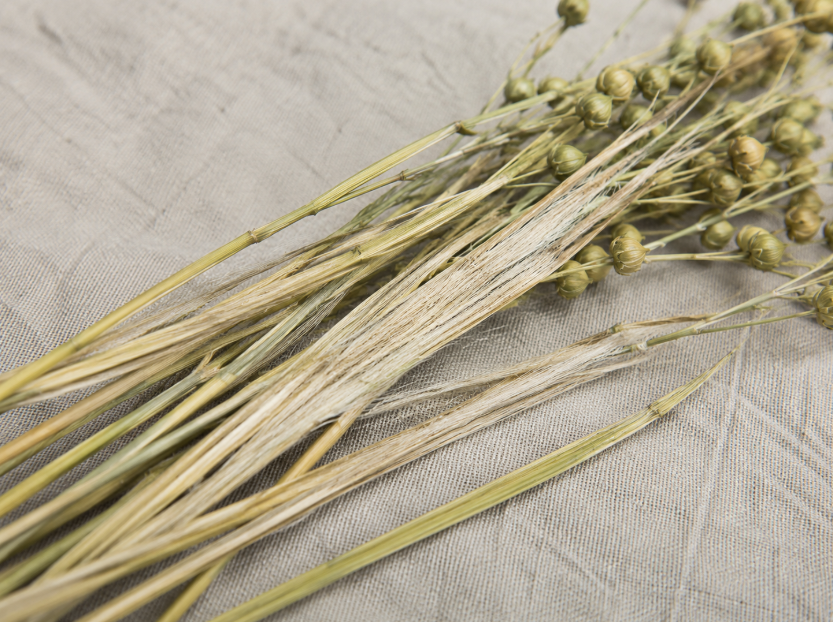
Use flax fiber when discussing the raw textile fiber. Use linen fabric when discussing the finished woven textile. Use flax linen carefully, because that phrase usually means linen made from flax fiber rather than a separate fiber category.
Fiber flax and seed flax should not be treated as the same buying category. Fiber flax is grown for textile use, while seed flax is grown for food, feed, or oil. CFDA makes this distinction directly in its fiber guide.
The most important linen performance traits come from flax fiber length, bast fiber structure, moisture behavior, low elasticity, and surface character. These traits explain why linen can be durable and breathable while still feeling crisp, textured, and wrinkle-prone.
Flax fiber is a bast fiber from the plant stem, not a seed fiber like cotton. In linen, longer and cleaner flax fibers can support stronger and smoother yarns, but fabric durability still depends on yarn quality, weave density, fabric weight, and finishing.
For buyers, “linen” should not be treated as one uniform performance grade. A fine apparel linen, a slubby decorative linen, and a heavy linen canvas may all come from flax fiber, but the finished fabrics can differ in strength, hand, texture, shrinkage behavior, and dimensional stability.
Line flax and tow flax describe different fiber outcomes after flax is processed. Longer fibers are generally associated with finer linen applications, while shorter tow fibers are more often associated with coarser or more utilitarian results.
This distinction should stay practical rather than absolute. A finished fabric’s performance still depends on fiber preparation, spinning, weaving, finishing, and quality control. For purchasing decisions, we recommend checking the actual fabric specification instead of assuming quality from a single label.
Linen’s moisture behavior comes from flax fiber’s plant-based cellulose structure and from the way the linen is spun and woven. USDA ARS reports that adding flax to cotton fabric improved moisture wicking, which means the fabric’s ability to pull moisture away from the skin, and also supported air permeability, which helps fabric dry more quickly.
Moisture absorption, moisture wicking, and air permeability are related but not identical. Absorption describes how fiber takes in moisture. Wicking describes how moisture moves away from a surface. Air permeability describes how air passes through fabric. A heavy, tight linen canvas and a loose, lightweight linen shirting can both be flax-based, but they will not breathe, absorb, or dry in the same way.
Linen wrinkles because flax fiber has low elasticity and limited recovery compared with fibers that bend and spring back more readily. Britannica describes linen as having low elasticity, a hard smooth texture, and a tendency to wrinkle.
Wrinkling is not automatically a defect. The same low stretch that contributes to creasing also supports linen’s crisp hand and stable surface. In table linens, decorative upholstery, linen canvas, and textured home goods, a crisp or lightly creased surface may fit the expected look. In fitted garments, uniforms, or wrinkle-sensitive interiors, linen may need blending, finishing, lining, or a different material choice.
Linen texture often comes from flax fiber variation, yarn formation, and weave structure. Slubs, thick-thin yarn changes, and visible weave character can make linen look more organic and tactile than smoother cotton or synthetic fabrics.
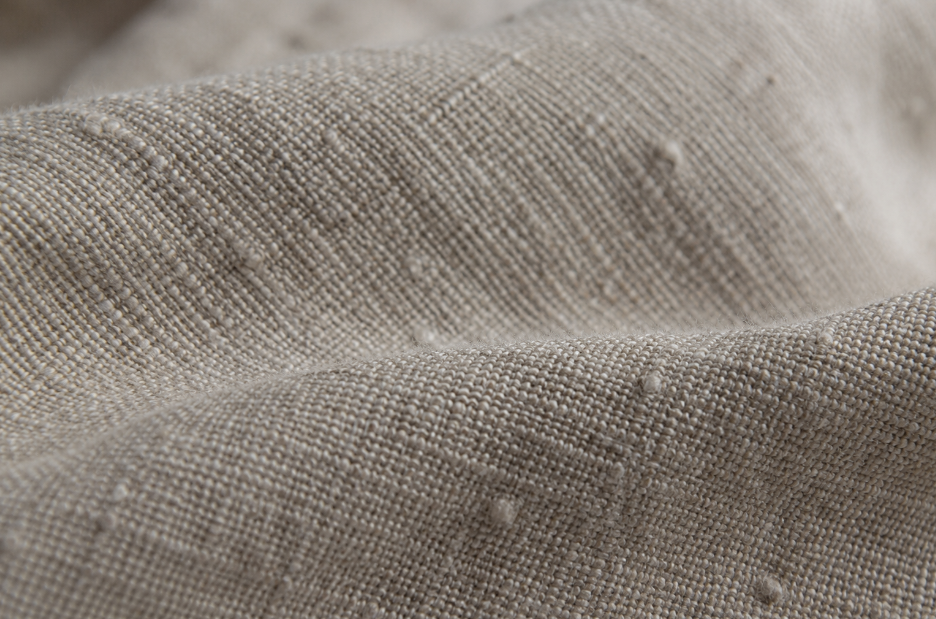
Texture affects both appearance and use. In artist canvas, surface texture contributes to tooth and paint interaction. In upholstery and décor, visible linen texture can become part of the design language. In apparel, the same surface character may read as relaxed, rustic, or refined depending on yarn quality, finishing, weight, and color.
Processing quality changes linen performance because flax fiber must be separated from the plant stem before it can become usable textile fiber. Retting, breaking, scutching, hackling, spinning, weaving, and finishing all influence fiber cleanliness, yarn smoothness, texture, and fabric consistency.
Retting loosens the plant material around the fiber. Scutching helps remove woody material from the fiber. Hackling combs and separates fibers before spinning. USDA ARS identifies flax fiber production, enzyme retting, fiber quality parameters, and fiber standards as active research concerns, which supports the practical point that processing quality affects the consistency and usefulness of flax fiber.
For production planning, treat linen as a specification-sensitive fabric. A lightweight linen for garments, a linen blend for printed décor, and an unprimed linen canvas for painting each need a different evaluation path.
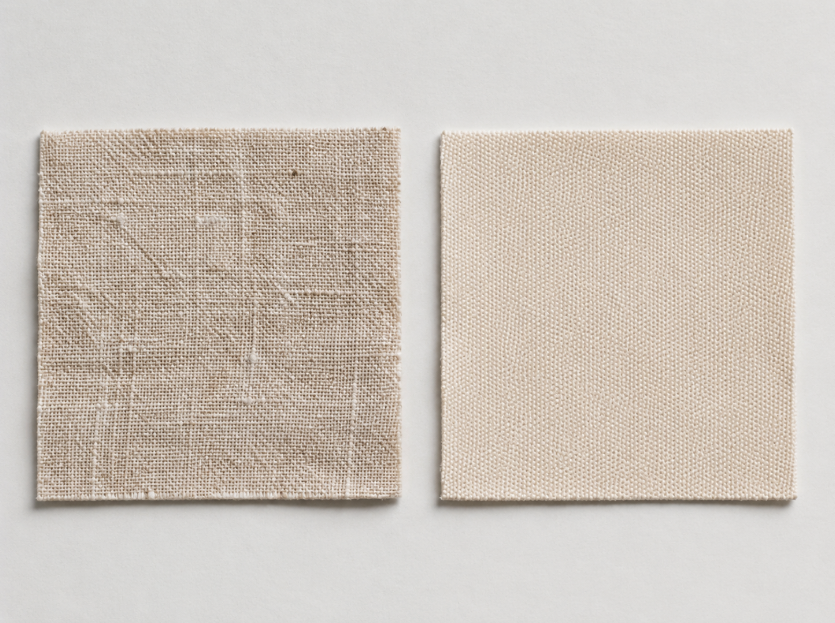
Linen and cotton differ mainly by fiber source, elasticity, texture, moisture behavior, and typical hand. Linen comes from flax bast fiber and often gives a crisp, textured, low-stretch fabric; cotton comes from seed fiber and often gives a softer, more familiar hand in canvas, apparel, and home textiles.
| Performance dimension | Flax-based linen | Cotton fabric or cotton duck | Selection implication |
|---|---|---|---|
| Fiber source | Bast fiber from flax stem. | Seed fiber from cotton boll. | Linen and cotton start from different fiber structures. |
| Hand feel | Crisp, cool, textured, sometimes firm at first. | Often softer or more familiar, depending on weave and finish. | Choose by desired hand, not fiber name alone. |
| Elastic recovery | Low recovery; wrinkles readily. | Usually more forgiving in everyday use. | Use cotton or blends when lower wrinkle visibility matters more. |
| Moisture behavior | Absorbent and often comfortable in breathable constructions. | Also absorbent, with behavior depending on yarn and weave. | Compare fabric weight, weave, and finish. |
| Texture | Visible slub or weave character may be desirable. | Cotton duck gives firm plain-woven structure. | Match surface texture to the design and end use. |
| Canvas use | Linen canvas can provide tooth, strength, and dimensional character for art supports. | Cotton duck canvas is common, versatile, and available in many weights. | Link the choice to painting method, budget, surface preference, and preparation. |
| Cost and availability | Often more specialized. | Often broad in weight and color availability. | Verify current product specifications and availability before ordering. |
Choose linen when crisp structure, texture, airflow, moisture response, or artist-canvas surface character matters. Choose cotton duck or another canvas when weight variety, familiar handling, cost control, or lower wrinkle visibility matters more. For a deeper art-support comparison, use Canvas ETC’s cotton and linen canvas comparison as the next-step route.
Linen performance is an advantage when strength, airflow, texture, and crisp structure matter more than stretch, wrinkle resistance, or the lowest material cost. We recommend choosing linen by project requirement, not by the fiber name alone.
| Use case | Why linen can work | What to verify before choosing |
|---|---|---|
| Artist canvas | Linen canvas can provide surface texture, strength, and a traditional painting-support feel. | Primed vs unprimed state, weight, width, surface texture, stretch behavior, and paint medium. |
| Upholstery and home décor | Linen’s texture and crisp hand can support decorative surfaces. | Abrasion needs, stain resistance, backing, lining, finish, and expected wrinkling. |
| Apparel and bedding | Linen can feel breathable and moisture-responsive in suitable weights and weaves. | Fabric weight, weave openness, finishing, shrinkage, and care tolerance. |
| Printing or decorative production | Linen-look, linen blends, or selected printable fabrics can deliver texture or visual character. | Print method, fabric compatibility, color target, shrinkage, and swatch approval. |
| Specification-driven sourcing | Linen can be compared by material, weight, width, weave, finish, and end use. | Confirm the exact project requirement before selecting by fiber alone. |
For artist canvas projects, useful next steps include linen canvas fabric, priming artist canvas, and types of artist canvas. For material confirmation before a larger purchase, use printed fabric swatches/samples or review Linen Art Canvas 10 ounce 88″ width Unprimed.
Fiber-level claims describe typical material behavior, not guaranteed performance for every linen fabric. Linen performance depends on flax fiber quality, yarn formation, weave, weight, finish, laundering, project conditions, and whether the textile is pure linen, a blend, a linen-look fabric, or a coated or treated material.
| Claim | Safe way to say it | Avoid saying |
|---|---|---|
| Strength | Flax fiber can contribute to strong linen fabrics when yarn and weave quality support that outcome. | Linen is always stronger than every cotton fabric. |
| Breathability | Linen can be breathable in suitable weights and weaves, and flax has been studied for moisture wicking and air permeability in cotton-flax textiles. | Linen is always the most breathable fabric. |
| Wrinkling | Linen tends to wrinkle because flax fiber has low elasticity and limited recovery. | Wrinkling means linen is low quality. |
| Sustainability | Flax cultivation may be only one part of linen’s impact; extraction, processing, use, and care also matter. | Linen is automatically eco-friendly. |
| Product performance | Product-specific claims require product specs or first-party testing. | This linen product has a measured performance advantage without test data. |
Sustainability claims need especially careful wording. CFDA notes that flax cultivation can be the least water- and energy-intensive part of a linen garment’s lifecycle, while fiber extraction, material processing, consumer use, and care can have a much higher impact.
Flax is not exactly the same as linen. Flax is the plant and fiber source, while linen is the yarn or fabric made from processed flax fiber. The distinction matters because flax fiber explains part of linen’s behavior, but finished linen fabric also depends on processing, spinning, weaving, finishing, and care.
“100% flax linen” usually means the fabric is linen made from flax fiber, but the exact meaning depends on the product label and seller specification. Before buying, verify whether the fabric is pure linen, a linen blend, a linen-look fabric, or a printed base that imitates linen texture.
Linen wrinkles because flax fiber has low elasticity and limited recovery after bending or folding. Britannica describes low elasticity as the reason linen is subject to wrinkling, so the wrinkle tendency is tied to the material’s fiber behavior rather than being only a finishing problem.
Linen can be strong because flax is a bast fiber and can form durable yarns, but “stronger than cotton” needs scope. Fiber strength, yarn quality, weave density, fabric weight, finishing, and use conditions all affect final fabric durability. Compare specific fabrics rather than assuming every linen outperforms every cotton.
Linen can feel breathable in suitable fabric constructions, but breathability depends on weave openness, weight, yarn, finish, and product design. USDA ARS reports moisture wicking and air permeability benefits in cotton-flax textile research, but that does not mean every linen fabric breathes the same way.
Flax does not make linen automatically sustainable in every case. CFDA notes that flax cultivation can be the least water- and energy-intensive part of a linen garment’s lifecycle, while extraction, processing, use, and care can have higher impact. Use lifecycle-specific language instead of broad “eco-friendly” claims.
Linen canvas is better for some art and surface-texture requirements, while cotton canvas is better for other budgets, weights, handling preferences, and availability needs. Choose linen canvas when surface tooth, crispness, and traditional linen behavior fit the painting or textile application; choose cotton duck canvas when weight variety, familiarity, or cost control matters more.
Evaluate linen by fiber content, weight, width, weave, finish, color, texture, shrinkage expectations, and end use. For online buying, use swatches or samples when color, hand, surface texture, or print compatibility will affect the project outcome.
Use the next resource by task: