
Linen fabric shrinks, softens, and wrinkles because flax-based fibers respond to moisture, heat, mechanical movement, and bending. Water, heat, agitation, and drying can change linen’s dimensions; repeated use and gentle laundering can relax the fabric’s hand; and linen wrinkles readily because flax fibers have low elastic recovery after creasing. This guide covers linen fabric and linen yardage, not every household item sometimes called “linens.”
Use this matrix to connect each linen behavior to its likely trigger, fabric mechanism, and safest next step.
| Linen behavior | Main trigger | What is happening | Best response |
|---|---|---|---|
| Linen shrinks | Water, heat, agitation, and drying method | The fabric’s length or width changes as fibers and yarns relax under laundering conditions. | Wash cool or lukewarm, avoid high dryer heat, and test a swatch before cutting yardage. |
| Linen softens | Wear, washing, flexing, and repeated handling | The fabric’s hand can become more flexible as yarns and fibers relax through use. | Use gentle laundering and normal wear instead of harsh softening shortcuts. |
| Linen wrinkles | Bending, sitting, folding, crumpled drying, and low elastic recovery | Creases remain visible because flax-based linen does not spring back as easily as more elastic fibers. | Smooth linen while damp, air dry with shape control, steam, or press while slightly damp. |
Key point: linen behavior is not one fixed number or one universal care rule. Fiber content, weave, fabric weight, finish, previous washing, sewing construction, and drying method all affect how much linen shrinks, how quickly it softens, and how visibly it wrinkles.
Linen shrinkage is dimensional change in the fabric’s length or width after the fabric is exposed to laundering, drying, finishing, or moisture-related handling. In textile testing, dimensional change is evaluated by measuring fabric dimensions before and after controlled washing and drying conditions.
Linen can shrink more noticeably when the fabric is untreated, loosely constructed, washed in hot water, dried with high heat, or agitated more aggressively than the fabric or care label allows. Prewashed or finished linen may show less additional shrinkage, but “less shrinkage” does not mean “no shrinkage.” The safest rule is to test the actual linen before cutting or producing anything where finished size matters.
| Shrinkage factor | Why it matters | Safer handling |
|---|---|---|
| Hot water | Heat can increase fiber and yarn movement during washing. | Use cool or lukewarm water unless the care label says otherwise. |
| High dryer heat | Heat and tumbling can increase dimensional change and set wrinkles. | Air dry when size matters; use low heat only when the care label allows it. |
| Agitation | Mechanical movement can stress fibers, yarns, seams, and edges. | Use gentle cycles or hand handling for delicate linen. |
| Raw or untreated linen | The fabric may not have gone through stabilizing washing or finishing. | Test and prewash before cutting or production. |
| Finished construction | Seams, linings, trims, dyes, and thread may react differently from the main fabric. | Follow the care label on finished items. |
For linen yardage, shrinkage matters before cutting. If a linen panel shrinks after the pieces are cut, the finished project can lose size, distort seam alignment, or change panel proportions.
No single shrinkage percentage applies to every linen fabric. Linen shrinkage depends on fiber content, weave density, fabric weight, finish, previous washing, wash temperature, agitation, drying method, and whether the linen is yardage or a finished item.
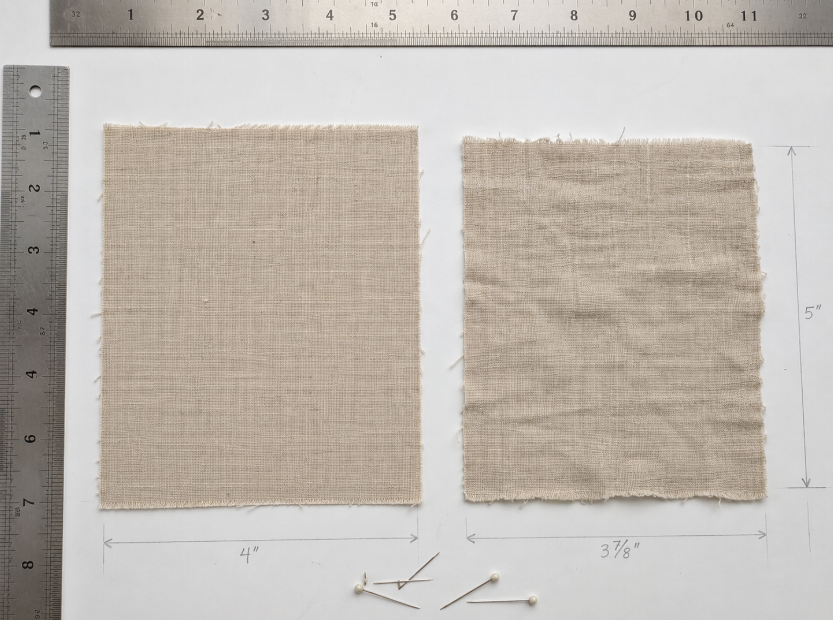
For Canvas ETC projects, the safest way to estimate shrinkage is to test a fabric sample using the same care method planned for the finished project. A swatch washed gently and air dried will not predict the same result as fabric washed hot and tumble dried.
Swatch test method
Linen can soften over time because repeated wear, washing, and flexing can relax the fabric structure. New linen often feels crisp because flax fibers are strong and the woven fabric can have a firm hand, especially before repeated use or laundering.
Softening is not the same as damage. Linen can become more flexible and comfortable while still retaining structure. The result depends on fabric weight, weave, finish, and care method. A tightly woven linen canvas may continue to feel more structured than a lightweight garment linen even after both fabrics relax.
Use gentle handling when softness is the goal. Aggressive heat, harsh chemicals, or abrasive laundering may change linen in ways that are difficult to control. Gradual softening through normal use and careful laundering is safer than forcing softness through high heat or rough treatment.
Linen wrinkles easily because flax fibers have low elastic recovery compared with more resilient fibers. When linen bends, folds, or dries in a crumpled position, the crease can remain visible instead of springing back quickly.
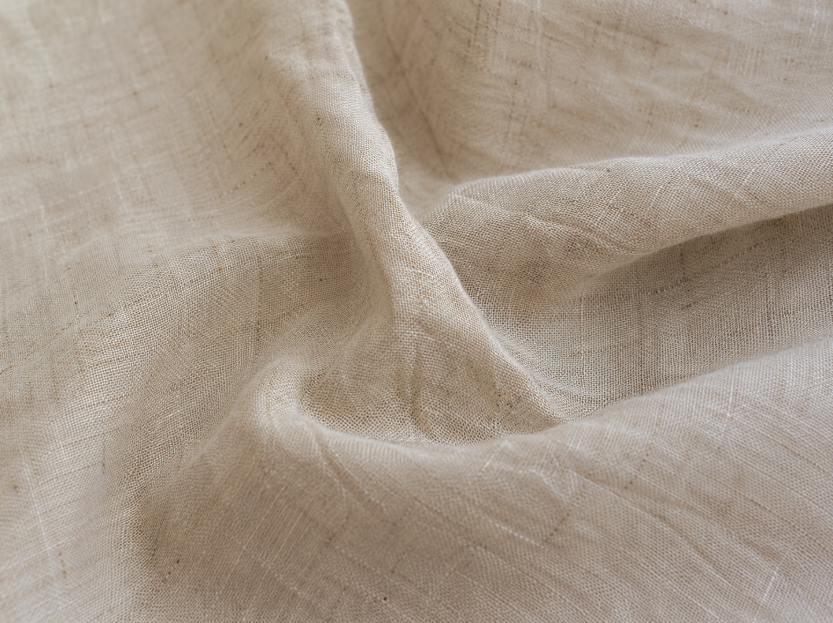
Wrinkles are not automatically a defect in linen fabric. Wrinkling is part of linen’s normal surface behavior. The practical goal is usually wrinkle management, not wrinkle elimination.
| Wrinkle cause | What it does | Better handling |
|---|---|---|
| Drying in a crumpled pile | Sets folds as the fabric dries. | Remove linen promptly and smooth it while damp. |
| High heat | Can set creases and increase dimensional-change risk. | Use air drying or low heat when the care label allows it. |
| Sitting or folding | Compresses the fabric along bend lines. | Expect some creasing during use. |
| Overdrying | Makes wrinkles harder to release. | Steam or press while slightly damp. |
| Storage under pressure | Creates fold lines. | Store linen loosely folded or rolled when crease control matters. |
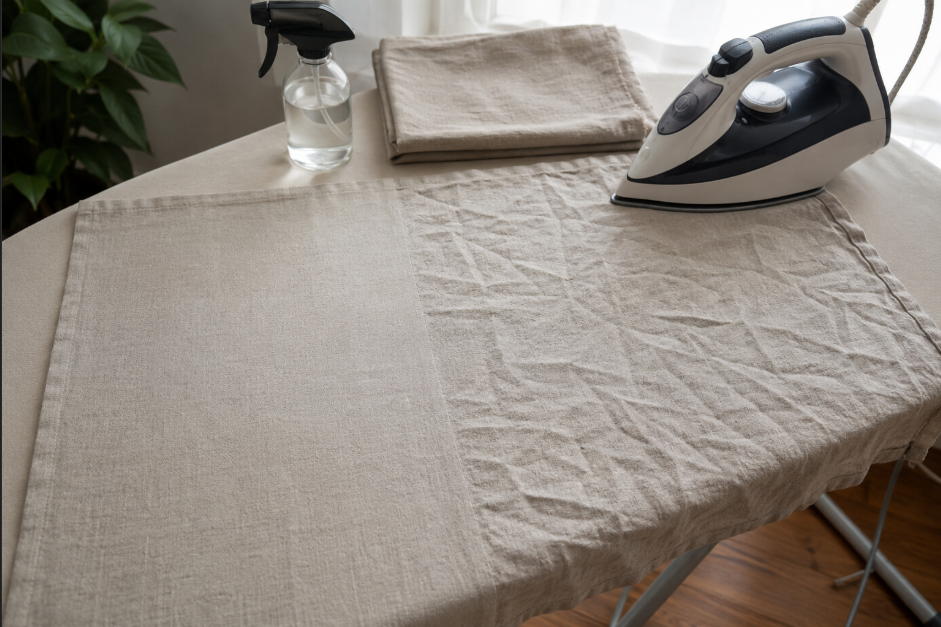
Linen care should match the result you want: preserve size, soften the hand, reduce wrinkles, or prepare yardage for cutting. For finished linen items, the care label controls because dyes, trims, linings, seams, and finishes may change the safe washing method.
| Goal | Wash | Dry | Press or finish | Avoid |
|---|---|---|---|---|
| Minimize shrinkage | Cool or lukewarm water; gentle cycle | Air dry or low heat if the care label allows it | Smooth while damp | Hot water, high heat, aggressive agitation |
| Encourage gradual softness | Gentle wash over repeated use | Air dry or low heat | Handle normally after drying | Harsh softening shortcuts |
| Reduce wrinkles | Do not overload the washer | Remove while damp; hang or lay flat | Steam or press while slightly damp | Letting linen dry in a crumpled pile |
| Prepare yardage | Wash a measured swatch first | Match the intended final care method | Remeasure before cutting | Cutting untested fabric when final size matters |
| Preserve finished garments | Follow the care label | Follow the care label | Use the recommended iron or steam setting | Treating every linen item the same |
If the linen is delicate, embroidered, lined, blended, printed, coated, or part of a structured item, use the most conservative care method and follow the label. General linen advice should not override specific product care instructions.
Prewashing linen is prudent when the final dimensions matter. Yardage for garments, cushion covers, panels, upholstery details, drapery, banners, or artist canvas preparation can change after moisture exposure, so a swatch test or prewash should happen before cutting when finished size must stay predictable.
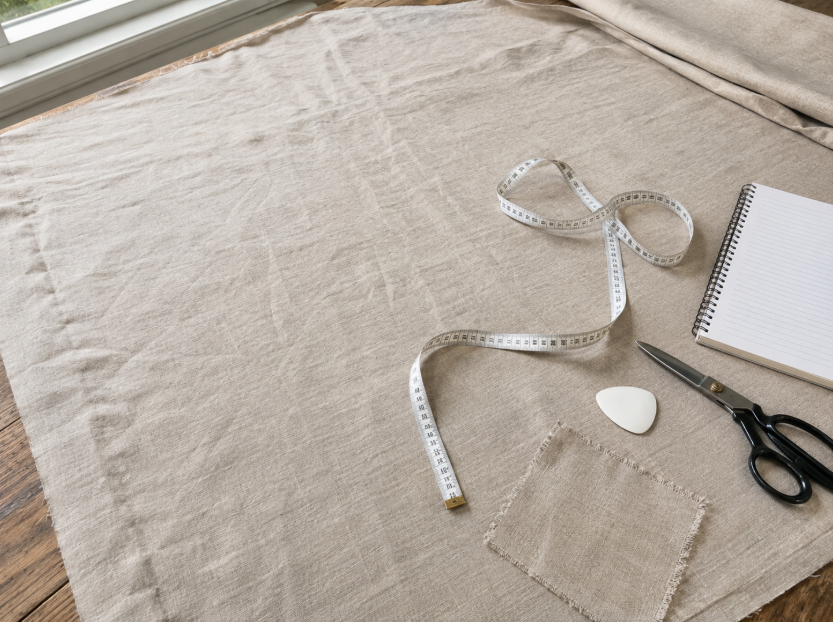
Use the intended final care method for the test. If the finished project will be washed cold and air dried, test that method. If the finished project may be exposed to warmer water or machine drying, test those conditions before committing to a layout or production plan.
| Project condition | Prewash or test? | Reason |
|---|---|---|
| Final fit matters | Yes | Shrinkage after cutting can change fit. |
| Panels must match | Yes | Uneven dimensional change can affect alignment. |
| Yardage will be washed later | Yes | Testing should match the expected wash method. |
| Artist canvas will be stretched, sized, primed, or exposed to moisture | Test first | Moisture or coating steps may affect tension and surface behavior. |
| Finished item has a care label | Follow the label | Construction may limit safe washing. |
| Decorative sample only | Optional | Size may not matter. |
For fabric projects, we recommend testing a swatch before committing to a cut plan when size, hand feel, color, or surface texture matters. Use printed fabric swatches and samples when you need to compare fabric behavior before cutting yardage.
Linen behavior matters differently depending on whether the linen is uncut yardage, a finished item, upholstery fabric, bedding, or artist canvas. The same shrinkage, softening, or wrinkle behavior can create different project risks.
| Use case | Main concern | Recommended handling | Useful next step |
|---|---|---|---|
| Linen yardage | Shrinkage before cutting | Test, prewash if needed, and remeasure before layout. | Order a swatch and plan yardage after testing. |
| Garments | Fit, seams, trims, and wrinkles | Follow the care label; wash gently; air dry or use low heat only if allowed. | Test first when sewing from yardage. |
| Bedding | Size, softness, and wrinkles | Use gentle washing and avoid overdrying. | Follow the product care label. |
| Upholstery | Fit, stability, and surface change | Do not launder installed upholstery fabric unless care instructions allow it. | Review linen upholstery fabric before selecting fabric. |
| Artist canvas | Tension, surface, sizing, and priming response | Test moisture response before stretching or finishing. | Review linen canvas fabric and product-specific preparation requirements. |
| Printed linen or linen blends | Color, finish, dimensional change, and print result | Test for color, finish, shrinkage, and surface change before production. | Use swatches for print-base evaluation. |
For artist-canvas projects, Canvas ETC’s product inventory includes 10 oz unprimed linen art canvas.
Linen problems need different fixes because shrinkage, stiffness, and wrinkles come from different fabric conditions. Some changes can be improved with moisture, reshaping, steaming, or pressing, but full reversal is not guaranteed.
| Problem | Likely cause | What to try | What not to promise |
|---|---|---|---|
| Linen shrank after washing | Hot water, high dryer heat, agitation, or untreated fabric | Rewet gently, reshape while damp, and air dry flat or hanging as appropriate. | Do not promise full size recovery. |
| Linen feels stiff | New fabric, finish, tight weave, or overdrying | Wash gently over time, use normally, and avoid overdrying. | Do not assume stiffness means poor fabric. |
| Linen wrinkles deeply | Crumpled drying, sitting, folding, or low elastic recovery | Mist, steam, or press while slightly damp. | Do not promise wrinkle-free linen. |
| Linen panels no longer align | Uneven shrinkage or cutting before testing | Remeasure, adjust the pattern or panel plan if possible, and test remaining yardage before cutting. | Do not cut remaining yardage without testing. |
| Finished item changed shape | Fabric, seams, trims, or construction reacted differently | Follow the care label; consult a cleaner or fabric professional for high-value items. | Do not use generic yardage advice for structured garments. |
The safest troubleshooting rule is to avoid adding more stress. Use moisture, patience, and controlled reshaping before applying heat or force.
Test a linen swatch when size, hand feel, surface texture, color, print result, or wrinkle behavior matters to the finished project. A swatch does not answer every production question, but it can reveal how a specific linen reacts before full yardage is cut, sewn, stretched, printed, or finished.
We recommend swatch testing for projects where linen will be washed later, fitted closely, stretched, printed, upholstered, sewn into matching panels, or used in multiples that must align. The test should record both measurements and qualitative observations, because shrinkage, softness, and wrinkles are related but separate outcomes.
| Test field | What to record |
|---|---|
| Fabric name | Exact product or sample label |
| Fiber content | 100% linen, blend, or unknown |
| Width and length before care | Measured values |
| Wash method | Water temperature, cycle, detergent |
| Dry method | Air dry, low heat, line dry, flat dry |
| Width and length after care | Measured values |
| Hand feel | Crisp, softer, firmer, or more relaxed |
| Wrinkle response | Light creasing, deep creasing, easier to press |
| Final decision | Prewash full yardage, adjust pattern, choose another fabric, or request more information |
Use these Canvas ETC resources as next steps after identifying which linen behavior matters for your project.
Linen does not have one universal shrinkage pattern. The most noticeable shrinkage risk often appears when untreated linen first meets water, heat, agitation, or drying, but later care can still affect dimensions if the fabric is exposed to harsher conditions than before. Test the actual fabric when size matters.
Linen shrinkage varies by fabric and care method. Fiber content, weave, finish, previous washing, wash temperature, agitation, and drying method all matter. Do not rely on a generic percentage for cutting or production; measure a swatch from the actual fabric.
Cold water generally lowers shrinkage risk compared with hot water, but cold water does not guarantee zero dimensional change. Linen can still change if the fabric is untreated, agitated heavily, dried with heat, or constructed in a way that reacts differently during laundering.
Some linen items may tolerate low dryer heat if the care label allows it, but high heat increases the risk of shrinkage and set-in wrinkles. Air drying is the safer default when size, fit, or surface appearance matters.
Linen can become softer with washing, wear, and repeated flexing, but the result depends on fabric weight, weave, finish, and care method. A heavy linen canvas may remain structured even after the fabric relaxes.
New linen can feel stiff because flax-based fabric often has a crisp hand, and some fabrics also carry finishing effects from production. Stiffness may relax with gentle washing and use, but stiffness alone does not prove that the fabric is defective.
Shrunken linen may sometimes be improved by gently rewetting, reshaping while damp, and air drying, but full recovery is not guaranteed. Treat any recovery attempt as partial adjustment, not a promise that the linen will return to its original size.
Linen tends to wrinkle readily because flax fibers have low elastic recovery after bending. Cotton and linen also differ by fiber structure, yarn, weave, finish, and fabric weight, so a full linen-versus-cotton comparison should be handled as a separate comparison topic. For canvas-specific selection, review differences between cotton and linen canvas.
Linen canvas is usually selected for structure, surface, stretching, or painting performance, while clothing linen is usually selected for drape and wearability. Both can respond to moisture and tension, but the project risk is different.