
Water resistant, water repellent, and waterproof describe different ways fabric handles water. Water resistant fabric can resist limited moisture, water repellent fabric sheds or beads water at the surface, and waterproof fabric resists water penetration under stated conditions. For fabric projects, the right choice depends on exposure time, water pressure, coating or finish, seam construction, abrasion, and maintenance.
Choose water resistant fabric for brief splashes or light moisture, water repellent fabric when you want water to bead and roll away from the surface, and waterproof fabric when the material or finished system must resist sustained water penetration. A fabric label is only a starting point. We recommend checking the material, weave, finish, coating, test rating, seams, and intended end use before choosing fabric.
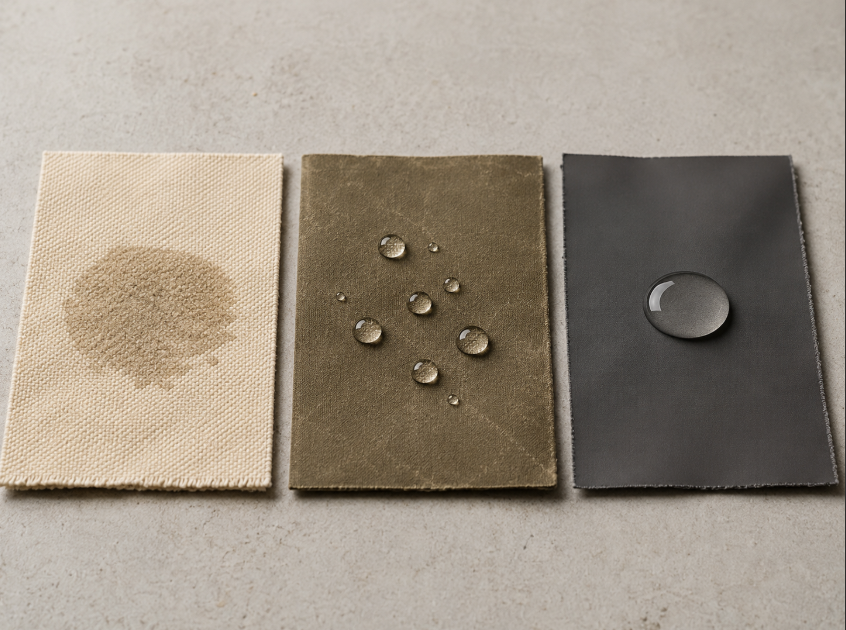
This guide is about fabrics and textile materials. Electronics IP ratings, watch water resistance, and building waterproofing use different standards and should be evaluated separately.
Water resistant, water repellent, and waterproof are not interchangeable because each term describes a different relationship between fabric and water. Water resistance describes limited resistance to moisture, water repellency describes surface shedding, and waterproofness describes resistance to water penetration under defined conditions. Waterproof fabric is commonly described as fabric that resists water penetration and wetting, and the term “waterproof” should be tied to a governing specification or test condition rather than treated as an absolute promise.
| Comparison Point | Water Resistant | Water Repellent | Waterproof |
|---|---|---|---|
| Plain meaning | Resists some water exposure | Sheds or beads water on the surface | Resists water penetration under stated conditions |
| Main performance type | Limited resistance | Surface behavior | Barrier performance |
| Common fabric factor | Fiber, density, weave, or light finish | DWR, wax, coating, or surface finish | Coating, laminate, membrane, film, or sealed system |
| Good fit | Brief splashes, light moisture, low-risk indoor/outdoor projects | Bags, outer layers, covers, and projects where surface shedding matters | Sustained rain, covers, tarps, marine-adjacent uses, and barrier applications |
| Main limitation | Can wet through under longer exposure | Can wet out, abrade, or lose finish performance | Base fabric performance can be reduced by seams, holes, closures, wear, or unsupported conditions |
| What to verify | Material, weight, weave, finish, and exposure limit | Finish type, care, abrasion points, and surface behavior | Coating, rating, seam plan, hardware, and finished-product construction |
For fabric selection, move from the label to the use condition. A tote bag, patio cover, marine cover, awning panel, printed fabric banner, or sewn outdoor accessory can require different levels of water protection even when similar words appear in the product description.
Water resistant fabric can resist limited contact with water, but it is not necessarily designed to block sustained water penetration. Use this term for light moisture, brief splashes, or short contact with damp surfaces, not as a guarantee that fabric will stay dry through heavy rain, pooling water, or pressure.
A fabric may be water resistant because of its fiber type, yarn density, weave structure, fabric weight, or finish. That resistance can change with exposure time, abrasion, washing, surface wear, and the way the fabric is cut or sewn. For example, a dense canvas or duck cloth may resist moisture differently than a loose, lightweight fabric, but the actual result depends on the specific material and any treatment applied.
Choose water resistant fabric when the project faces occasional moisture rather than sustained wet exposure. For a deeper Canvas ETC guide on cotton duck and moisture performance, see is cotton duck waterproof.
Water repellent fabric is designed or treated so water beads, sheds, or rolls away from the surface instead of soaking in immediately. Water repellency is a surface behavior, so a water-repellent finish can improve how fabric handles rain or splashes without making the fabric fully waterproof.
DWR, or durable water repellent, is a common finish used to make a fabric surface hydrophobic. DWR is commonly described as a coating or finish added to fabrics to make them water-resistant, and “wetting out” happens when the outer fabric becomes saturated enough to reduce surface shedding and, in some systems, affect comfort or breathability.
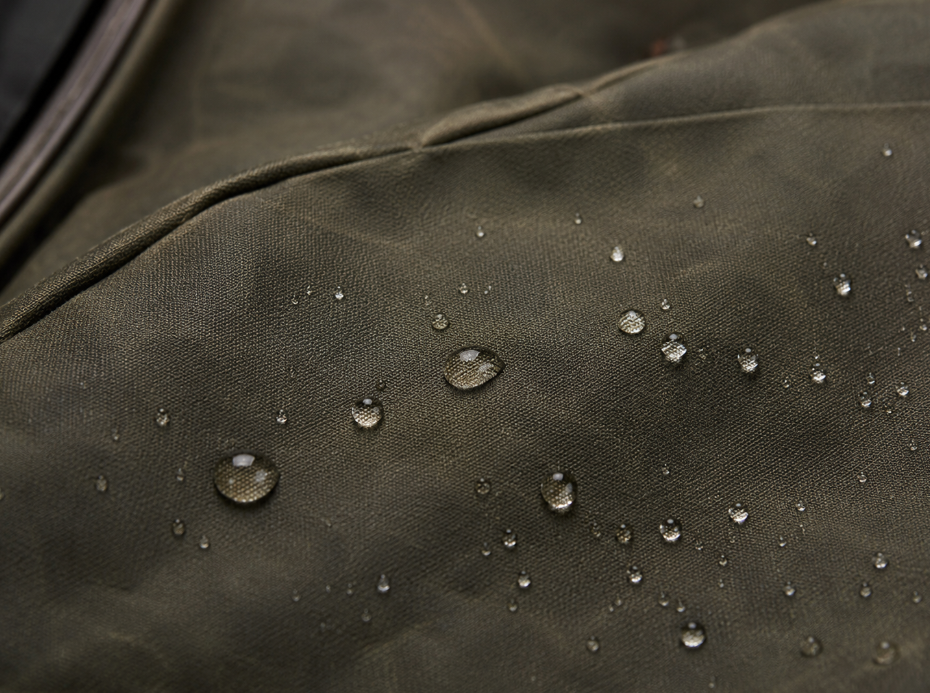
Waxed canvas also belongs in this category because wax changes how cotton canvas interacts with water at the surface. Waxed canvas can shed water better than untreated cotton canvas, but waterproof performance depends on the base fabric, wax, age, maintenance, seams, and exposure conditions. For a deeper Canvas ETC guide, see is waxed canvas waterproof.
Waterproof fabric resists water penetration under specified conditions, but waterproof should not mean “never leaks under any condition.” In textile use, waterproofness usually depends on a coating, membrane, laminate, film, or other barrier layer, and stronger claims should be supported by a test method, product specification, or manufacturer rating.
Hydrostatic pressure testing is one way textile water-penetration resistance is evaluated. ISO 811:2018 is listed as a textile standard for determining resistance to water penetration using a hydrostatic pressure test. That matters because a waterproof claim should be connected to how the fabric was tested, not only to how the word appears in a product name.
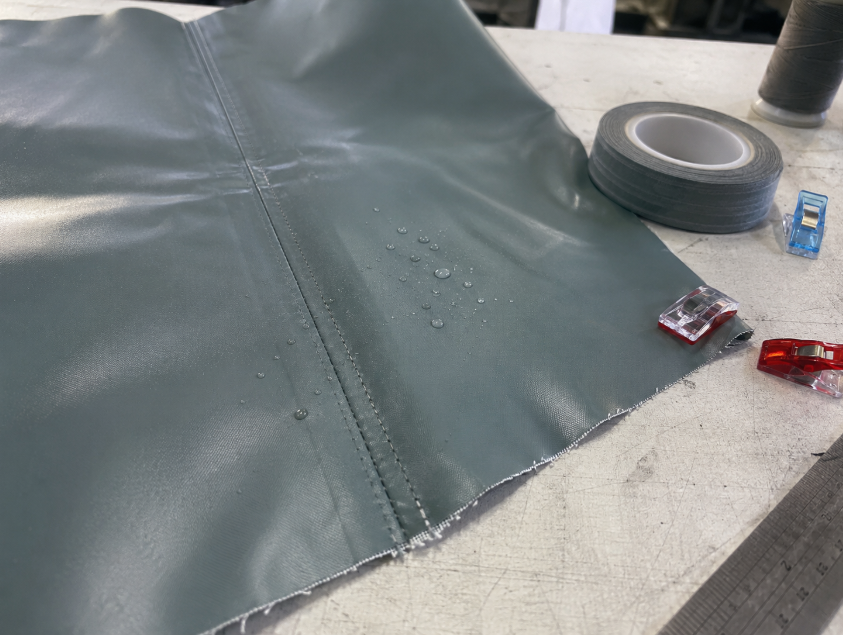
A waterproof base fabric does not automatically create a waterproof finished product. Stitching, needle holes, seams, zippers, grommets, cut edges, abrasion, folding, and coating damage can create water-entry points. Seam sealants are used on items such as rainwear, tents, backpacks, dry sacks, and dry suits to support waterproof seams, which shows why construction details matter after the fabric is selected.
Water protection in fabric comes from the combination of construction, finish, coating, and finished-product design. A fabric can resist water through a dense construction, shed water through a surface finish, or block water through a coating or laminate, but the finished result depends on the full material system.
Weave and fiber construction influence how quickly water can enter a fabric surface. A tighter, denser construction usually leaves fewer open spaces than a loose construction, but weave alone should not be treated as a waterproof guarantee. Fabric weight, yarn type, finishing, surface wear, and exposure conditions can all change the result.
For Canvas ETC projects, describe fabric by material, weight or denier, width, weave, finish, coating, and end use rather than by one moisture label. This is especially important when a project involves cutting, sewing, printing, slitting, or repeated outdoor handling.
Coatings, laminates, wax, and DWR finishes change how fabric interacts with water. DWR and wax mainly help water shed from the surface, while coatings or laminates can create stronger resistance to water penetration when the product specification supports that claim. Waterproof fabrics are commonly described as coated or laminated with materials such as wax, rubber, PVC, polyurethane, silicone elastomer, or fluoropolymers.
The practical buying question is not simply “Is the fabric waterproof?” The better question is: What material, finish, coating, test evidence, and construction method support the water-protection claim for this use case?
For deeper background on finishes and coatings, see canvas fabric treatments and denier fabric coatings.
Seams and stitching can reduce water protection because sewing joins separate panels and can create needle holes. A coated fabric panel may resist water penetration, but a stitched seam can still become a water-entry path if the seam is not sealed, taped, welded, bound, or otherwise designed for the exposure level.
Use this rule when specifying fabric for wet exposure: base fabric performance is only one part of finished-product performance. Covers, bags, awnings, cushions, and outdoor accessories need a construction plan that matches the water-exposure claim.
| Failure Point | Why It Matters | What to Verify |
|---|---|---|
| Needle holes | Stitching can puncture the material | Seam sealing, seam tape, welded seams, or an acceptable exposure limit |
| Zippers and closures | Openings can admit water | Closure type and storm-flap strategy |
| Cut edges | Coating or finish may not protect exposed edges | Edge binding, hemming, or sealing |
| Abrasion | Wear can reduce coating or surface finish performance | Expected rub points and care instructions |
| Folding and creasing | Repeated stress can affect coatings or wax | Flexibility and maintenance requirements |
| Grommets and hardware | Hardware creates holes and stress points | Reinforcement and water-entry control |
Choose water resistant, water repellent, or waterproof fabric by matching the fabric to expected exposure, pressure, duration, and construction. The strongest-sounding label is not always the right choice because waterproof barriers can affect breathability, hand feel, sewability, print compatibility, weight, and maintenance.
| Project Condition | Better Starting Point | Why | What to Verify Before Buying |
|---|---|---|---|
| Brief splashes, indoor/outdoor craft use, or light moisture | Water resistant | Limited exposure may not require a barrier fabric | Fiber, weight, weave, finish, and care |
| Bags, aprons, light covers, or accessories that need surface shedding | Water repellent | Beading and shedding can reduce surface wetting | Finish type, abrasion points, and maintenance |
| Outdoor covers, tarps, marine-adjacent uses, or sustained rain exposure | Waterproof or coated barrier fabric | Sustained exposure needs water-penetration resistance | Coating, test rating, seams, hardware, and edge finishing |
| Breathable outer layer or apparel-adjacent use | Water repellent or waterproof-breathable system | Comfort depends on vapor movement as well as rain resistance | Breathability data, DWR, lining, and construction |
| Printed fabric project | Depends on print method and finish | Coatings and treatments can affect print compatibility | Print process, coating, finish, and test swatch |
| Sewn finished goods | Depends on seam plan | Stitching can reduce water protection | Seam sealing, thread, needle size, and construction method |
For production planning, start with a swatch or sample when finish, hand feel, coating, color, or print compatibility matters. Canvas ETC offers printed fabric swatches and samples for material evaluation before larger yardage or roll decisions.
Fabric examples help translate the terms, but the product page or spec sheet must confirm any actual water-protection claim. We can discuss material categories such as cotton duck, waxed canvas, nylon packcloth, ripstop nylon, Sunforger canvas, and vinyl-coated fabrics as selection paths, but the final choice should be based on the current product details and intended use.
| Material Category | How It Fits the Comparison | Use-Case Direction | Claim Safety Note |
|---|---|---|---|
| Cotton duck / canvas | Often evaluated for water resistance, finish compatibility, and durability | Bags, aprons, covers, upholstery, work surfaces, craft and industrial projects | Do not call untreated canvas waterproof without evidence |
| Waxed canvas | Usually discussed as water repellent or water resistant, depending on wax, fabric, and construction | Bags, gear, accessories, heritage-style outdoor goods | Verify wax type, care, seam strategy, and product details |
| Nylon packcloth / denier nylon | Often selected for technical or lightweight projects; water behavior depends on coating or finish | Bags, linings, lightweight covers, and technical soft goods | Verify coating, denier, finish, and water-performance rating |
| Ripstop nylon | Adds a tear-management structure; water behavior depends on coating or finish | Lightweight gear, covers, bags, and utility projects | Ripstop weave is not the same as waterproofing |
| Vinyl-coated polyester or vinyl-coated fabric | Often considered for stronger barrier-style applications | Covers, outdoor barriers, utility projects, and industrial uses | Verify coating, weight, flexibility, seams, and exposure conditions |
| Sunforger canvas | Often considered for outdoor canvas applications | Tent, awning, and outdoor canvas contexts | Verify current treatment, care, and intended use |
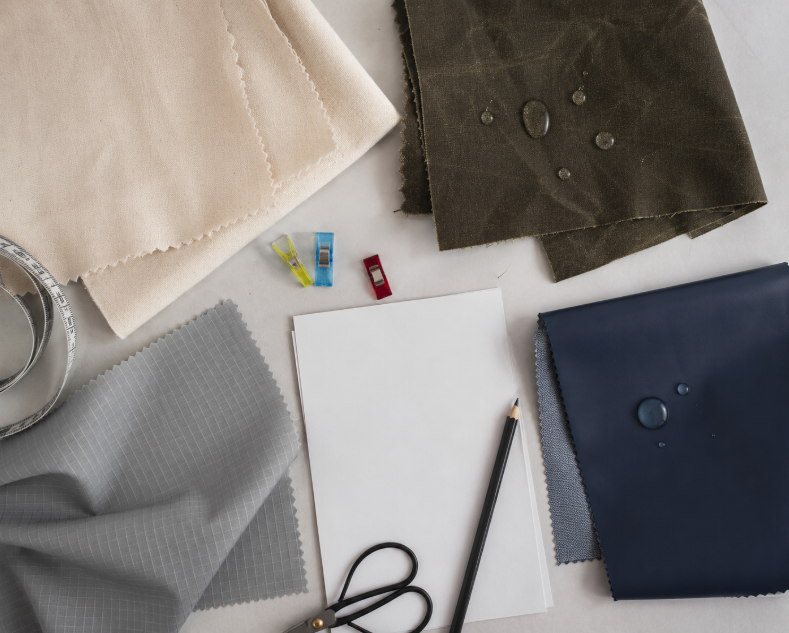
Keep product links selective. Link only when the material category directly supports the section, and avoid saying a product is waterproof unless the current product page or spec sheet supports that claim.
The safest way to compare water-protection claims is to verify the material, finish, coating, test evidence, seam plan, and end use. A fabric label gives a starting point, but a specification gives the buyer a way to judge whether that label matches the project.
| Verification Point | Why It Matters | Ask or Confirm |
|---|---|---|
| Material | Fiber and base construction influence absorbency, strength, and hand feel | Cotton, nylon, polyester, vinyl-coated polyester, canvas, duck, ripstop |
| Weight or denier | Weight and denier affect durability, drape, and application fit | Ounces, numbered duck, denier, or product weight |
| Weave | Construction affects openness and surface behavior | Plain weave, duck weave, ripstop, packcloth |
| Finish | Finish can affect water shedding, hand, and maintenance | DWR, wax, water-repellent treatment, mildew-resistant treatment |
| Coating | Coating can create stronger water-barrier behavior | PVC, PU, vinyl coating, silicone, or other coating |
| Test evidence | Claims need measurable support | Hydrostatic pressure, spray test, manufacturer spec, or lab data |
| Seams | Sewn construction can create leak paths | Seam tape, sealing, welding, binding, or acceptable exposure limit |
| Printing or fabrication | Finishes and coatings can affect production | Print compatibility, slitting, sewing, or cut-and-sew needs |
| Care and maintenance | Repellent finishes can change with use | Cleaning, re-treatment, wax care, coating care |
| Sample review | Hand feel and surface behavior are difficult to judge from words alone | Order swatches or samples before production |
For next-step evaluation, use printed fabric swatches and samples when the project depends on finish, print compatibility, coating feel, color, or hand.
Most buying mistakes happen when water-protection labels are treated as absolute guarantees instead of condition-based performance clues. The right fabric choice depends on exposure, water pressure, time, finish, coating, and construction.
| Mistake | Why It Creates Risk | Better Approach |
|---|---|---|
| Treating water resistant as waterproof | Water-resistant fabric may wet through under longer exposure | Match the term to expected exposure time |
| Treating water repellent as waterproof | Surface beading does not prove water-penetration resistance | Verify coating, test rating, and fabric construction |
| Ignoring seams | Needle holes and joins can create leak paths | Plan seam sealing, welding, binding, or acceptable exposure limits |
| Assuming coating never wears | Abrasion, folding, cleaning, and UV exposure can change performance | Confirm care and maintenance requirements |
| Buying by fabric name only | “Canvas,” “nylon,” or “polyester” does not define water performance | Check weight, weave, finish, coating, and use case |
| Using product links as proof | A product name alone may not prove a water-performance claim | Read the product page and spec sheet before publication or purchase |
| Forgetting the finished use | A flat fabric panel and a sewn product face different stresses | Evaluate the finished item, not only the yardage |
A practical rule for project planning is simple: if water failure could damage goods, equipment, displays, flooring, inventory, or customer products, move from label-based selection to specification-based selection.
Water repellent is not the same as waterproof. Water repellent describes surface behavior, usually water beading or shedding from the fabric face. Waterproof describes resistance to water penetration under specified conditions. A water-repellent fabric can shed light rain but still allow water through under pressure, long exposure, worn finish, or unsealed seams.
Water resistant does not mean waterproof. Water resistant means the fabric can resist some moisture, usually under limited exposure. Waterproof means the fabric or finished system is intended to resist water penetration under defined conditions, often with a coating, laminate, membrane, or test-backed barrier claim.
Waterproof is not always better than water repellent because the right choice depends on the project. A waterproof barrier may be more suitable for sustained rain or pooling water, but a water-repellent fabric may be more suitable when the project needs surface shedding, breathability, softer hand, easier sewing, or a specific visual finish.
Waterproof fabric can still leak if the finished product has unsealed seams, exposed needle holes, weak closures, damaged coating, worn finish, or water pressure beyond the supported condition. A waterproof material should be evaluated as part of a system that includes fabric, seams, edges, hardware, and maintenance.
DWR stands for durable water repellent. DWR is a finish added to fabric to make the surface hydrophobic, so water tends to bead or shed instead of soaking in immediately. DWR supports water repellency, but DWR alone should not be treated as proof that the fabric is waterproof.
DWR performance can decline with wear, abrasion, dirt, cleaning, and time. When the surface begins absorbing water instead of beading it, the fabric may be wetting out. The right fix depends on the fabric and finish, so follow the product care instructions and verify whether re-treatment is recommended for that material.
Cotton duck is not automatically waterproof. Cotton duck can be dense, durable, and suitable for many projects, but waterproofness depends on the specific fabric, treatment, coating, finish, seams, and exposure conditions. For a deeper Canvas ETC guide, see is cotton duck waterproof.
Waxed canvas should not be treated as automatically waterproof. Waxed canvas often sheds water better than untreated cotton canvas, but waterproof performance depends on the base fabric, wax, age, maintenance, seams, and exposure. For a deeper Canvas ETC guide, see is waxed canvas waterproof.
The next step is to match the water-protection term to the material, finish, coating, seam plan, and end use. If the project only faces light moisture, start with water-resistant or water-repellent options. If the project faces sustained wet exposure, ask for coating details, test evidence, and construction guidance before treating any material as waterproof.
Use these Canvas ETC paths by task:
Before placing a production order, verify the current product page, finish, coating, care requirements, and intended exposure conditions. That verification step is the difference between choosing a fabric label and specifying a fabric system.