
Canvas fabric can be dyed when its fiber accepts the selected colorant and its finish allows the dye bath to wet the yarns. Uncoated cotton or linen canvas is a practical starting point for many small-batch immersion projects. Polyester, nylon, blends, waxed canvas, water-repellent canvas, vinyl-coated canvas, and primed artist canvas need different methods or may not be suitable. We recommend identifying the full fabric specification and approving a dry swatch before coloring yardage.
We separated fabric construction from fiber chemistry, checked current dye-manufacturer directions, used Cotton Incorporated’s CottonWorks textile guidance for preparation and dye classes, and used AATCC test descriptions for performance terminology. We treated the selected dye product’s label as the authority for quantity, temperature, time, pH, salt, alkali, fixative, and afterwashing. The procedure below is a control framework for uncoated cotton canvas, not a substitute for those product directions.
Canvas fabric is dyeable only when the colorant matches the fiber and the surface permits wetting. A dense weave can slow wet-out and make level color harder, but density alone does not decide compatibility. Fiber content and finish decide the first route. Our guide to canvas fabric material composition explains why cotton, linen, polyester, nylon, and blended canvases should not share one recipe.
| Canvas specification | Possible color route | Main constraint | Decision before yardage |
|---|---|---|---|
| Uncoated 100% cotton duck | Fiber-reactive or another cotton-compatible system | Sizing, oils, tight weave, and bath space | Scour or prewash as directed, then test a weighed swatch |
| Unprimed linen canvas | Cellulosic-fiber dye system | Existing finish, texture, and dimensional change | Confirm finish and sample the same lot |
| Polyester canvas | Manufacturer-specified synthetic-fiber dye or production coloration | High heat, equipment size, coating, and existing color | Confirm heat tolerance and coating before testing |
| Nylon canvas | Nylon-compatible dye system | Finish, coating, uneven components, and shade depth | Use the dye maker’s nylon directions on a representative sample |
| Cotton-polyester blend | Two-fiber process or pigment-based surface color | Each fiber accepts different dye classes | Expect a heathered or unequal result unless both fibers are addressed |
| Waxed, waterproof, or stain-resistant canvas | Usually stock color, replacement substrate, or tested surface color | The finish resists water and dye penetration | Stop the immersion plan until the finish is identified |
| Vinyl-coated canvas | Purpose-made coating color or replacement substrate | The exposed surface is a polymer coating, not bare fiber | Do not use an ordinary textile immersion recipe |
| Primed artist canvas | Paint on the prepared face or select unprimed material | Primer blocks access to the yarn surface | Choose unprimed canvas when fiber coloration is the goal |
CottonWorks textile dyeing guidance separates colorant classes by fiber and explains that both fibers in a cotton-polyester blend need compatible coloration. The matrix above uses that source as its chemistry boundary.
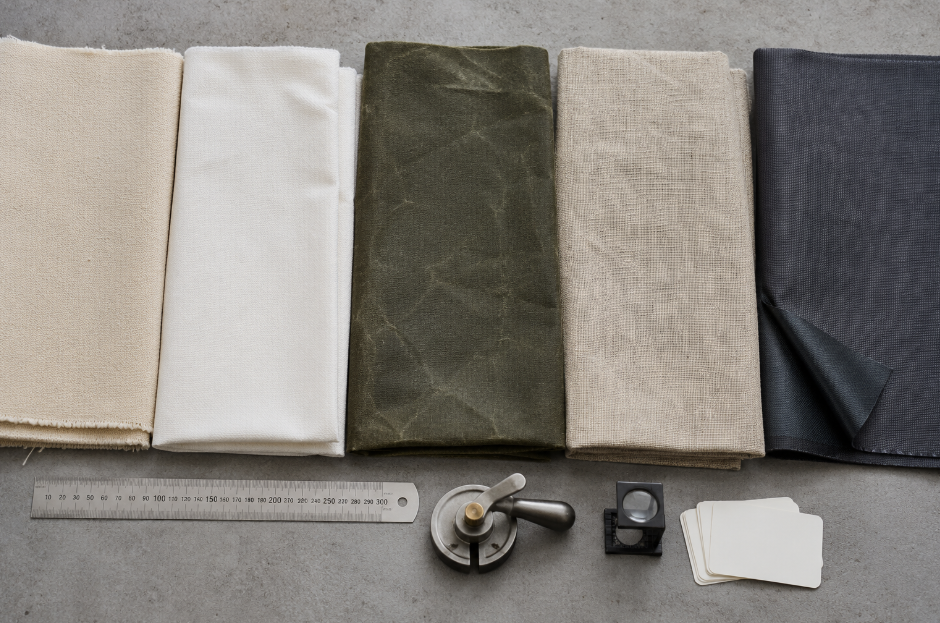
We start with material, dry weight, width, weave, yarn structure, finish, coating, existing color, and end use. A product name such as drop cloth, tote canvas, marine canvas, or artist canvas does not reveal all of those fields. The natural 10 oz cotton duck in a 72-inch width, for example, lists 100% cotton, no coating, a natural finish, single yarn, and an Oxford weave. That specification supports a cellulosic-dye test, although the current product page should be checked for stock status before purchase.
A white fabric is not automatically unfinished. Our white 10 oz cotton duck lists a water-repellent finish. That field changes the recommendation because a repellent can resist the same water that carries dye. Rit states that waterproof and stain-resistant finishes resist wetting and dye penetration, so a buyer should request a sample or select another substrate rather than assume that white canvas is ready for immersion dyeing. Read our canvas fabric treatments guide when a finish or coating appears in the specification.
Place a clean water drop on a hidden area or sample. Immediate absorption suggests that the surface wets, while persistent beading signals a finish or coating that needs identification. The screen does not identify fiber, prove complete finish removal, or predict final color. Product specifications and a representative dye trial remain the controlling checks.
Fiber-reactive dye is a strong candidate for clean cotton or linen canvas because the dye forms a covalent bond with cellulosic fiber. CottonWorks describes reactive dyes as forming strong bonds that produce good wash fastness, and Jacquard identifies Procion MX for cotton, linen, canvas, hemp, and other cellulose fibers with soda ash as the usual fixative. Exact recipes differ by product and technique, so use the selected manufacturer’s current instructions rather than mixing quantities from unrelated tutorials.
Direct dyes, vat dyes, sulfur dyes, and pigments also color cotton in industrial or specialized processes, but the classes differ in application and fastness. CottonWorks dyeing guidance notes that direct dyes are easy to apply but need aftertreatment for adequate wash fastness, while reactive dyes require control of hydrolysis. A home article should not convert that industrial overview into an improvised chemical recipe.
Fabric paint and pigment printing use binders to attach colored particles to the surface. CottonWorks explains that pigments are not dyes and that binder choice affects hand and colorfastness. Surface color can be useful for stencils, one-sided graphics, mixed fibers, or fabric that cannot enter a dye bath, but a sample must check adhesion, stiffness, rubbing, folding, and the final end use.
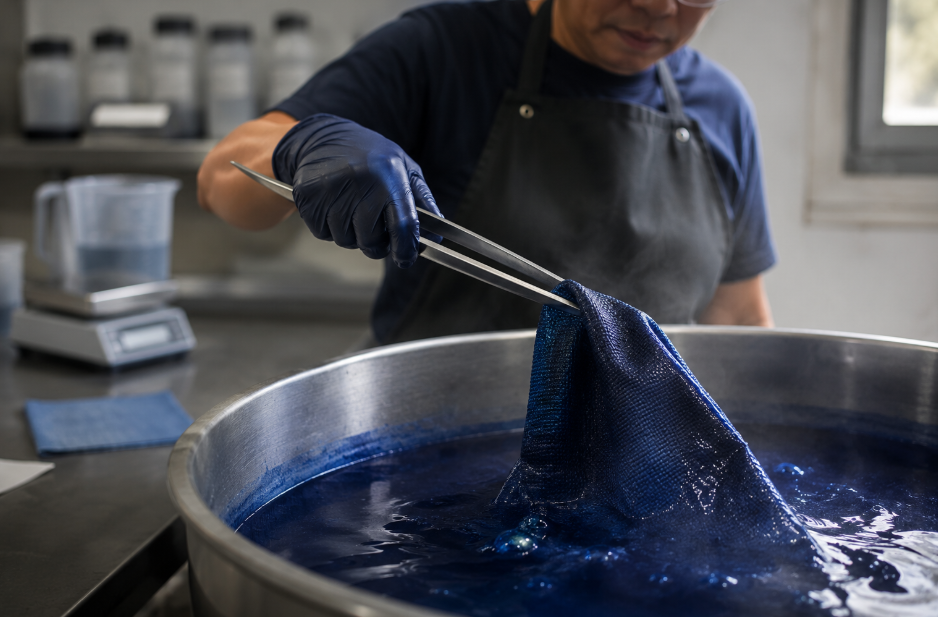
Scouring prepares cotton canvas by removing unwanted impurities and improving absorbency. CottonWorks identifies scouring as the first preparation stage for cotton and connects it with uniform cleanliness. At home, use the fabric and dye makers’ safe washing directions. Do not copy an industrial alkali recipe without equipment, chemical controls, and wastewater handling.
Heavy canvas needs more physical room than a light fabric of the same dry weight. A 15 oz organic cotton army duck has a different weight, width, and end-use profile from a 10 oz duck. We would not scale a recipe between those constructions without a new swatch and a recorded bath setup.
Polyester needs a synthetic-fiber color system. As one product-specific example, Rit DyeMore directs users to a near-boiling stovetop bath for polyester and related synthetics. That requirement makes large canvas panels impractical in many home setups. Coatings, backing, thread, webbing, hardware, and heat-sensitive components can create additional stop conditions. Our guide to polyester and nylon canvas helps identify the substrate before a color method is selected.
Waxed, waterproof, and stain-resistant canvas should not enter an ordinary immersion-dye process without finish-specific evidence. Rit reports that waterproof and stain-resistant finishes resist water and dye penetration. Removing an unknown finish can damage the fabric, change its hand, remove performance, or leave patchy residues. Purchasing the required stock color, selecting unfinished yardage, or testing a compatible surface system is usually a more controllable route.
Primer creates a painting surface and blocks direct access to the yarns on the coated face. Select unprimed material if the goal is to color the textile before stretching or priming. Our 10 oz, 88-inch unprimed linen art canvas shows why the words linen, 10 ounce, 88-inch, and unprimed belong in the purchasing specification.
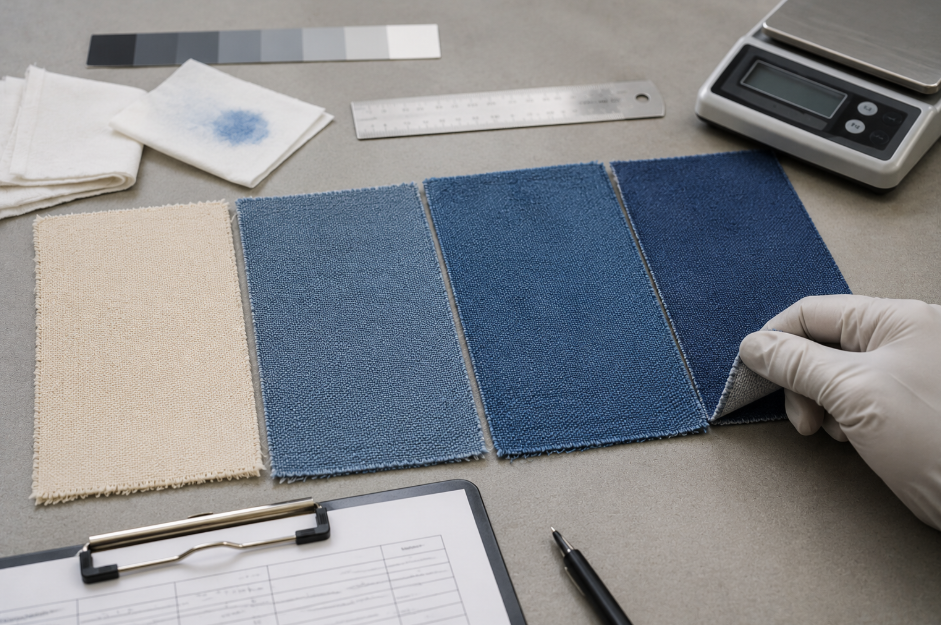
A dry representative swatch should control the scale-up decision. Rit recommends matching scrap fabric as the most realistic practical color test. The sample should come from the same substrate and finish lot. A paper towel can preview some cotton-dye color, but it cannot reproduce a dense canvas construction or a synthetic substrate.
Shade approval and colorfastness are different decisions. AATCC TM61 addresses accelerated laundering colorfastness. AATCC also lists TM8 for crocking, which evaluates color transfer by rubbing. Outdoor products may need light, water, weathering, coating adhesion, or other tests. No article, package label, or clear rinse can replace the test tied to the real end use.
| Substrate | SKU or description, fiber, dry weight, width, weave, yarn structure, finish, coating, existing color, lot |
|---|---|
| Color system | Dye or pigment product, color name or formula, lot, manufacturer instruction version |
| Bath | Dry sample weight, water volume, vessel size, temperature, time, pH when required |
| Additions | Salt, alkali, acid, fixative, detergent, wetting agent, amount, order, time |
| Movement | Agitation method, interval, folds or restrictions observed |
| Afterwash | Rinse sequence, detergent, temperature, cycles, drying method |
| Dry decision | Shade approval, hand change, dimensions, visible levelness, next action, reviewer, date |
| End-use tests | Laundering, crocking, light, water, coating adhesion, or another named method and result |
| Symptom | Probable causes | Check | Action |
|---|---|---|---|
| Water beads or color stays pale | Repellent, stain finish, wax, primer, or coating | Review specification and compare a wetting sample | Stop immersion dyeing; choose unfinished, stock colored, or surface-color material |
| Dark creases and light folds | Dry entry, incomplete wet-out, small vessel, or limited movement | Review the bath record and fold pattern | Repeat on a new swatch with complete wet-out and more movement room |
| Cotton shell colors but thread stays light | Polyester thread or mixed components | Identify fiber content for shell and components | Accept contrast, use a compatible second route, or recolor before assembly |
| Shade dries lighter | Wet fabric appeared darker than the final dry specimen | Compare only fully dry samples under the same light | Adjust the next sample, not the completed batch |
| Color transfers by rubbing | Unfixed color, incomplete afterwash, binder issue, or unsuitable system | Run a defined crocking check | Follow the product afterwash; reject or reformulate if the target grade is not met |
| Canvas feels stiffer | Residual chemistry, heat, coating change, pigment binder, or drying method | Compare with the undyed control | Do not approve the process until the end-use hand is accepted |
The examples below illustrate decision paths. They are not customer projects, production results, or measured Canvas ETC case studies.
A buyer specifies uncoated 100% cotton duck, 10 oz per square yard, 72 inches wide, single yarn, natural finish, and a bag end use. The buyer cuts and weighs a same-lot swatch, follows one fiber-reactive dye manufacturer’s recipe, records the bath and afterwash, dries the sample, and approves or rejects the shade before yardage. The buyer repeats the sample if the lot, finish, weight, or formula changes.
A maker finds white 10 oz cotton duck, but the specification lists a water-repellent finish. The maker stops the ordinary cotton immersion plan because finish compatibility is unresolved. A sample, finish detail, stock color, or printed route becomes the next action. The word cotton alone does not overrule the finish field.
A fabricator identifies a 600 denier polyester shell with a coating and outdoor exposure. The fabricator rejects a cotton-reactive recipe, checks whether the construction tolerates a synthetic process, and compares stock color or print-to-production sourcing. The final specification includes denier, width, weave, coating, color, seam plan, weather exposure, and required tests.
| Route | Fits | Control point | Main limit |
|---|---|---|---|
| Home sample dyeing | Small uncoated, compatible-fiber projects | Dry swatch and recorded recipe | Bath size, repeatability, and end-use testing |
| Stock colored canvas | Known solid color with simpler procurement | Physical swatch, lot, specification, and quantity | Available shades and lot variation |
| Production coloring | Larger runs with a defined solid-color target | Lab dip, substrate specification, tolerance, and tests | Minimums, lead time, and process capability need supplier confirmation |
| Custom printing | Graphics, repeats, multiple colors, gradients, or placement | Print proof, substrate, color workflow, and finishing | Ink, coating, hand, resolution, and end-use constraints |
Stock color can remove the uncertainty of a home dye bath. Our red 10 oz dyed cotton duck lists material, width, weave, finish, coating, color, and end-use fields on one product page. Buyers should request a physical sample because monitors do not establish the final shade and product pages do not guarantee light, rub, or print performance.
Printing is a separate route for repeat artwork or multicolor designs. Our guide to printing on canvas fabric covers substrate and process choices, while our background on hand-dyed fabric methods provides context for decorative small-batch work.
We can help compare cut-yard or roll canvas, swatches, stock colors, custom printing, and production support. Send us the material, weight or denier, width, weave, finish, coating, existing color, target color or artwork, quantity, construction plan, and end use. Those fields let us discuss a substrate and production path without pretending that every canvas should enter the same dye bath.
Some all-purpose dyes color washable cotton, linen, rayon, or nylon, but the result depends on fiber, finish, existing color, and the selected product. Check the label, test a same-fabric swatch, and do not apply a natural-fiber recipe to polyester or coated canvas.
Vinegar is not a universal dye fixative. A Procion MX fiber-reactive process commonly uses soda ash for cellulosic fibers, while other systems use different chemistry or heat. Follow one manufacturer’s directions for the exact dye and fiber.
Wax and water-repellent finishes resist the water that carries ordinary dye. Immersion can produce pale or patchy color and may damage the finish. Identify the treatment and compare unfinished canvas, stock color, or a tested surface-color method.
Polyester can accept a synthetic-fiber dye under product-specific heat and process conditions. Large panels, coatings, backing, and heat-sensitive components may make a home process impractical. Test the exact construction or source the required color at production scale.
Wet fabric appears darker than dry fabric. Uneven dry color can also trace to finish, incomplete wet-out, folds, limited bath room, inconsistent movement, mixed fibers, or uneven additions. Compare the dry sample with its bath record and undyed control before changing the formula.
Read the dye, auxiliary, and fabric-care labels before work. Use the named protective equipment, keep dye tools out of food service, ventilate as directed, and store products in their original labeled containers. The US Environmental Protection Agency advises households to follow product disposal directions and local waste-program guidance for products that may require special handling. Do not mix leftover chemicals or pour them into storm drains.
Update note: On July 12, 2026, we checked primary textile sources and the Canvas ETC links used in this guide. Product stock, finish details, dye instructions, and platform results can change, so recheck them before purchase, processing, or republication.