
To remove stains from fabric, we first identify the stain type, check the fabric type, test a hidden area, blot or lift excess residue, pretreat with the least aggressive method that fits the stain, then wash or rinse only within the fabric’s care limits. Fabric stain removal is a textile-care process controlled by stain type, fabric type, colorfastness, finish, and heat exposure. This guide covers washable fabric, cotton duck, canvas, coated or printed textiles, and dry-clean-only stop rules; it does not cover carpet, leather, suede, or hazardous contamination.
Do not use dryer heat, ironing heat, bleach, peroxide, solvents, or aggressive scrubbing before the fabric and stain have been checked. Dryer heat can make remaining stains harder to remove or permanent, and care labels should guide water temperature and drying choices.
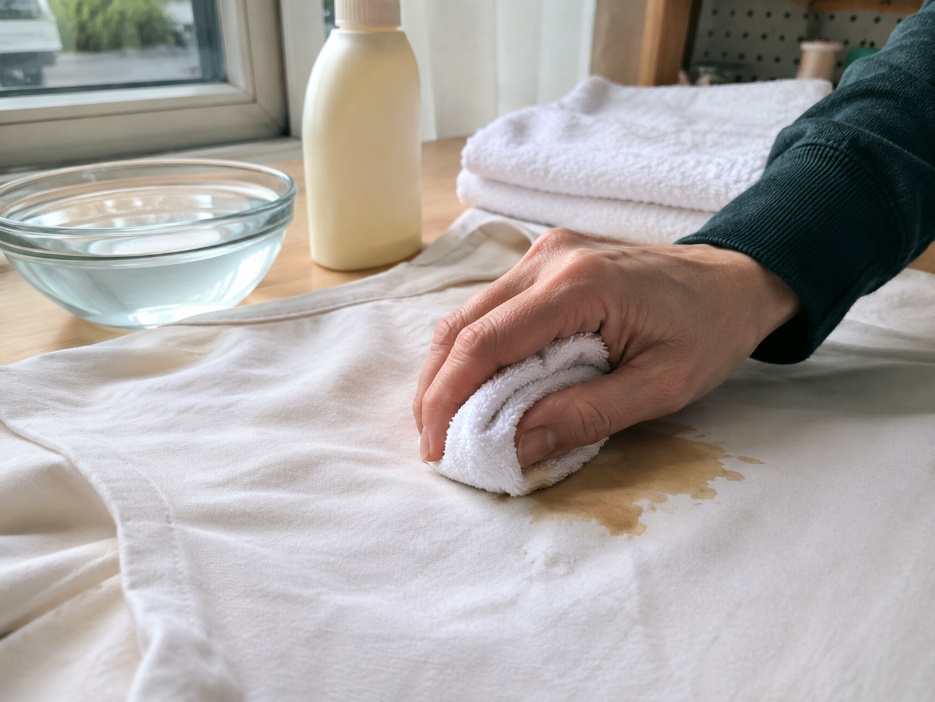
| If this is true | Do this first | Avoid this first |
|---|---|---|
| The stain is fresh | Lift solids, blot liquid, and treat before heat | Rubbing hard or drying |
| The fabric is washable | Follow the care label and pretreat gently | Water hotter than the care label allows |
| The fabric is dark, printed, dyed, waxed, or coated | Test a hidden area with the planned cleaner | Bleach, peroxide, solvents, or scrubbing without testing |
| The fabric is dry-clean-only | Blot excess residue and use professional care | Soaking, machine washing, or at-home stain chemistry |
| The stain is unknown | Start with cool water and a mild detergent test on washable, colorfast fabric | Hot water, bleach, mixed cleaners, or dryer heat |
Fabric stain removal should begin with three checks: what made the stain, what the fabric is made of, and what the fabric care instructions allow. The stain type points to the likely cleaning method, but the fabric type and finish decide whether that method is safe enough to try. A care label or supplier care instruction should override general stain advice because it defines the washing, bleaching, drying, dry-cleaning, or ironing limits for that textile.
Stain type determines the first pretreatment choice. Protein stains include blood, sweat, egg, dairy, and some food residue. Oil and grease stains include butter, cooking oil, machine oil, and some body oils. Tannin stains include coffee, tea, wine, juice, and some plant-based marks. Dye and ink stains need extra caution because the color can spread, migrate, or bond with the textile.
Fabric type controls how much moisture, heat, agitation, and cleaner strength the material can tolerate. Washable cotton and untreated cotton duck can often handle more water and gentle agitation than waxed canvas, coated polyester, vinyl-coated fabric, printed fabric, dark dyed fabric, or delicate fabric. A wax, coating, print, dye, flame-retardant treatment, or water-resistant finish can constrain the cleaner choice before the cleaner reaches the stain.
A colorfastness test reduces the risk of dye transfer, color loss, and visible surface damage. Apply a small amount of the intended cleaner to a hidden seam, underside, or scrap piece if one is available. Blot the test area with a white cloth and inspect the cloth for color transfer. If color transfers or the surface changes, the cleaner is too aggressive for that fabric in that spot.
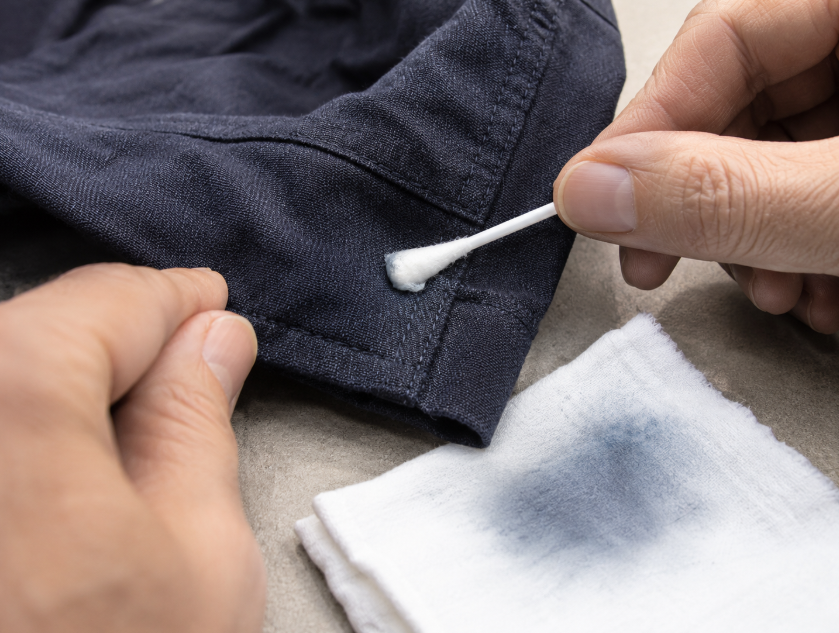
For most washable fabrics, stain removal works best as a controlled sequence: remove excess residue, blot, pretreat by stain class, wash or rinse within the care limits, then air dry and inspect. The order matters because rubbing can push a stain deeper, the wrong water temperature can make some stains harder to remove, and dryer heat can set a stain before the mark is fully gone.
Stain type controls the treatment path because different stain materials respond to different cleaning actions. Use the table as a stain-class guide for washable, colorfast fabric only. If the fabric is coated, waxed, printed, dark dyed, delicate, or dry-clean-only, the fabric limits come before the stain-removal method.
| Stain type | Common examples | Try first on washable, colorfast fabric | Avoid first | Source and review note |
|---|---|---|---|---|
| Protein | Blood, sweat, dairy, egg | Rinse with cool water, then pretreat with mild detergent or enzyme detergent if the fabric allows it | Hot water, steam, dryer heat | Protein-based stains can become harder to remove with heat, so start cool unless the care instructions say otherwise. |
| Oil and grease | Cooking oil, butter, body oil, machine oil | Blot, absorb excess if appropriate, then pretreat with detergent or a fabric-safe degreasing detergent | Plain water alone, dryer heat, dish soap on coated or waxed fabric without testing | Warm water may help grease only when the fabric can tolerate it; care limits still control the final choice. |
| Tannin | Coffee, tea, wine, juice | Blot, rinse with care-label-safe water, then pretreat with detergent or a suitable stain remover | Heat before inspection, aggressive scrubbing, untested bleach | Treat early and air dry until the mark is gone. |
| Dye and ink | Pen ink, marker, dye transfer | Blot carefully, test first, then use a product made for ink or dye only if the fabric care instructions allow it | Rubbing, soaking unknown dyes, bleach without label approval | Dye stains can spread during treatment, especially on printed or dark fabric. |
| Rust and mineral | Rust, metal marks, mineral stains | Use rust-specific guidance and test first | Chlorine bleach, heat before review | Rust is a separate stain class. For canvas-specific help, see how to remove rust stains from canvas fabric. |
| Unknown | Unidentified mark | Blot, test cool water and mild detergent on a hidden area, then reassess | Hot water, bleach, peroxide, solvents, mixed cleaners | Start with the least aggressive washable-fabric method because the stain chemistry is unknown. |
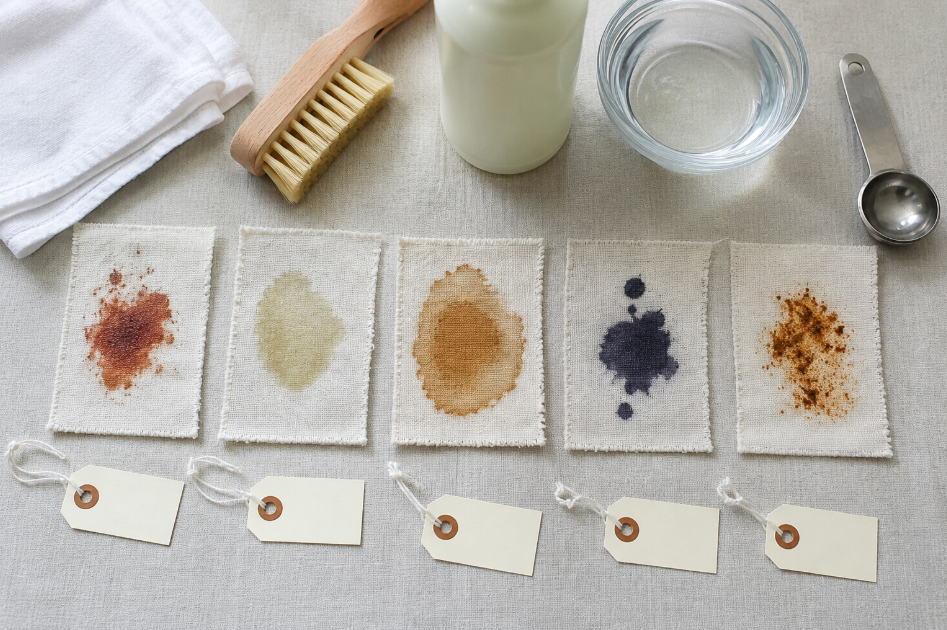
The same stain treatment can behave differently on different fabrics because fiber content, weave, dye, finish, coating, and washability control cleaning risk. We work with cotton duck, canvas, waxed canvas, vinyl-coated textiles, denier nylons, polyester fabrics, muslin, fleece, and printed fabrics, so we treat “fabric” as a material category, not just a synonym for clothing. The rows below are care-planning guidance, not a substitute for a care label, supplier instructions, product label, or fabric specialist review.
| Fabric or finish | Stain-removal risk | Safer first move | Avoid or verify first |
|---|---|---|---|
| Washable cotton | Moderate | Blot, test, pretreat, and wash by care instructions | Dryer heat before inspection |
| Cotton duck and untreated canvas | Moderate | Blot, test cleaner, use controlled moisture, and brush gently only when the fabric structure allows it | Harsh scrubbing that distorts the weave |
| Heavy canvas | Moderate to high | Use controlled moisture and gentle agitation | Oversoaking if shrinkage, stiffness, finish change, or panel shape matters |
| Waxed canvas | High | Blot and spot clean with minimal moisture according to waxed-canvas care instructions | Detergent soaking, hot water, bleach, solvents, or machine washing unless the product-care guidance allows it |
| Vinyl-coated or coated polyester | High | Wipe the surface gently with a cleaner approved for that coating | Abrasives, untested solvents, high heat, or cleaners that soften or lift the coating |
| Nylon, polyester, ripstop, and denier fabrics | Medium | Test, blot, and use mild detergent only if the coating and care instructions allow it | High heat or solvents that may affect coating, backing, or finish |
| Printed or dark dyed fabric | High | Test a hidden area and blot with a white cloth before treating the visible stain | Bleach, peroxide, prolonged soaking, and aggressive rubbing unless approved for that fabric |
| Muslin and light cotton | Medium | Use gentle washing or rinsing if the fabric is washable | Strong agitation that may distort or shrink the fabric |
| Fleece | Medium | Blot, use mild detergent if allowed, and handle with low friction | High heat that can affect pile, texture, or shape |
| Dry-clean-only fabric | High | Blot excess residue and use professional care | Home soaking, machine washing, bleach, peroxide, or solvent experiments |
For deeper fabric-care context, use canvas care and maintenance for general canvas upkeep, care for waxed canvas for waxed material, and canvas fabric treatments for finish and treatment context.
Old stains need slower treatment because time, prior washing, and heat can make a stain harder to release. A heat-set stain is a mark that has been exposed to dryer heat, iron heat, steam, or hot water before the stain was fully removed. If the fabric is washable and colorfast, repeat a gentle pretreatment and wash cycle before trying stronger chemistry. If the stain remains after several gentle attempts, the next safe step is fabric-specific review, not stronger chemistry by default.
| Problem | Likely cause | Safer next step | Stop when |
|---|---|---|---|
| Stain faded but remains | Partial release | Repeat the same gentle treatment before heat | Fabric changes texture or color |
| Stain darkened after washing | Heat, cleaner residue, or stain chemistry | Reassess stain class and fabric type | The mark spreads or dye transfers |
| Grease halo remains | Oil residue in fibers | Use detergent-based pretreatment only if the fabric and finish allow it | Coating, print, or dye reacts |
| Ink spread | Dye migration | Blot only and seek specialty guidance | Color keeps transferring |
| Fabric looks lighter | Dye loss or surface damage | Stop treating | Color change is visible |
| Coating feels sticky or lifted | Finish reaction | Stop and review coating care | Any coating change appears |
Stop treating a fabric stain when the cleaning process begins to damage the fabric, dye, coating, print, or texture. A stain is a problem, but stripped color, lifted coating, shrunken fabric, distorted weave, or a sticky finish can be harder to correct than the original mark. Stop and use professional or supplier-specific advice if the fabric is dry-clean-only, the dye transfers during testing, the surface becomes sticky, the coating lifts, the material changes shape, or the stain spreads during treatment.
Do not mix cleaning products to intensify a stain treatment. Bleach should not be mixed with ammonia, vinegar, acids, hydrogen peroxide, or other cleaners because those combinations can release hazardous gases or other harmful reaction products.
We recommend choosing fabric by end use, cleaning tolerance, finish, weight or denier, weave, and coating before a project begins. A shop apron, outdoor cover, tote bag, pet mat, banner, or workroom panel faces different stain risks than fabric used for decor, craft panels, or printed displays. If cleaning tolerance matters, order swatches, test the surface, and confirm the care limits before cutting or sewing the full project.
For project testing, use printed fabric swatches and samples when color, print behavior, coating response, or cleaning tolerance matters. For material selection, duck canvas by weight can help compare weight and application needs before choosing a fabric for a stain-prone project.
The first thing to do is remove excess residue, blot liquid, and identify both the stain type and fabric type. Do not rub hard, apply heat, or use bleach before checking whether the stain is protein, oil, tannin, dye, rust, or unknown.
Use the water temperature that fits both the stain and the care instructions. Cold water is usually the safer first choice for protein stains, colors, synthetics, delicate materials, and unknown stains. Warmer water may help oily stains only when the fabric can tolerate it.
Bleach can damage some fibers, dyes, prints, and finishes, so it should not be treated as a general fabric stain remover. Use bleach only when the care label, product label, and fabric type allow it. Do not mix bleach with vinegar, ammonia, hydrogen peroxide, acids, or other cleaners.
Old stains should be treated with a slower, lower-risk process: identify the stain, test the fabric, pretreat gently, wash or rinse within care limits, then air dry and inspect. If the fabric has already been dried with heat, removal may be harder and stronger treatment may create more damage.
Dryer heat can make a remaining stain harder to remove or permanent, so stained fabric should be air dried and inspected before tumble drying or ironing. This is especially important when the stain is oily, protein-based, dye-based, or only partly removed.
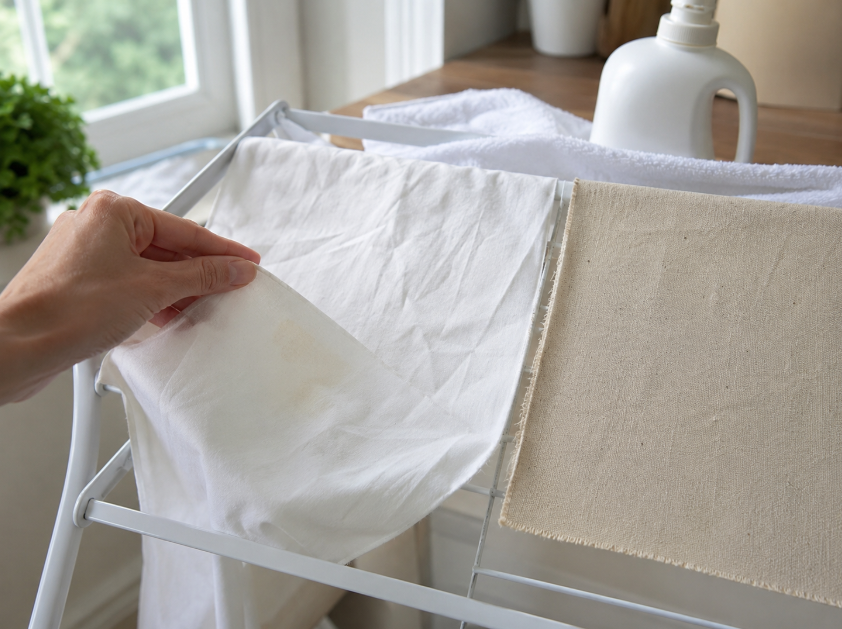
For canvas fabric, blot first, avoid harsh rubbing, test any cleaner on a hidden area, and use controlled moisture. Untreated cotton canvas and cotton duck can often tolerate more cleaning than waxed canvas or coated canvas, but the weave, dye, weight, and finish still matter.
If the stain is unknown, start with the least aggressive method on washable fabric: blot, use cool water, test mild detergent in a hidden area, and avoid heat. Do not use bleach, peroxide, solvents, or hot water until the stain and fabric are better understood.
Dry-clean-only fabric should not be soaked, machine washed, or treated with strong at-home cleaners. Blot excess residue only, then use a professional cleaner and tell them what caused the stain if known.
Key takeaways: To remove stains from fabric safely, match the treatment to the stain type, match the cleaning method to the fabric type, test before treating visible areas, avoid heat until the stain is gone, and stop when the fabric begins to change.