
Ballistic nylon, Cordura®, cotton duck canvas, ripstop nylon, and Kevlar® each dominate distinct mechanical failure modes in high-performance textile engineering. Cordura leads in rotary surface abrasion resistance (>3,500 Taber cycles) for scuff-heavy pack exteriors. Ballistic Nylon provides superior tensile tear strength (138 lbf Elmendorf) and snag resistance for luggage bottoms. Cotton Duck Canvas uniquely resists melting from sparks, hot slag, and high heat while providing breathable organic puncture tolerance. Ripstop Nylon maximizes strength-to-weight ratio by arresting tear propagation at ultralight weights (1.9–4.2 oz/yd²). Kevlar provides unmatched tensile tenacity (23–28 g/d) and cut/puncture defense for protective armor, but fails in direct sunlight and flex fatigue.
At Canvas ETC, our cutting-room evaluations, wholesale textile conversion facility, and contract manufacturing experience reveal that no single “super-fabric” solves every engineering challenge. Selecting the optimal material requires matching polymer chemistry, yarn morphology, and weave geometry directly against the operating environment’s physical stresses.
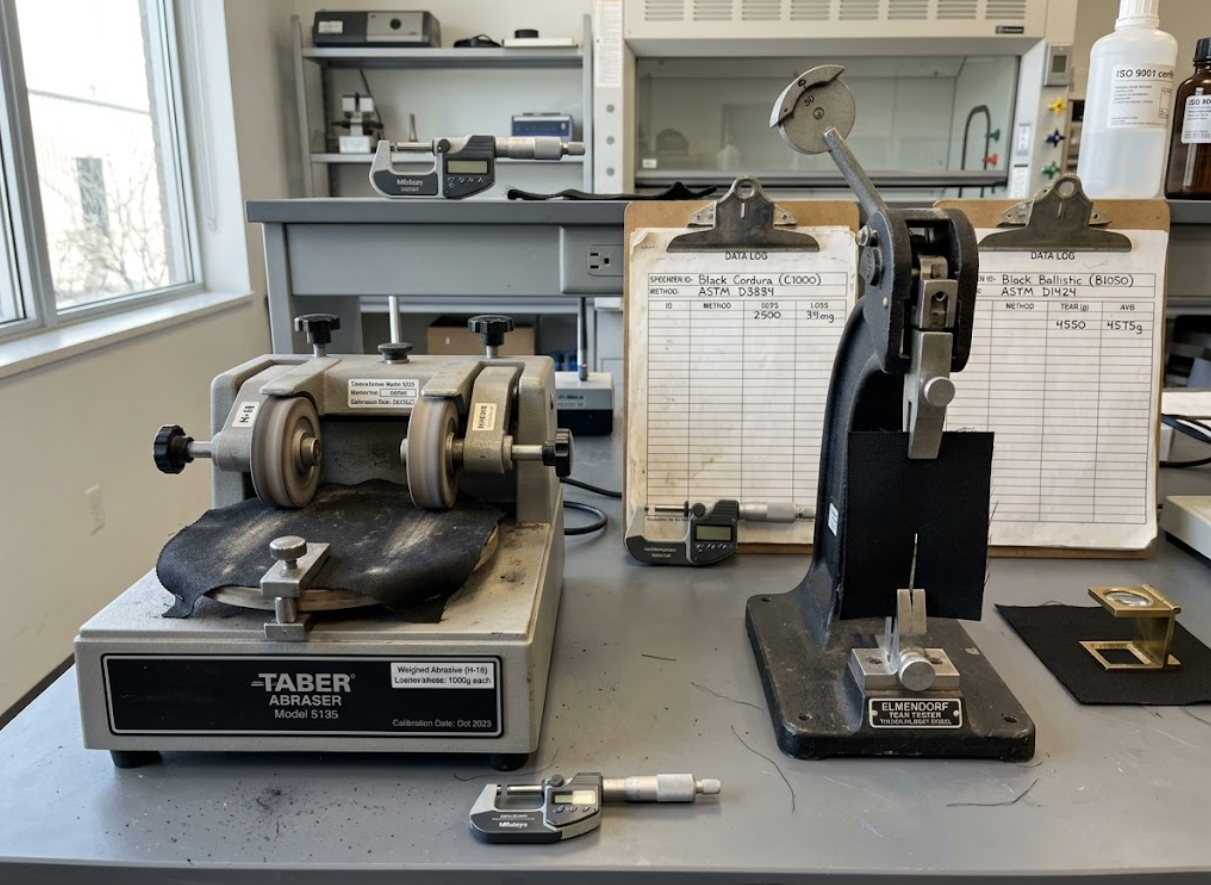
In industrial gear manufacturing and military procurement, qualitative claims such as “super durable” or “military grade” are functionally meaningless. Commercial specifications require verified, normalized laboratory benchmarks evaluated under standardized ASTM International test methods.
The following master comparison table normalizes the physical, mechanical, thermal, and manufacturing specifications of all five foundational textile classes. All data reflects laboratory testing on first-quality production-run goods conditioned per ASTM D1776:
| Material Class & Grade | Base Polymer Chemistry | Weave Geometry | Areal Weight (oz/yd² / GSM) | Tensile Grab Strength Warp / Fill (ASTM D5034) | Elmendorf Tear Strength Warp / Fill (ASTM D1424) | Taber Rotary Abrasion H-18 / 1000g (ASTM D3884) | Needle Puncture Peak Load (ASTM F2878) | Thermal Melting / Decomposition Point | Primary Industrial End Uses |
|---|---|---|---|---|---|---|---|---|---|
| 1050D Ballistic Nylon | High-Tenacity Filament Polyamide 6,6 | 2×2 Basket Weave | 14.5 oz/yd² (492 GSM) | 525 lbf / 470 lbf | 138 lbf / 126 lbf | 2,780 cycles | 28.4 N | Melts at 255°C – 265°C (491°F – 509°F) | Heavy luggage bases, tactical gear bottoms, tool bags, police duty belts |
| 1000D Cordura® Classic | Air-Jet Textured Polyamide 6,6 (Invista) | Dense 1×1 Plain Weave | 11.6 oz/yd² (393 GSM) | 445 lbf / 395 lbf | 85 lbf / 78 lbf | 3,850 cycles | 22.1 N | Melts at 255°C – 265°C (491°F – 509°F) | Combat rucksacks, tactical vests, outdoor backpacks, motorcycle shells |
| 500D Cordura® Classic | Air-Jet Textured Polyamide 6,6 (Invista) | Dense 1×1 Plain Weave | 7.5 oz/yd² (254 GSM) | 260 lbf / 235 lbf | 48 lbf / 44 lbf | 2,100 cycles | 15.6 N | Melts at 255°C – 265°C (491°F – 509°F) | Lightweight tactical gear, everyday carry (EDC) bags, hunting packs |
| #8 Cotton Duck Canvas | 100% Ring-Spun Cotton Cellulose | 1×1 Plain Weave (Double Fill Duck) | 18.2 oz/yd² (617 GSM) | 325 lbf / 245 lbf | 42 lbf / 38 lbf (ASTM D2261) | 1,420 cycles | 26.5 N | Does NOT melt; chars at ~250°C (482°F) | Welding jackets, heavy utility totes, industrial tool rolls, workwear aprons |
| #10 Waxed Duck Canvas | 100% Cotton Duck + Paraffin / Beeswax | 1×1 Plain Weave (Double Fill) | 14.7 oz/yd² (498 GSM) | 290 lbf / 220 lbf | 38 lbf / 34 lbf (ASTM D2261) | 1,650 cycles | 28.2 N | Wax softens >60°C; cotton base chars at ~250°C | Heritage luggage, outdoor jackets, forestry packs, foul-weather gear |
| 70D Ripstop Nylon | Continuous Filament Polyamide 6,6 | Plain Weave with Crosshatch Grid | 1.9 oz/yd² (65 GSM) | 95 lbf / 80 lbf | 16 lbf / 14 lbf | 420 cycles | 5.2 N | Melts at 215°C – 255°C | Ultralight backpacks, tent rainflies, pack liners, wind shells, parachutes |
| 210D Heavy Ripstop | Continuous Filament Polyamide 6,6 | Square Grid Plain Weave | 4.2 oz/yd² (142 GSM) | 195 lbf / 165 lbf | 28 lbf / 26 lbf | 680 cycles | 9.8 N | Melts at 255°C – 265°C | Hiking daypack bodies, duffel internal organizers, lightweight gear bags |
| 400D Kevlar® 29 Aramid | Poly(p-phenylene terephthalamide) | Dense 1×1 Plain Weave | 7.8 oz/yd² (264 GSM) | 1,180 lbf / 1,050 lbf | 185 lbf / 172 lbf | 1,950 cycles (surface fibrillates) | 44.2 N | Does NOT melt; decomposes at 450°C–500°C | Ballistic armor inserts, slash-proof gloves, motorcycle internal skid liners |
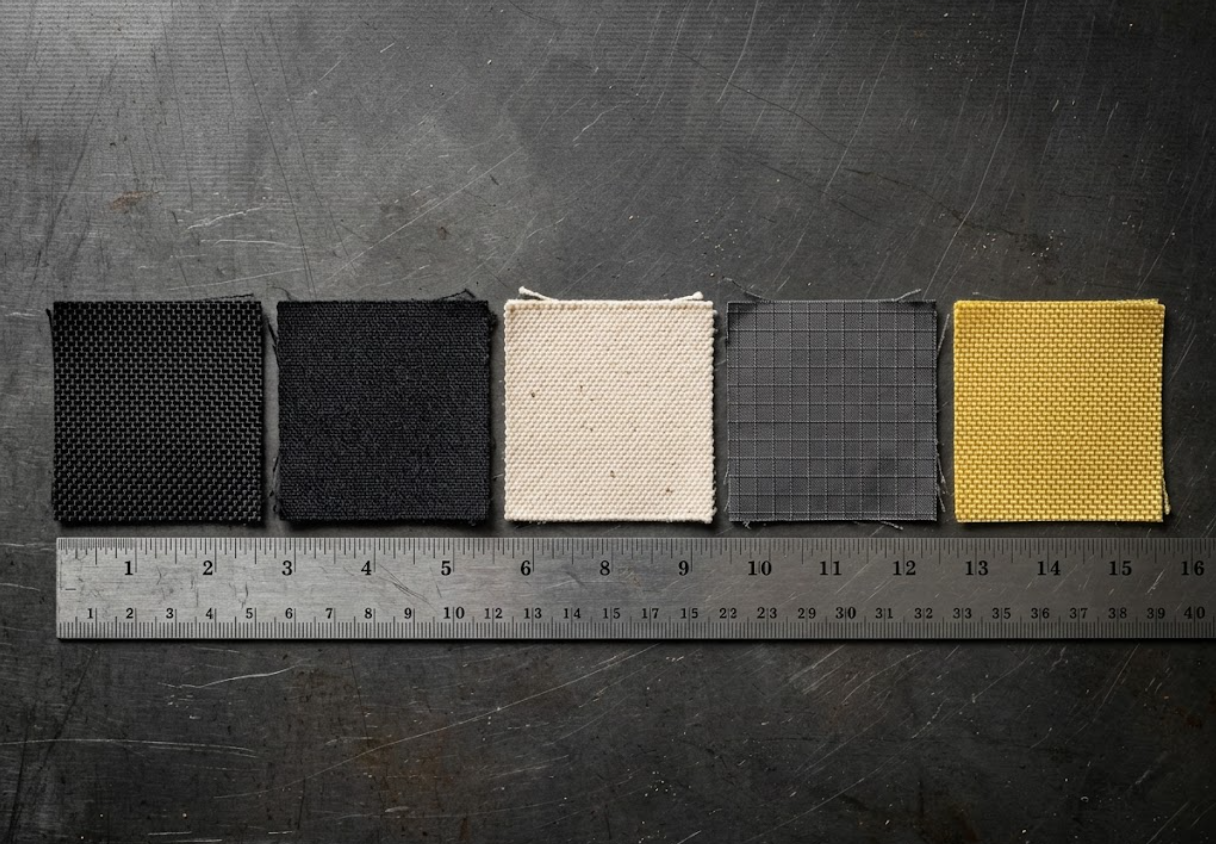
Cordura® provides superior rotary surface abrasion resistance, while Ballistic Nylon delivers higher tensile breaking and tear strength. Both textiles are commonly manufactured from high-tenacity nylon 6,6 polyamides, but their fundamental engineering divergence lies in yarn morphology and weave architecture. Understanding this distinction resolves the most common confusion in technical gear procurement.
The mechanical behavior of Cordura Classic is governed by DuPont Patent US 2,985,995, invented by A. L. Breen. During the manufacturing of Cordura yarn, continuous nylon filaments are subjected to a high-velocity air-jet texturing stream. This turbulent air disrupts the parallel filaments, entangling them into millions of microscopic loops and crimps. The resulting yarn mimics the spun texture and matte appearance of natural cotton while retaining synthetic polyamide tenacity.
In contrast, authentic 1050D ballistic nylon uses smooth, continuous-filament yarns that receive zero air texturing. These slick filaments are woven in a balanced 2×2 basket weave (two warp yarns interlacing over and under two filling yarns per repeat), governed by military specification MIL-C-83489.
The differences in yarn surface create radically different performance profiles:
To understand how yarn thickness translates into finished roll performance, review our detailed engineering guide on how to choose denier fabric.
In our testing laboratory, we evaluated 1000D Cordura Classic and 1050 denier ballistic nylon fabric under standardized ASTM conditions:
The 2×2 basket weave of ballistic nylon permits adjacent yarns to bunch together when pulled under high tensile stress, effectively multiplying the number of filaments sharing the load at the apex of a tear. For deep structural background on polymer lineage, consult our breakdown of what ballistic nylon is made of.
Beyond laboratory metrics, the tactile hand-feel dictates where each material belongs on a finished product:
If you are evaluating fabric weights for tactical gear, we stock 500 denier mil-spec Cordura nylon conforming to MIL-DTL-32439A Type III Class 3, providing an optimal balance of tactical durability and reduced carry weight.
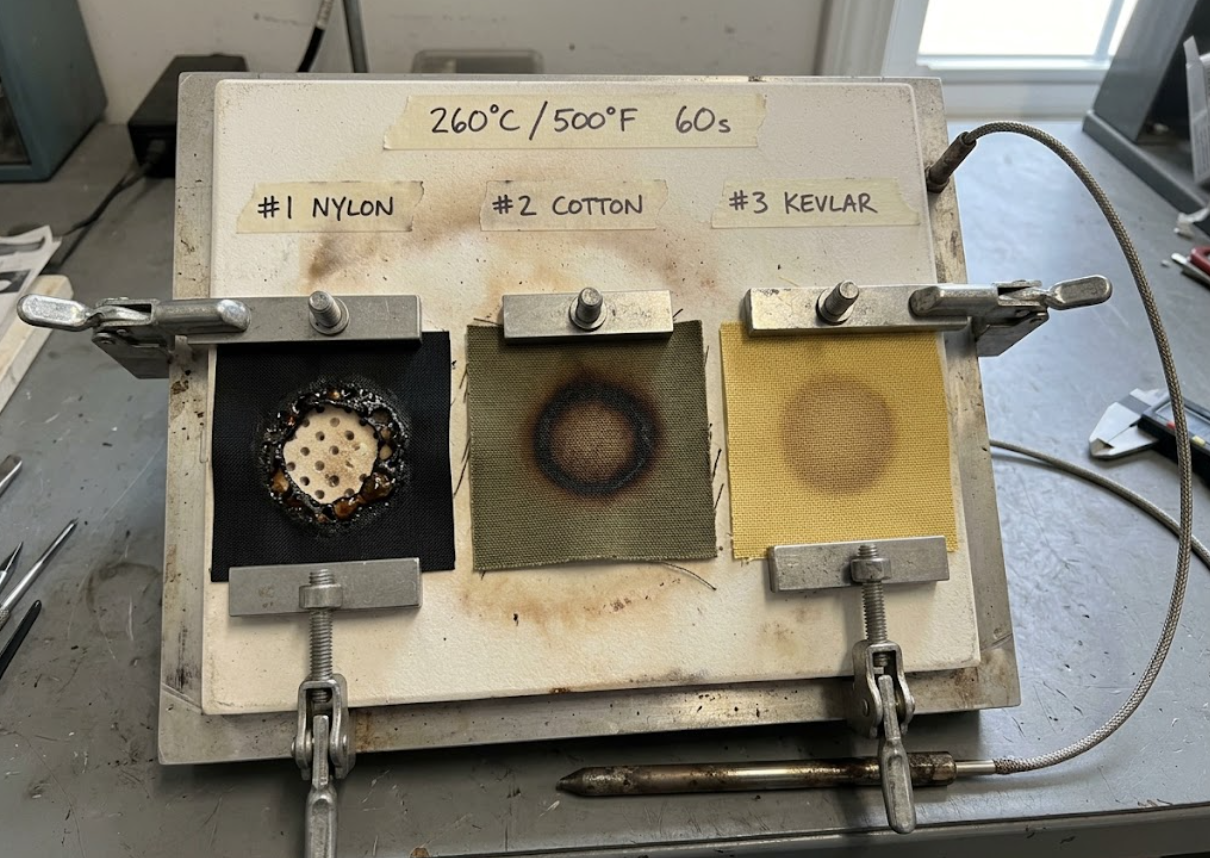
Cotton duck canvas excels in high-heat and spark-heavy environments where synthetic polyamides melt into skin-damaging molten plastic. Modern gear marketing often portrays natural canvas as an obsolete precursor to synthetic polymers. In industrial fabrication, welding, foundries, and heavy-duty utility, heavy cotton duck canvas possesses physical properties that synthetic nylon cannot duplicate.
The defining engineering divide between synthetics and canvas is thermal phase change:
For heavy industrial applications, foundry work aprons, blacksmithing tool rolls, and welding shop curtains, specifying #1 heavy-duty cotton canvas duck fabric (18 oz/yd² tight double-fill) provides mandatory life-safety thermal protection that nylon cannot offer.
For a comprehensive comparison of heritage canvas versus technical synthetics, read our comparative analysis of Cordura versus canvas duck.
While 1050D Ballistic Nylon and 1000D Cordura outperform cotton canvas in raw tear propagation per unit weight, heavy numbered duck cloth offers unique structural advantages:
Weatherproofing mechanisms reflect another fundamental engineering trade-off:
Ripstop nylon is engineered to halt tear propagation at a fraction of heavy denier fabric weight. In applications where finished product weight directly impacts user performance—such as ultralight trekking packs, mountaineering tents, military poncho shells, and parachute envelopes—specifying 1000D Cordura or 1050D Ballistic Nylon creates crippling dead weight.
Standard plain-weave lightweight fabrics (such as 30D or 70D taffeta) are vulnerable to catastrophic failure. Once a puncture is initiated by a thorn, tent stake, or ice axe, tensile tension concentrates at the cut’s apex. The single-filament threads shear sequentially like a zipper at loads below 5 lbf.
Ripstop fabric resolves this failure mode through structural weave geometry:
In our laboratory testing, 70 denier USA-made ripstop nylon fabric (1.9 oz/yd²) stopped an initiated tear at 16 lbf Elmendorf, providing exceptional security at 13% of the weight of 1050D Ballistic Nylon.
For production teams setting up cutting and seaming lines for lightweight synthetics, consult our technical tips for sewing ripstop nylon fabric.
Commercial gear developers specify ripstop nylon across three primary product architecture zones:
Ballistic nylon is not bulletproof; true ballistic, stab, and slash protection requires para-aramid fibers like Kevlar®. This is the single most pervasive misconception in the performance fabric industry.
The historical origin of ballistic nylon explains its name and its limits:
True modern ballistic armor vests require multiple plies of ultra-high-modulus para-aramid fibers (Kevlar® 29, Kevlar® 129), ultra-high-molecular-weight polyethylene (UHMWPE / Dyneema), or pressed ceramic strike plates.
Kevlar® is the registered trademark of DuPont for poly(p-phenylene terephthalamide), an aromatic polyamide (para-aramid) synthesized by Stephanie Kwolek in 1965 (US Patent 3,819,787).
The molecular difference between nylon and Kevlar is vast:
If Kevlar is five times stronger than steel, why don’t manufacturers build entire backpacks, duffels, and work pants from it? In commercial manufacturing, Kevlar suffers from four critical engineering liabilities:
The Engineering Consensus: Kevlar belongs in localized, internal, or encapsulated high-hazard zones: motorcycle road-rash skid panels (sewn behind an abrasion-resistant Cordura shell to shield it from UV), chainsaw protective chaps, puncture-resistant glove palms, and ballistic armor inserts.
A fabric’s mechanical durability in a dry laboratory means little if the material rots under rain, degrades in intense sunlight, or leaks during severe storms. The following matrix evaluates environmental endurance and chemical finishing across all five materials:
| Environmental Stressor | 1050D Ballistic Nylon | 1000D Cordura® Classic | Numbered Cotton Duck Canvas | 70D / 210D Ripstop Nylon | Kevlar® Para-Aramid |
|---|---|---|---|---|---|
| Direct Solar UV Resistance | Moderate (1,000+ hours before significant tensile loss) | High (Textured surface holds pigment and UV inhibitors well) | High (Natural cellulose degrades slowly; retains structure over years) | Moderate (Requires UV-stabilized polyurethane or silicone coatings) | Very Low (Severe photo-degradation; loses up to 50% strength under sunlight) |
| Hydrostatic Water Resistance | High (>1,200mm water column with standard 1.25 oz PU back-coating) | High (>1,000mm to 1,500mm water column with factory PU coating) | Moderate (Raw canvas absorbs water; requires wax or Sunforger finish) | High (>600mm to 2,000mm with silicone or PU coatings) | Low (Uncoated absorbs water; moisture weakens fragment performance) |
| Mildew & Fungal Susceptibility | Completely Immune (Polyamide does not support microbial growth) | Completely Immune (Synthetic polyamide does not rot or mildew) | Susceptible (Must be treated with antifungal finish or paraffin wax) | Completely Immune (Synthetic nylon base is immune to biological rot) | Completely Immune (Aromatic polyamide does not support fungus) |
| Chemical & Hydrocarbon Resistance | Excellent resistance to oils, greases, gasoline, and neutral solvents | Excellent resistance to oils, fuel, solvents, and environmental chemicals | Moderate (Absorbs oils and grease; can be stained unless waxed) | Good resistance to oils, mild acids, and common fuels | Exceptional chemical resistance to hydrocarbons, fuels, and organic solvents |
| Standard Factory Finishing | C6 DWR Face + 1.25 oz/yd² Polyurethane Clear Back-Coating | C6 DWR Face + 1.0 oz/yd² Polyurethane Back-Coating (MIL-DTL-32439A) | Natural Greige, Commercial Vat Dyeing, Sunforger Shrunk, or Paraffin Wax | Fluorocarbon DWR + Pigmented Polyurethane or Silicone (Silnylon) | Scoured Greige or Light Water-Repellent Treatment (Typically uncoated) |
Fabricating heavy technical textiles requires dedicated commercial manufacturing machinery. Attempting to stitch 1050D Ballistic Nylon, 1000D Cordura, or #8 Cotton Duck on a domestic home sewing machine results in stalled motors, skipped stitches, shredded thread, and bent needle bars.
At Canvas ETC, our contract sewing and cut-and-sew production support follows strict factory standard operating procedures:
A structural seam is only as strong as its thread. Standard home cotton thread (Tex 25) will fail instantly under heavy gear loads:
Edge finishing protocols vary sharply across fiber chemistries:
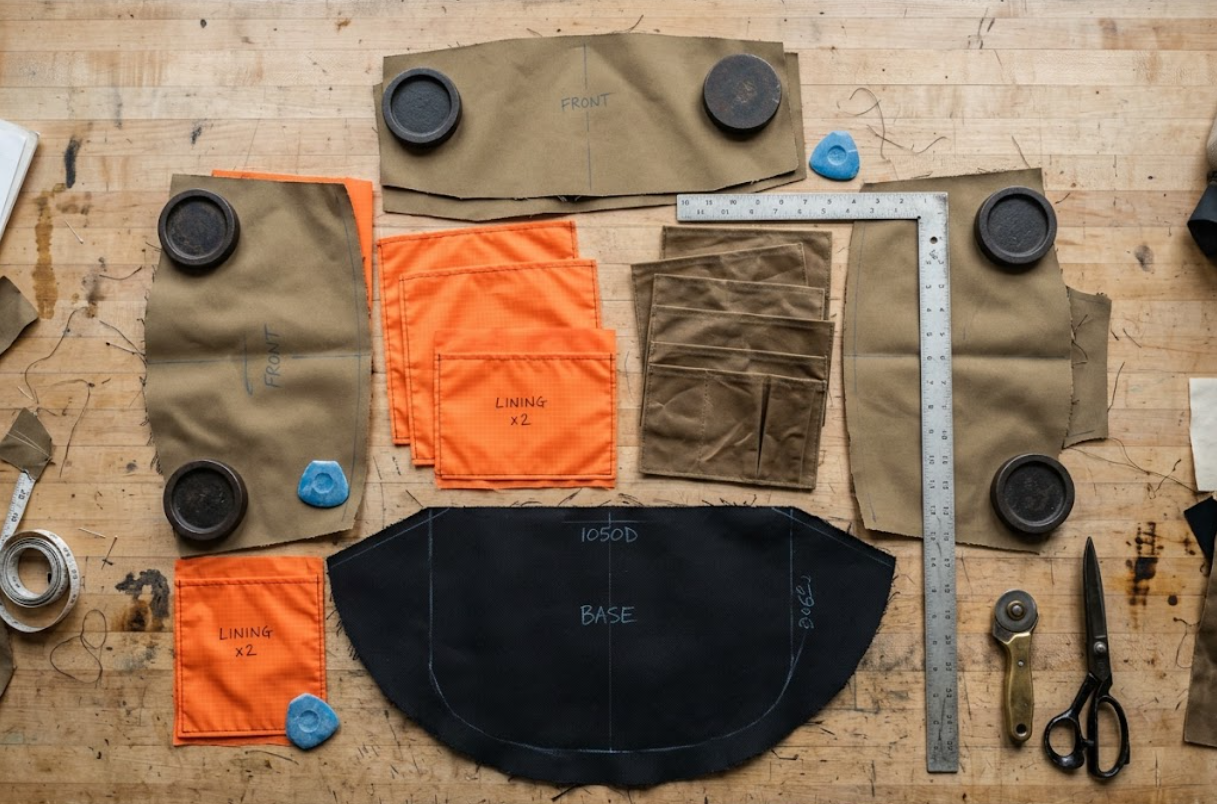
Premier gear design avoids single-fabric construction by allocating specific materials to distinct stress zones. In custom manufacturing, dogmatically specifying a single fabric across an entire product compromises performance. If an expedition bag is built entirely from 1050D Ballistic Nylon, it becomes an excessively heavy, rigid brick. If built entirely from 500D nylon, its base panel will wear through after a year of rough tarmac baggage handling.
To quantify the benefits of hybrid material architecture, our design team conducted an iterative prototyping study with a commercial outdoor equipment manufacturer developing an expedition-grade 90-liter gear duffel:
Use this engineering decision framework to match your exact product requirements to the proper textile specification:
| Application Category | Primary Failure Mode & Stresses | Primary Recommended Fabric | Secondary / Reinforcement Fabric | Engineering Rationale |
|---|---|---|---|---|
| Heavy Travel Luggage & Rollaboards | Rough baggage conveyor drag, sharp corner drops, punctures | 1050D Ballistic Nylon | 500D Cordura or 210D Ripstop (Linings) | Ballistic nylon’s smooth basket weave glides over baggage belts without snagging; 525 lbf grab tensile prevents blowout. |
| Tactical Plate Carriers & Combat Packs | Crawling on gravel, rough aggregate abrasion, NIR concealment | 500D or 1000D Cordura® | 70D/210D Ripstop (Internal Pockets) | Air-jet textured Cordura provides maximum rotary abrasion against rocks and concrete while offering a non-reflective matte tactical surface. |
| Welding Jackets, Aprons & Shop Curtains | Flying hot sparks (1,000°C), molten slag, hot metal contact | #8 or #1 Heavy Cotton Duck Canvas | Kevlar Aramid Thread (Seams) | 100% cotton canvas chars at ~250°C without melting or dripping molten plastic onto skin; synthetic polyamides melt and cause severe burns. |
| Ultralight Backpacking Tents & Tarps | High wind shear, branch snag punctures, pack weight limits | 70D Ripstop Nylon (PU/Silicone) | 210D Ripstop (Floor Bathtub) | Crosshatch grid arrests tears from spreading at an ultralight 1.9 oz/yd²; packable into fist-sized stuff sacks. |
| Motorcycle Protective Garments | High-speed asphalt sliding abrasion, road rash friction heat | 1000D Cordura® Shell | Kevlar® Para-Aramid (Internal Liner) | Cordura shell takes initial asphalt friction; internal Kevlar liner shields against secondary slide wear and friction heat without exposure to solar UV. |
| Industrial Tool Rolls & Carpenter Bags | Sharp screwdrivers, oily tools, punctures, grease exposure | #8 or #10 Waxed Duck Canvas | 1050D Ballistic Nylon (Bottom Reinforcement) | Heavy plied cotton canvas deflects sharp points, absorbs grease without delaminating, and provides rugged heritage durability. |
For over three decades, Canvas ETC has served as a premier wholesale textile supplier and custom contract manufacturing partner for commercial brands, government contractors, tactical gear makers, and independent designers across the United States.
Our defining competitive advantage is our dual authority: we maintain deep warehouse inventories of heritage cotton duck canvas alongside military-specification technical denier synthetics, backed by in-house industrial production machinery:
Whether you are engineering an expedition duffel, specifying mil-spec tactical gear, or outfitting an industrial welding facility, our textile specialists are available to review your bill of materials and provide verified ASTM test documentation.
Cordura provides superior rotary surface abrasion resistance (>3,500 Taber H-18 cycles for 1000D vs ~2,780 for 1050D Ballistic), making it better for scuff and drag wear against rough aggregate. Conversely, 1050D Ballistic Nylon delivers higher tensile breaking strength (~525 lbf vs ~445 lbf ASTM D5034) and higher tear resistance (138 lbf vs 85 lbf Elmendorf), making it superior for luggage bases and heavy load panels.
No, ballistic nylon is not bulletproof. Developed by DuPont in 1942 for WWII bomber flak jackets, ballistic nylon was engineered to catch low-velocity fragmentation and explosive shrapnel (~800 ft/s). It cannot stop modern handgun or rifle rounds (1,000–1,400+ ft/s). True ballistic protection requires ultra-high-modulus para-aramid textiles like Kevlar (23 g/d tenacity) or ceramic composite armor.
Cotton duck canvas provides zero-melting thermal resistance that synthetic polyamides cannot replicate. While Cordura and Ballistic Nylon melt at 255°C (491°F) into hot molten plastic, 100% cotton duck canvas merely chars without melting, making it indispensable for welding gear, high-heat workwear, tool rolls, and campfire equipment. It also offers organic breathability and accepts rewaxable water-repellent wax.
Ripstop nylon is an engineered fabric that interweaves heavy reinforcement threads in a square grid (4mm–6mm) to mechanically arrest tear propagation at an ultralight weight (1.9 to 4.2 oz/yd²). It is specified for ultralight backpacks, tents, tarps, and bag linings where 1000D Cordura (11.6 oz/yd²) or 1050D Ballistic (14.5 oz/yd²) would add excessive dead weight.
Kevlar is unsuitable for complete backpack shells due to four major limitations: severe photo-degradation under solar UV light (losing up to 50% tensile strength unless shielded), poor flex fatigue causing fibers to break down under repeated sharp creasing, extreme difficulty in cutting and sewing which destroys standard tools, and high cost ($45–$95+/yd vs $12–$22/yd for Cordura).
No, commercial-grade 1000D Cordura, 1050D Ballistic Nylon, and #8 cotton duck require a compound-feed walking foot industrial sewing machine. Multi-layer assemblies cannot be penetrated by domestic machines without motor stalling, skipped stitches, and needle breakage. Industrial fabrication requires System 135×17 (DPx17) needles in sizes #18 to #22 and Tex 70 to Tex 90 bonded nylon or polyester thread.