
Linen fabric weight is a fabric specification that helps buyers compare linen by mass, structure, drape, opacity, and likely project fit. In this linen fabric weights and GSM guide, use GSM, or grams per square meter, as the starting measurement, then confirm the fabric by project type, weave, finish, color, width, and swatch testing. GSM helps narrow the choice, but GSM does not prove fabric quality, upholstery durability, opacity, or finished hand by itself.
At Canvas ETC, we treat fabric weight as one part of a complete fabric-selection decision. A practical linen choice should connect the number on the spec sheet with how the fabric will be cut, sewn, hung, stretched, washed, or used.
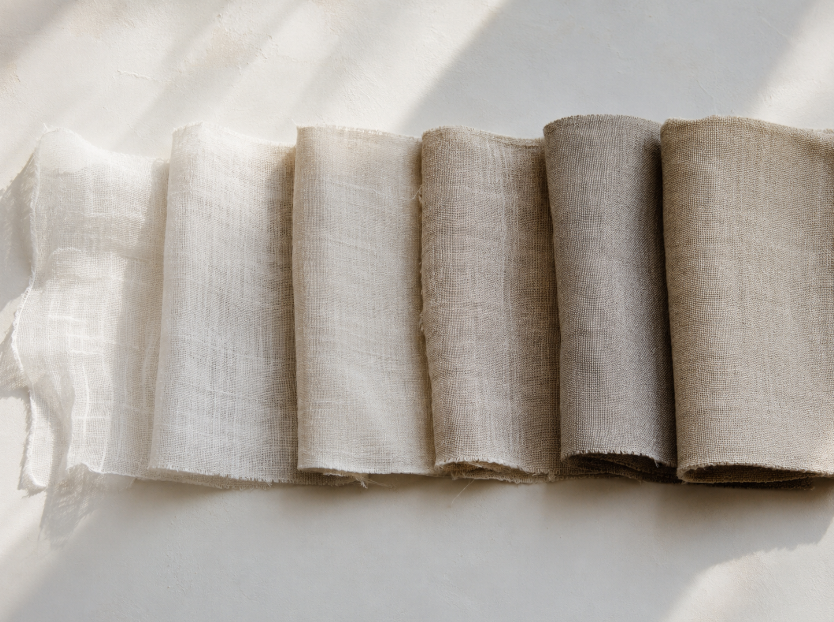
| If your project needs… | Start by looking at… | Verify before ordering |
|---|---|---|
| Airy garments, scarves, or sheer panels | Very lightweight to lightweight linen | Opacity, seam strength, lining need, and wash behavior |
| Shirts, dresses, bedding candidates, or light drapery | Light-to-medium linen | Drape, coverage, shrinkage, and finished width |
| Table linens, structured garments, curtains, or cushion accents | Medium-weight linen | Hand feel, seam bulk, crease behavior, and color |
| Heavy curtains, bags, décor, or upholstery candidates | Heavy linen | Abrasion needs, backing, cleaning method, and machine handling |
| Artist canvas or structured panels | Heavy linen or linen canvas | Texture, dimensional stability, primed or unprimed state, and intended medium |
Use this guide as a selection framework, not a substitute for swatch testing. Canvas ETC fabric swatches provide tactile decision support for buyers who need to compare color, texture, opacity, and hand feel before ordering larger quantities.
The linen GSM quick selection matrix gives starting ranges for comparing linen fabric weight by project. These ranges should be validated against the supplier’s specifications, the fabric’s finished state, and a physical sample before purchase.
| Linen GSM Band | Approx. oz/yd² | Weight Class | Common Starting Uses | Likely Feel and Behavior | Verify Before Buying |
|---|---|---|---|---|---|
| 80–120 GSM | 2.4–3.5 oz/yd² | Very lightweight linen | Sheer panels, delicate accents, airy layering | Very light, fluid, often sheer | Opacity, weave openness, seam strength, color visibility |
| 120–160 GSM | 3.5–4.7 oz/yd² | Lightweight linen | Warm-weather shirts, blouses, scarves, sheer curtains | Breathable, soft-draping, may show light through | Garment opacity, lining need, wash behavior |
| 160–200 GSM | 4.7–5.9 oz/yd² | Light-to-medium linen | Shirts, dresses, bedding candidates, light drapery | More body than lightweight linen while still flexible | Drape, shrinkage, hand feel, finished width |
| 200–260 GSM | 5.9–7.7 oz/yd² | Medium-weight linen | Structured garments, table linens, curtains, cushion accents | More stable, less sheer, stronger structure | Softness, crease behavior, seam bulk |
| 260–350 GSM | 7.7–10.3 oz/yd² | Heavy linen | Heavy curtains, décor, bags, upholstery candidates | Firm, substantial, more structured | Abrasion needs, backing, cleaning method, machine handling |
| 350+ GSM | 10.3+ oz/yd² | Very heavy linen | Specialty décor, structured panels, artist-canvas candidates, heavy upholstery candidates | Dense, firm, may be stiff depending on finish | End-use testing, width, finish, equipment compatibility |
Table note: These are practical starting ranges, not universal performance grades. Linen with the same GSM can behave differently when the weave, yarn, finish, color, or treatment changes.
Canvas ETC’s fabric-selection approach supports specification-based buying by keeping fabric weight, width, finish, material, and end use central to the decision. That approach is useful for online fabric buyers because the number alone does not show how a linen will feel, fold, hang, or sew.
GSM converts to oz/yd² by dividing the GSM value by about 33.9. This conversion helps U.S. buyers compare suppliers that list fabric weight in different units.
| GSM | Approx. oz/yd² |
|---|---|
| 120 GSM | 3.5 oz/yd² |
| 150 GSM | 4.4 oz/yd² |
| 180 GSM | 5.3 oz/yd² |
| 200 GSM | 5.9 oz/yd² |
| 250 GSM | 7.4 oz/yd² |
| 300 GSM | 8.9 oz/yd² |
| 350 GSM | 10.3 oz/yd² |
| 400 GSM | 11.8 oz/yd² |
Formula: GSM ÷ 33.9 = approximate oz/yd².
A conversion table is useful for comparison, but it does not describe hand feel, drape, opacity, thread size, finish, shrinkage, or suitability for a specific project.
GSM means grams per square meter, a mass-per-area measurement that describes how much one square meter of fabric weighs. In linen fabric selection, GSM helps compare lightweight linen, medium-weight linen, and heavyweight linen across different suppliers and fabric widths.
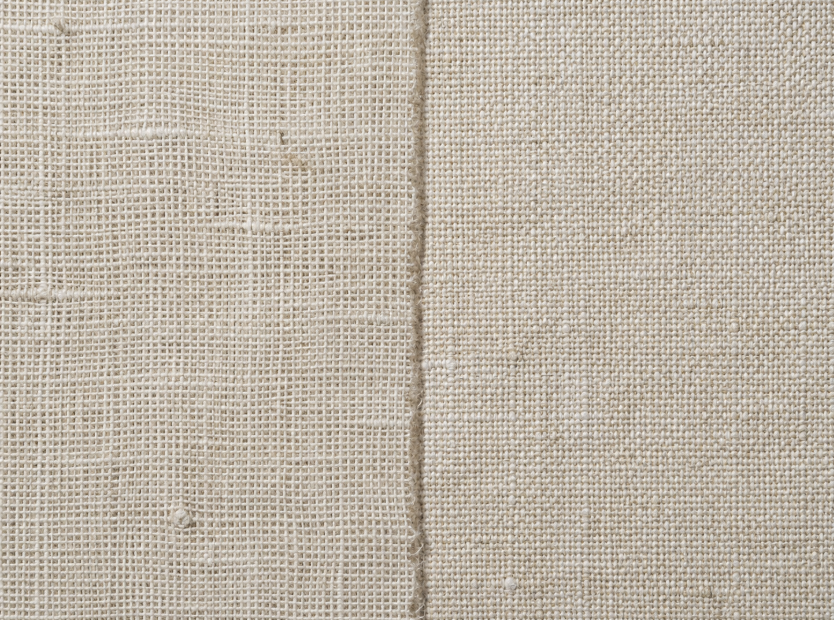
GSM is not the same as thread count, fabric thickness, opacity, or fabric quality. A 200 GSM linen in a tight weave can look and handle differently from a 200 GSM linen in a loose weave. A washed linen can also feel softer than an unfinished linen at a similar weight.
A good linen specification should pair GSM with width, weave, finish, color, and intended use. Canvas ETC’s practical fabric guidance is useful here because a complete textile choice depends on more than weight alone.
Choose linen weight by the project’s required behavior before choosing a number. Clothing needs comfort and movement, curtains need the right balance of drape and light control, upholstery candidates need durability checks beyond GSM, and artist canvas needs texture and surface stability.
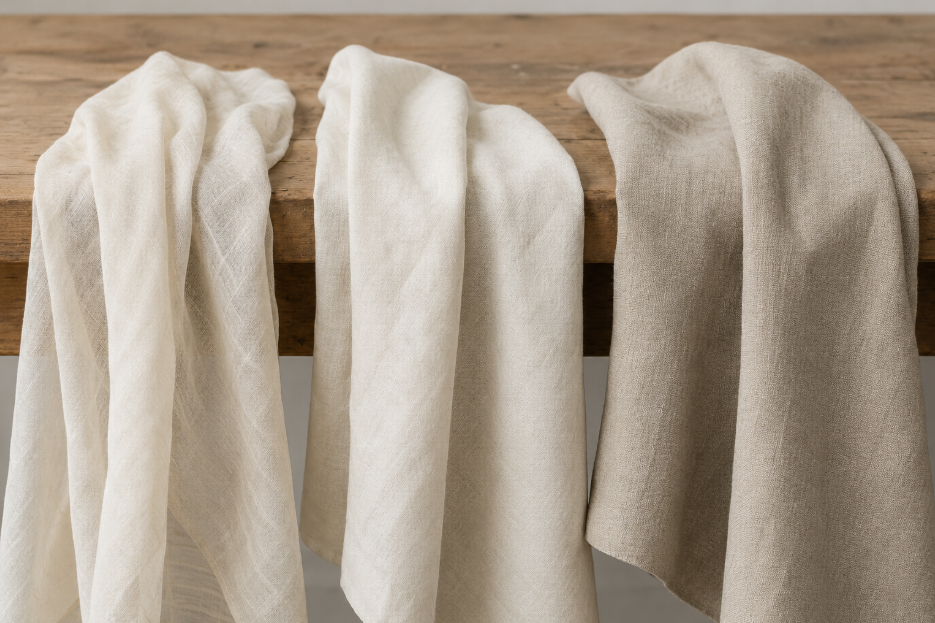
Linen for clothing should provide the right balance of coverage, drape, breathability, and seam behavior. Lightweight linen often suits warm-weather tops, loose shirts, scarves, and layered garments, while medium-weight linen often suits dresses, trousers, overshirts, and more structured apparel.
Use GSM as a screening tool, then test opacity against skin or lining, seam bulk, washed hand, and pressing behavior. A lightweight linen that works for a relaxed shirt may be too sheer for unlined trousers. A heavier linen that works for a jacket may feel stiff or warm in a loose summer shirt.
Clothing decision rule: choose lighter linen when airflow and drape matter most; choose medium linen when coverage, structure, and seam stability matter more.
Canvas ETC’s cut-yard shopping path can support smaller project tests before larger orders when the selected fabric is available by the yard.
Linen for curtains should be selected by light control, privacy, hanging behavior, and whether the curtain will be lined. Lightweight linen can create sheer or semi-sheer panels, while medium and heavier linen can create more substantial drapery with stronger visual body.
GSM alone does not tell you how much light a curtain will block. Color, weave density, lining, and room lighting change the finished result. A pale, open-weave linen can look more transparent than a darker or tighter linen at a similar GSM.
Curtain decision rule: choose lightweight linen for airy light-filtering panels, medium linen for general drapery, and heavier linen when structure or privacy matters, then test the swatch under the lighting conditions where the curtain will hang.
Canvas ETC fabric swatches are especially helpful for drapery planning because color, opacity, and hand feel are difficult to judge from GSM alone.
Linen for upholstery needs more than a high GSM number. Upholstery suitability depends on abrasion resistance, weave stability, backing, cleaning method, seam strength, cushion type, and expected traffic.
A heavier linen may be a starting candidate for upholstery, but GSM does not prove that the fabric can withstand daily seating use. Before choosing linen for upholstery, confirm that the fabric is intended for upholstery or that the supplier provides relevant durability, construction, and care information.
Upholstery decision rule: treat heavyweight linen as a screening point only. Require sample testing, construction details, and supplier confirmation before using linen on high-traffic seating.
For deeper upholstery-specific planning, see our linen upholstery fabric guide.
Linen for artist canvas should be evaluated by weight, texture, dimensional stability, primed or unprimed state, and the painting medium. Artist canvas selection is different from apparel or curtain selection because the linen becomes a working surface, not only a sewn textile.
A heavier linen canvas may offer a more substantial surface, but the right choice depends on whether the canvas will be stretched, primed, sized, painted directly, or used for a specific studio process. The important attributes are weight, surface texture, stability, preparation, and compatibility with the artist’s medium.
For artist-canvas-specific information, see our linen canvas fabric guide. Canvas ETC’s artist-canvas resources are useful when fabric needs to function as a painting surface rather than as a garment or décor textile.
GSM does not determine linen quality, durability, opacity, or project suitability by itself. GSM measures fabric mass per area, while the finished behavior of linen also depends on weave, yarn, finish, color, width, treatment, and use conditions.
| Attribute | What It Tells You | Why It Matters Alongside GSM |
|---|---|---|
| Weave | How yarns interlace | A tight weave can increase opacity and stability without changing the GSM dramatically. |
| Finish | Whether the linen is washed, softened, coated, primed, or otherwise treated | Finish can change hand feel, shrinkage, stiffness, and surface behavior. |
| Color | The visible shade of the fabric | Light colors may appear more transparent than dark colors at the same GSM. |
| Width | The usable fabric area per yard | A wide linen can cover more area per linear yard than a narrow linen. |
| Thread count | Yarn density in a fabric | Thread count is not the same measurement as GSM and should not be used as a direct substitute. |
| Abrasion data | Resistance to wear from rubbing | Upholstery and heavy-use projects need more than fabric weight. |
| Shrinkage | Dimensional change after washing or finishing | A fabric that shrinks after washing may need extra yardage or pre-treatment. |
| Hand feel | How the fabric feels and moves | Two linen fabrics with similar GSM can feel different after washing or finishing. |
Decision rule: use GSM to narrow the weight range, then use swatches and specifications to verify the fabric’s finished behavior.
Canvas ETC’s broader fabric guidance supports this kind of specification-based decision because weight is only one part of a complete textile choice.
Linen GSM is measured by weighing a known area of fabric and converting that mass to grams per square meter. A basic measurement process uses a cut sample of known size, an accurate scale, and a calculation that scales the sample weight to one square meter.
A simplified measurement workflow is:
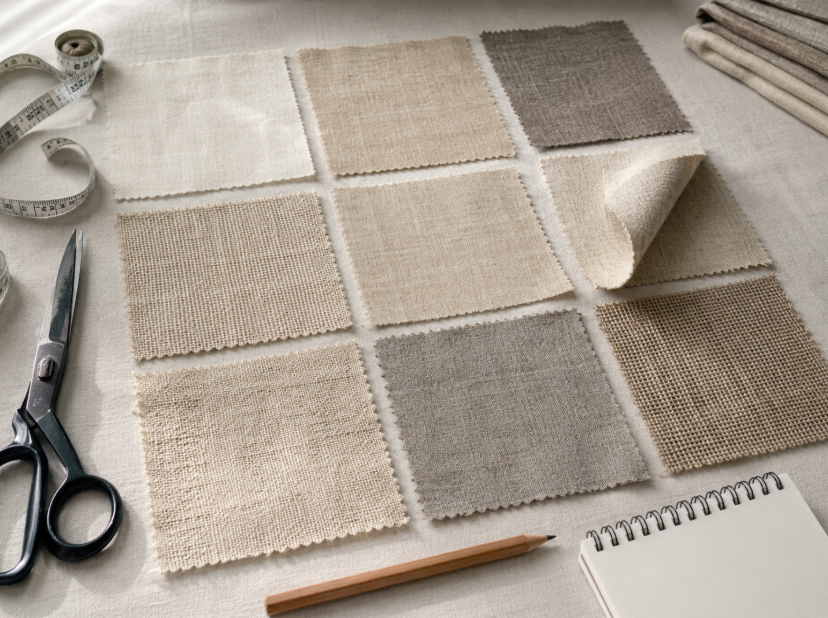
A linen swatch helps verify the parts of fabric selection that GSM cannot prove on its own. Before ordering yardage or rolls, check the swatch for opacity, drape, hand feel, color, weave density, finish, shrinkage behavior, and sewing compatibility.
Canvas ETC fabric swatches provide tactile decision support, helping buyers compare color, texture, opacity, and hand feel before ordering larger quantities. This is one of the most useful steps in online fabric buying because the screen cannot fully show weight, surface texture, stiffness, or drape.
| Verification Item | What to Check | Why It Matters |
|---|---|---|
| Opacity | Hold the swatch against light and against the expected background | Prevents unwanted sheerness in garments, curtains, and décor |
| Drape | Let the swatch hang from one edge | Shows whether the fabric falls softly or holds shape |
| Hand feel | Touch and fold the fabric | Reveals softness, stiffness, and seam bulk |
| Weave | Inspect yarn spacing and texture | Helps predict stability, transparency, and surface character |
| Finish | Confirm washed, softened, coated, primed, or unfinished state | Finish changes feel, shrinkage, and end use |
| Width | Compare fabric width to project dimensions | Width affects how many linear yards you need |
| Shrinkage | Check supplier notes or test a sample if washing is expected | Prevents undersized finished goods |
| Sewing compatibility | Test needle, thread, seam, and pressing behavior | Reduces production problems before bulk ordering |
For physical verification, start with fabric swatches and samples. For quantity planning, use the fabric yardage calculator and review how a linear yard of fabric differs from square area.
Fabric width changes how much usable fabric you receive per linear yard. A linear yard always measures length, but the total area depends on the fabric width.
For example, one linear yard of 54-inch-wide linen provides less total fabric area than one linear yard of 88-inch-wide linen. GSM stays tied to mass per square meter, while buying by the linear yard depends on both length and width.
Buying rule: read GSM and width together. A fabric with the right GSM may still be inefficient for a project if the width creates extra seams, waste, or yardage needs.
Canvas ETC’s by-the-yard and by-the-roll options can support both small project planning and larger fabric sourcing when current product availability allows.
Visual comparisons make linen GSM easier to understand because weight changes how a fabric looks, folds, and transmits light. A useful comparison should photograph each swatch under the same lighting, at the same distance, and against the same background.
| Visual Asset | What It Should Show | Caption Requirement |
|---|---|---|
| Backlit swatch grid | Opacity differences across GSM bands | Include GSM, color, weave, and lighting condition |
| Drape comparison | Lightweight, medium, and heavyweight linen hanging from the same edge | Identify GSM band and finish state |
| Fold and seam test | How fabric bulk changes across weight bands | Note whether sample is washed or unfinished |
| Texture close-up | Weave and surface texture | Include magnification or distance if relevant |
| Width diagram | Difference between linear yard and usable area | State width and length clearly |
Most linen weight mistakes happen when GSM is treated as a complete specification instead of a starting measurement. Use the table below to prevent common selection errors.
| Mistake | Likely Cause | Better Decision |
|---|---|---|
| Choosing linen that is too sheer | GSM was checked, but color and weave were not tested | Check opacity with a swatch under real lighting |
| Choosing linen that feels too stiff | Weight was prioritized over hand feel and finish | Compare washed, softened, and unfinished samples |
| Choosing linen that lacks structure | The GSM band was too light for the project | Move up a weight band or choose a tighter weave |
| Assuming higher GSM means higher quality | GSM was confused with quality or durability | Evaluate weave, finish, yarn, supplier specs, and end use |
| Using apparel linen for upholstery | Project requirements were treated as interchangeable | Confirm upholstery suitability and durability information |
| Ordering too little fabric | Width and shrinkage were not included in yardage planning | Use width, pattern repeat, seam allowance, and shrinkage estimates |
| Comparing linen by ounces only | oz/yd² and linear-yard weight were confused | Confirm whether the supplier lists oz/yd², linear-yard weight, or another measure |
Canvas ETC helps reduce online fabric uncertainty by encouraging buyers to check swatches, widths, finishes, and intended use before ordering. That process is especially useful when a project depends on how linen feels and performs after cutting, sewing, hanging, or stretching.
GSM means grams per square meter. In linen fabric selection, GSM expresses how much one square meter of the fabric weighs, which makes it useful for comparing lightweight, medium-weight, and heavyweight linen.
Higher GSM linen is not automatically better. Higher GSM usually means a heavier fabric, but suitability depends on the project, weave, finish, opacity, width, and performance requirements.
Medium-weight linen is often treated as a practical middle range around 200–260 GSM, but the exact boundary varies by supplier and fabric construction. Use the range as a starting point and confirm the swatch before buying.
For clothing, lighter linen often suits airy warm-weather garments, while medium-weight linen often suits garments that need more coverage or structure. The correct choice depends on opacity, drape, seam bulk, and whether the garment will be lined.
For curtains, lightweight linen can create sheer or semi-sheer panels, while medium and heavier linen can create more structure and privacy. Test a swatch under the same lighting conditions where the curtain will be used.
For upholstery, GSM should be treated as only one screening factor. A heavyweight linen may be a candidate, but upholstery use also requires weave stability, abrasion information, backing, cleaning compatibility, and supplier confirmation.
GSM is not the same as thread count. GSM measures fabric mass per square meter, while thread count describes yarn density or count in a fabric construction. The two measurements can both affect how linen behaves, but they are not interchangeable.
Divide GSM by about 33.9 to estimate oz/yd². For example, 200 GSM is approximately 5.9 oz/yd², and 300 GSM is approximately 8.9 oz/yd².
After you identify a likely linen GSM range, the next step is to verify the fabric against the project. Canvas ETC supports specification-driven fabric buying with swatches, yardage planning resources, fabric-by-the-yard options, fabric-by-the-roll options, and related material guides.
For tactile and visual checks, start with fabric swatches and samples. For quantity planning, use the fabric yardage calculator. For buying-unit clarity, review what a linear yard means.
If your project involves artist canvas, continue with our linen canvas fabric guide. If your project involves seating, cushions, or furniture, continue with our linen upholstery fabric guide.